

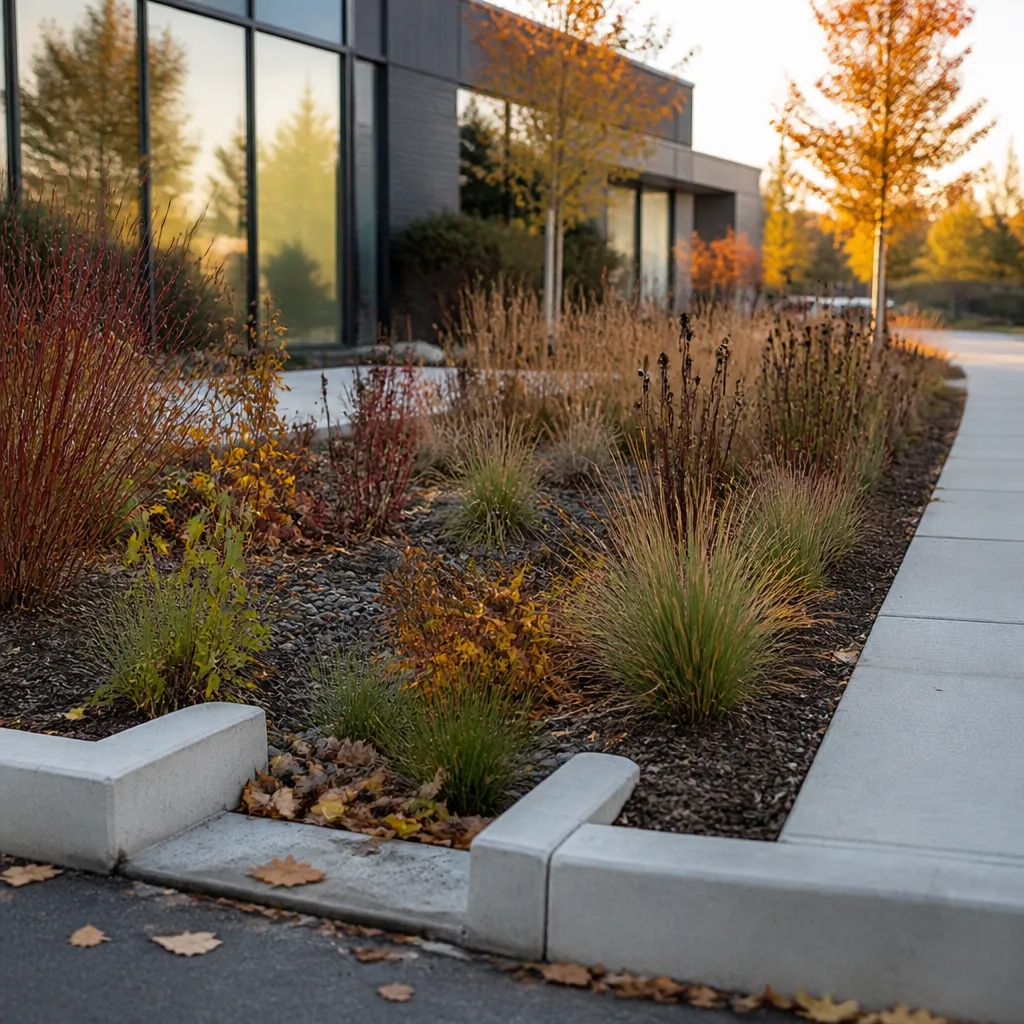
Most bioretention cells and rain gardens look fine in October. The problem shows up in March, when the basin still holds meltwater for days, the inlet is packed with leaves, and the plants that were supposed to help filter sediment are matted down. Bioretention maintenance done before the first frost is the cheapest insurance a property owner can buy, because it turns a winter of guessing into a short list of repairs you can finish in one visit. This checklist covers what we inspect, clean, and document each fall, and why the order of the work matters.
Table of Contents
- Quick Takeaways
- Why Fall Timing Matters for Bioretention
- Visual Inspection Before Leaves Settle
- Clearing Inlets, Outlets, and Overflow Points
- Sediment, Mulch, and Soil Media
- Plant Cutback and Vegetation Management
- Trash, Debris, and Vehicle Protection
- Comparing Fall Maintenance Approaches
- Documentation and Pretreatment Checks
- Frequently Asked Questions
- References
Quick Takeaways
| Key Insight | Explanation |
|---|---|
| Check the rainfall history before judging drainage | Many bioretention practices are designed to drain the design storm volume within 48 hours, so ponding right after a storm may be normal. |
| Clear inlets first | A partly clogged inlet pushes sediment upstream and can flood areas that should drain to the cell. |
| Remove surface sediment before it seals the soil | Once fines form a crust, water stops entering the media and the basin behaves like a shallow pond. |
| Keep mulch thin and away from plant crowns | A thick mulch collar holds moisture against the crown and rots the plant, and washed-out mulch moves sediment downstream. |
| Keep vehicles and stockpiles off the footprint | Compaction and stored soil reduce infiltration, and the Minnesota Pollution Control Agency guidance calls for no vehicles or stockpiling on these areas. |
| Record drain time, sediment depth, and photos from fixed points | Dated records prove the practice was maintained and let the spring visit start from measured facts instead of memory. |
Why Fall Timing Matters for Bioretention
A bioretention cell is a planted basin that filters runoff through layers of plants, soil, and sand before water soaks into the ground. The UC Agriculture and Natural Resources team describes this layered filtering as the reason rain gardens can capture fertilizers, pesticides, oil, and bacteria before they reach storm drains. That filter only works when water can enter the surface and move down through the media, and fall is when the surface is most likely to fail.
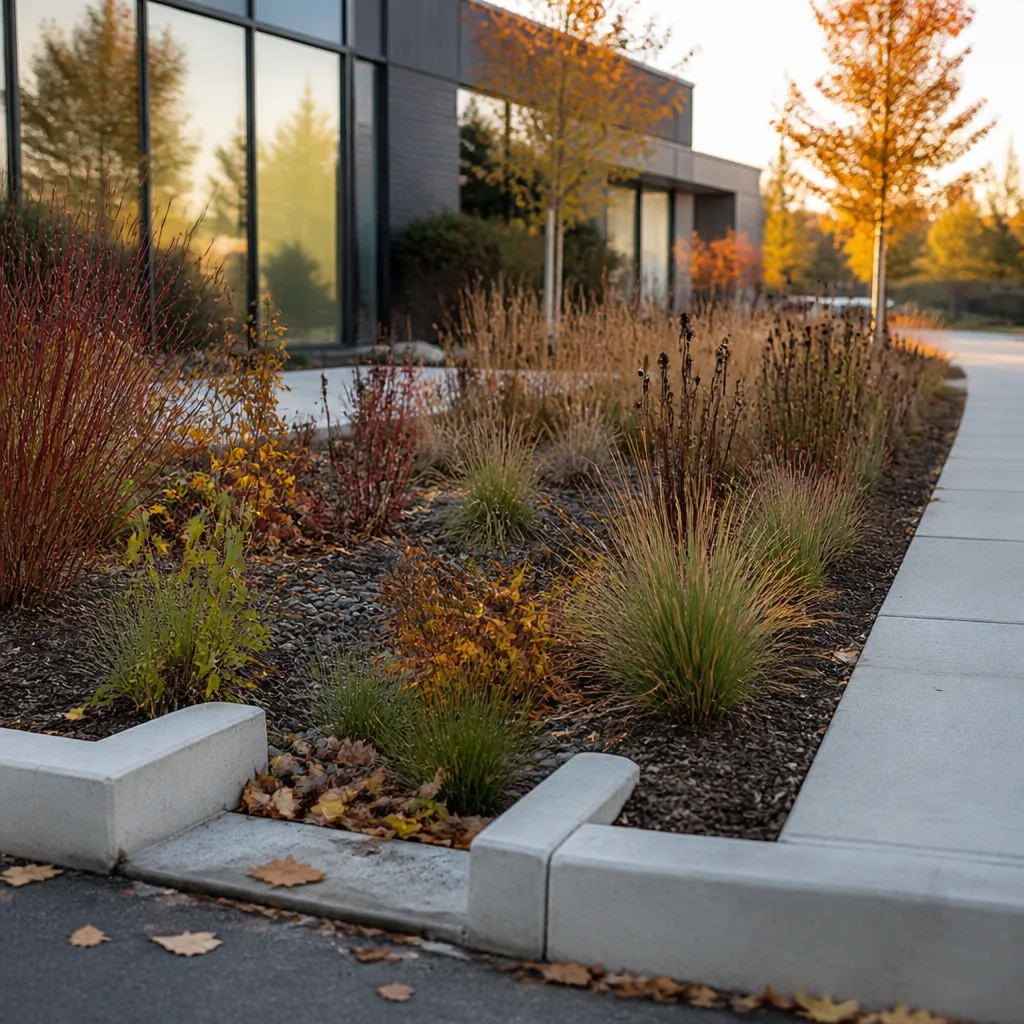
Leaves, sediment from the last storms of the season, and dead plant mats form a dense layer over the soil. Once that layer forms, water sits on top, the basin stops draining, and winter freeze and thaw cycles lock the damage in place. Clearing a clogged surface in October takes an afternoon. Clearing it in March often means a bigger job on saturated soil, with crews waiting on the weather.
What Freezing Does to a Clogged Basin
Standing water that freezes expands and pushes soil and mulch out of place, and it can leave bare spots that erode on the first spring melt. In practice, the worst damage we see is on cells that already ponded in late fall. The fix is cheap if it happens before the ground freezes and expensive if it waits for thaw.
Working Backward From the First Hard Freeze
Schedule the visit for a dry window a few weeks before your typical first hard freeze. Inspect first, clear inlets second, repair the surface third, then cut back plants and document the results. Doing it in the wrong order means you cut plants, a storm washes loose sediment into the basin, and you have to do the surface work twice.
Visual Inspection Before Leaves Settle
A visual inspection is a fast, qualitative check of whether the practice is working. Standard checklists, including the University of Minnesota guidance on scheduling maintenance for bioretention, use a short set of questions that tell you what to fix and in what order. Start with the answers that take five minutes, and save the ones that need a crew for last.
Check the 48-Hour Rainfall Window
Before you judge how the cell drains, check whether it has rained in the last 48 hours. Many bioretention practices are designed to drain the design storm volume within that window, so a visit right after a storm can show ponding that is normal for that moment. Rainfall in that window also changes how you read every other answer on the checklist, so write the date of the last storm at the top of your form.
Our rule on site is straightforward. If the basin still holds standing water more than two days after a measurable rain, the cause is clogging, a blocked outlet, or compacted media. Schedule inspections with that in mind, and avoid booking the visit the morning after a heavy storm.
Look for Erosion, Bare Spots, and Burrows
Walk the full footprint, including side slopes and the overflow edge. Look for standing water, bare or eroded patches, sinkholes, and animal burrows, which can open paths that carry water past the soil filter. Record each problem with a photo and a measured location, because a vague note like “bad spot near inlet” never gets fixed.
Clearing Inlets, Outlets, and Overflow Points
Inlets come first in any fall job because everything downstream depends on them. Inlet structures should be free of debris, sediment, vegetation, and other obstructions so that runoff can enter the practice without backing up. A partly clogged inlet sends suspended solids into the upstream conveyance system and can flood upstream areas, which is exactly the problem the cell was built to prevent.
Remove obstructions the day you find them rather than adding them to a list. The most common fall blockages we clear are wet leaves packed into a curb cut, sand from winter traction work piled at a grate, and grass clippings blown into a trench drain. If material has settled into the pipe, clean it out with a vactor rather than pushing it deeper.
Misaligned Inlets and Curb Cuts
Check whether any inlet has shifted, cracked, or moved out of its original alignment. A misaligned inlet sends runoff past the intended entry point and erodes the edge of the basin. Photograph the problem, measure the offset, and flag it in the same report, because a misaligned curb cut often needs a structure repair rather than a cleanout.
Overflow and Outlet Checks
The overflow is the last line of defense when the cell fills during a large storm. Confirm it is clear of leaves and that water can leave without pooling against a wall or structure. A blocked overflow turns a rain garden into a pond that never drains, and it is the failure we see most often at sites that skipped the previous fall.
Sediment, Mulch, and Soil Media
Sediment is the quiet failure in bioretention. Every storm drops a thin layer of fine material on the surface, and over several seasons that layer seals the soil. The result is a basin that looks healthy from the sidewalk but drains slowly, because water is only moving through the top inch or so of media.

Removing Accumulated Sediment and Surface Soil
When sediment has built up, remove it along with the top layer of soil media. The New York State stormwater management practice inspection checklist lists removing accumulated sediment and the top 2 to 3 inches of bioretention soil media as a repair step. Do not dig deeper than your design or the checklist calls for, because you can strip the root zone and expose fresh media to erosion. Replace the removed material with soil that matches the design specification, not whatever is on the nearest lawn.
Filling Eroded Areas and Re-mulching
For eroded spots, the same checklist recommends filling with clean topsoil or sand and covering with mulch. Work in small lifts, tamp lightly, and replant bare patches before the ground freezes so roots can establish. Keep the mulch layer thin and even. Piled against plant crowns, it invites rot, and mulch that washes out on the first spring storm just moves the sediment problem downstream.
Plant Cutback and Vegetation Management
Cutting back plants is the step people most often do too early or too hard. Dead stems and seed heads can stay standing through winter, and many practitioners leave them for cover and then cut them in early spring. The goal is to avoid a bare, compacted surface through winter, not to achieve a tidy look on the day you finish.
Cutting Back Dead Growth Without Damaging Crowns
Cut dead perennial stems at a height that leaves the crowns intact, and remove the cut material from the basin and inlet area. Do not leave a pile of cuttings at the edge of the basin, because the next storm will wash it in and add organic load to the surface. Haul the material off the same day.
Removing Woody Volunteers and Weeds Before Winter
Seedlings of woody plants and aggressive weeds pull out most easily in autumn soil while their roots are still shallow. Pull them now rather than waiting for spring, when a missed shrub can outgrow the planting plan. Avoid herbicide in the fall visit unless the product and application method are specified in your operation and maintenance plan, because treated material can run straight into the storm system.
Trash, Debris, and Vehicle Protection
Trash never stops arriving, but the timing of removal matters. Standard maintenance guidance for bioretention calls for removing trash somewhere between twice a year and quarterly, and the fall visit is the right moment to get ahead of winter buildup. Bottles, bags, and food wrappers left in the basin all winter get worked into the soil by the first melt.
Protect the footprint from vehicles and stockpiles. The Minnesota Pollution Control Agency guidance on infiltration practices says no vehicles or stockpiling should be allowed, and it pairs that rule with limiting the contributing drainage area and providing pretreatment and trash racks. In practice, the most damaging activity we see is a contractor parking equipment on the basin or stacking topsoil on the edge until spring.
Winter Snow Storage and Sand Control
Plowed snow carries sand, salt, and debris, and a large pile dumped onto a rain garden will smother plants and seal the surface. Mark a snow storage area well away from the basin and brief the plow operator before the first storm. If your site uses sand for traction, ask for a fall sweeping pass so the material is removed before it washes into the cell.
Pro tip: Set a marker stake at the basin edge with the design ponding depth painted on it. At the next visit, you can see at a glance whether water is sitting above the design line and how long it takes to drop.
Comparing Fall Maintenance Approaches
Property owners usually choose between three approaches to bioretention upkeep. Each has a place, and the right choice depends on how many storms your site sees and how much documentation your permit requires.
| Approach | Where It Works | Where It Falls Short |
|---|---|---|
| Single fall walk-through by a crew | Small residential or commercial cells with a stable history and no permit reporting | Misses storm-driven damage that happens after the visit, so spring problems arrive unnoticed |
| Storm-triggered inspections | Sites with an active operation and maintenance plan that ties inspections to rainfall | Costs more each year and requires someone to track rainfall and book visits quickly |
| Annual maintenance contract with a documented scope | Municipal and multi-cell commercial sites with permit obligations | Only as good as the checklist behind it, so a vague scope produces vague results |
For most commercial owners, our recommendation is the third option, with storm-triggered visits added while the site is new. A town-level bio-retention checklist calls for inspections at least twice after storm events exceeding 1/2 inch during the first 6 months following construction, which is a useful model for new cells. Once a cell is established, one fall visit plus one spring check is a reasonable baseline, but only if the fall visit covers the full checklist.
Documentation and Pretreatment Checks
Documentation turns a maintenance visit into evidence. A useful fall record includes the date of the last rainfall, the drain time observed, the depth of sediment removed, the condition of each inlet, and before and after photos taken from fixed points. Without those fields, the next inspector has to guess what was done, and the spring visit becomes a rediscovery exercise.
Pretreatment is the other check that often gets skipped. The University of Minnesota guidance notes that the state agency requires pretreatment for some bioretention practices under certain MS4 construction permits, and that a practice without upstream pretreatment may be in violation. Confirm whether a forebay, sump, or trash rack is present and whether it was cleaned this season. If pretreatment is missing, record it and raise it with the owner before winter, because retrofitting after a violation costs more and moves slower.

Pro tip: Take photos from the same fixed spots each season, such as the inlet, the overflow, and two points on the basin floor. Matching angles make spring comparisons quick and reveal slow settling you would otherwise miss.
Frequently Asked Questions
How soon before the first frost should I schedule bioretention maintenance?
Schedule the main visit in a dry window a few weeks before your typical first hard freeze. Leave room for a follow-up if the visit finds a clogged inlet or a blocked overflow that needs a crew.
Should I remove all leaves from a rain garden in the fall?
Remove leaves from inlets, overflow points, and any spot where they form a mat over the soil. Loose leaves in the middle of a well-vegetated cell can break down, but a thick wet mat seals the surface and should go.
Is it okay to cut back all plants before winter?
Cut dead material that is flopping over, matted down, or blocking the inlet. Many practitioners leave some standing stems through winter and cut them in early spring, which keeps cover on the soil without leaving debris in the basin.
How much sediment should trigger removal?
Use your design drawings as the baseline. If sediment has sealed the surface or ponding lasts longer than the design drain time, remove it now rather than waiting for next season.
What should I do if the basin still ponds after cleaning?
Have a stormwater professional check the underdrain, the soil infiltration rate, and the outlet grade. Ponding that survives a clean surface usually points to compacted media or a structural problem, and surface cleaning will not fix either one.
Tell us what your fall bioretention routine looks like and which step gave you the most trouble last season.
We would love your feedback and any insights you would share with others. What perspective would you add?
References
- University of Minnesota guide to scheduling maintenance for bioretention practices
- New York stormwater management practice inspection checklist
- EPA guide to rain garden siting, design, and maintenance
- Town-level bio-retention inspection and maintenance checklist
- UC Agriculture and Natural Resources article on rain gardens as a stormwater solution