

For years, a stormwater O&M plan was the document that sat in a project binder and never got opened again. That has changed. Municipal programs and development reviews now expect property owners to show a written operation and maintenance plan, a maintenance schedule, and records proving the work was done. If your site drains to a catch basin, a hydrodynamic separator, a detention pond, or a rain garden, the real question is no longer whether you need a stormwater O&M plan. It is whether yours would hold up the day an inspector asks to see it.
Table of Contents
- Quick Takeaways
- Why O&M Plans Moved From Good Practice to Requirement
- What an O&M Plan Must Contain
- How Stormwater Regulations Reach Private Property
- Maintenance Tasks Inspectors Check First
- Common Mistakes That Turn a Plan Into a Violation
- Comparing Ways to Run Your O&M Program
- Responding to a Violation Notice
- Frequently Asked Questions
- References
Quick Takeaways
| Key Insight | Explanation |
|---|---|
| Keep a maintenance log from day one | Dated entries for each cleaning, with the volume of sediment or debris removed, are the first records a reviewer asks for. EPA recommends logging sediment amounts and removal dates for catch basins. |
| Name the responsible party in writing | Every component needs a named owner, whether that is the property owner, a tenant, an association, or a contractor. Gaps in ownership are the most common reason work goes undone. |
| Set inspection frequency by component | Catch basins, separators, and bioretention collect and shed material at different rates. One annual visit for the whole site will miss problems in the components that fail first. |
| Budget for green practices as maintenance-heavy | Bioretention and porous pavement need vegetation control, surface cleaning, and sediment removal on a schedule. Plan the labor before the basin is full, not after it ponds. |
| Check whether recorded access rights exist | A maintenance crew needs legal access to the system. If the easement or maintenance agreement is missing, fix the paperwork before the first violation notice arrives. |
| Answer notices with records, not promises | A response backed by dated photos, logs, and invoices closes files faster than a letter that says the problem will be fixed. |
Why O&M Plans Moved From Good Practice to Requirement
The shift is easiest to see in how regulators describe the problem. A stormwater system does not fail on the day it is built. It loses capacity slowly, as sediment builds up, vegetation spreads, and outlets clog, and nobody notices until water starts ponding in the wrong place. Agencies now write O&M requirements because that slow loss is predictable.

EPA’s stormwater maintenance guidance states the core principle in one line, and it is worth repeating to any owner who still treats maintenance as optional:
All stormwater management systems, whether gray or green, require maintenance.
The same guidance says appropriate operation and maintenance keeps stormwater practices working as designed, protects public safety, meets legal standards, and protects the financial investment in the system. That combination is why reviewers now treat a written plan as the first document they ask for.
EPA’s page also lists what a plan should contain: responsible parties, maintenance schedules, inspection requirements and frequency, easements or covenants, a funding source, and descriptions of basic work such as sediment removal and inlet and outlet cleaning. If you do not have one, EPA’s wording is direct: now is the time to develop one.
Municipal permits explain the rest. A city that holds a stormwater permit has to show it runs a program covering the systems inside its boundaries. Aberdeen, Washington, documents its 2023 Stormwater Management Program as required under condition S5 of the Western Washington Phase II permit. In practice, cities ask owners for maintenance records because they cannot prove compliance without them.
What an O&M Plan Must Contain
A plan that satisfies a reviewer is specific enough that a stranger could follow it. Language like “the owner will maintain the system as needed” fails every time. Each component should have a name, a location, a task list, and a frequency.
Responsible Parties and Recorded Easements
Start with people. The plan must name who maintains each component, whether that is the owner, a tenant, a homeowners association, or a contractor. On shared sites, the most common gap is a pond or outlet that serves three lots but belongs to nobody on paper.
EPA’s list includes easements and covenants for a reason. Recorded access rights are what let a crew enter a neighboring parcel to clean a shared outlet without a dispute holding up the work.
Inspection Frequency and Maintenance Schedules
A single annual inspection line is not a schedule. Catch basins, hydrodynamic separators, and bioretention need different intervals because they collect debris at different rates. Write the frequency next to each component, and state what triggers an extra visit, such as a large storm or visible sediment build-up.
A regional development review file for a retail project shows how this looks in practice. Its supplemental stormwater operations plan states that the system “requires regular inspection and maintenance to ensure proper operation and effectiveness,” which is the kind of language reviewers look for when they check a project file.
Funding Source and Budget Line
EPA lists identification of a funding source as a plan element, and it is the one owners skip most often. A plan that says maintenance will be performed but has no budget line will get deferred the first year a repair is expensive. Put an annual maintenance line in the operating budget, and name the account that pays for emergency structure repairs.
Pro tip: Write the plan so a new maintenance contractor could work from it without calling you. If they would need to ask where the outlet structure is or how often to clean it, the plan is not finished.
How Stormwater Regulations Reach Private Property
Most owners assume stormwater regulation is something that happens to the city. In practice, requirements reach private sites through permits, development approvals, and inspections. Harris County’s stormwater quality program, for example, was established to comply with federal NPDES and state TPDES permitting requirements, and it covers plan review followed by inspections before, during, and at completion of a project.
Development Thresholds That Trigger a Plan
Thresholds decide whether a plan is required at all. Harris County’s guidance says a stormwater quality management plan is generally required for new development on a parcel of five acres or larger, and for redevelopment of that size where one acre or more of impervious surface is being added. Two common exemptions are grandfathering by an existing storm sewer line and filing an Industrial Activities Certificate.
Those figures belong to Harris County, not a national standard. Check your own jurisdiction before assuming you are below the line, because a smaller site can still carry maintenance conditions attached to its approval.
Permit Renewals and Annual Certifications
Renewals are where ongoing obligations become visible. The county’s renewal requirements include an annual professional engineer inspection certification and an annual permittee certification of proper operation, along with the application itself and a fee. An owner who has never inspected the system cannot sign that second certification honestly.
Two document types get confused often. The SWPPP addresses pollutants from construction activity, while the SWQMP addresses treatment of runoff after construction is complete. The O&M plan is the working document that keeps the post-construction side functioning once the drawings are approved.
Maintenance Tasks Inspectors Check First
Inspectors tend to go straight to the systems that are easiest to verify and hardest to fake. A sump with sediment to the rim, a screen full of trash, or a bioretention cell that is ponding water tells them more in five minutes than the binder does. Know which tasks show up on that first walk-through.

Catch Basins and the Sediment Log
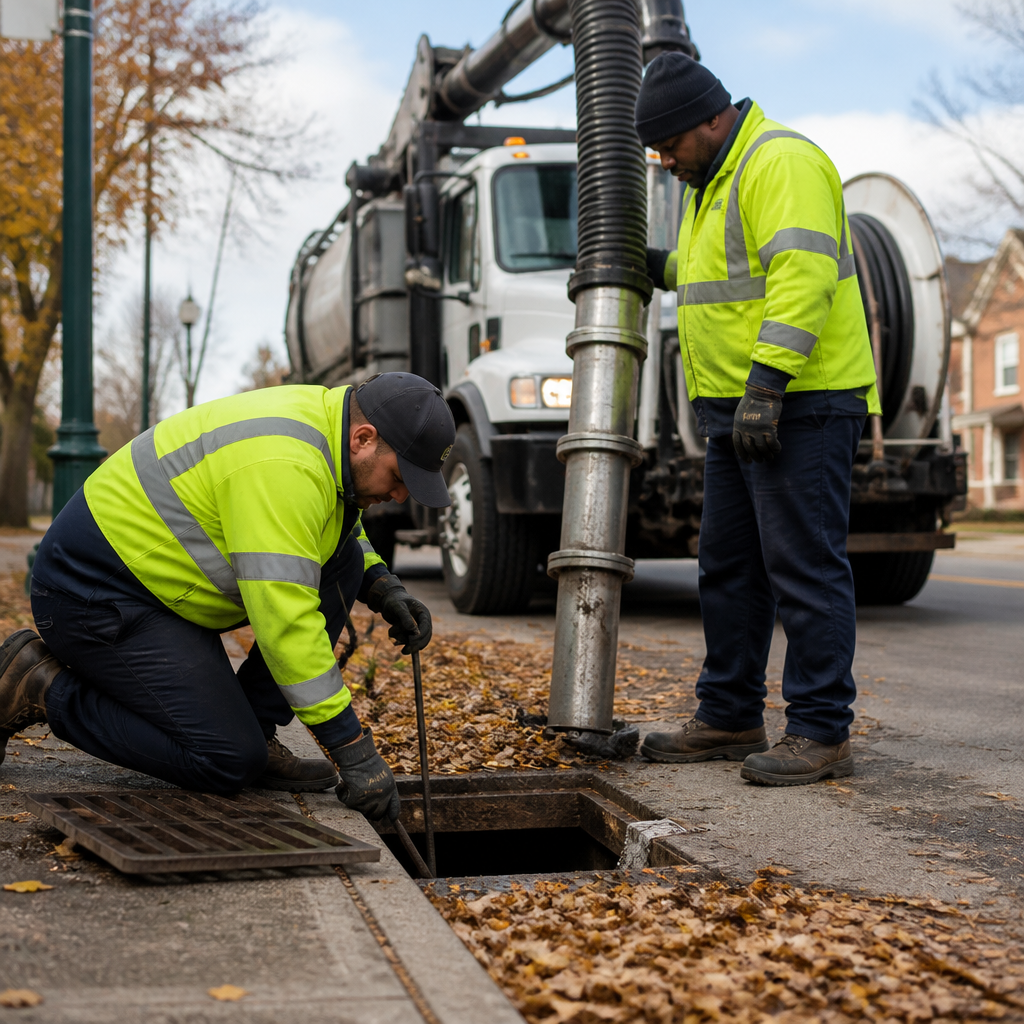
EPA describes typical catch basin maintenance as trash removal where a screen or other debris-capturing device is used, plus sediment removal with a vactor truck. Operators need training, and the record should show how much sediment came out and when. Some cities now track that data in GIS to decide where cleaning should happen next.
In practice, the log matters more than the cleaning itself to a reviewer. A crew that cleaned a basin in March and left no record has, on paper, not cleaned it.
Hydrodynamic Separators and Water Quality Devices
Water quality devices hold captured sediment and oil in a chamber that often looks clean from the top. The inspection question is whether the sump depth is still within design capacity and whether the record shows when it was last emptied. A separator that has been full for a long stretch is a violation waiting for a storm to expose it.
Green Infrastructure and Pavement Cleaning
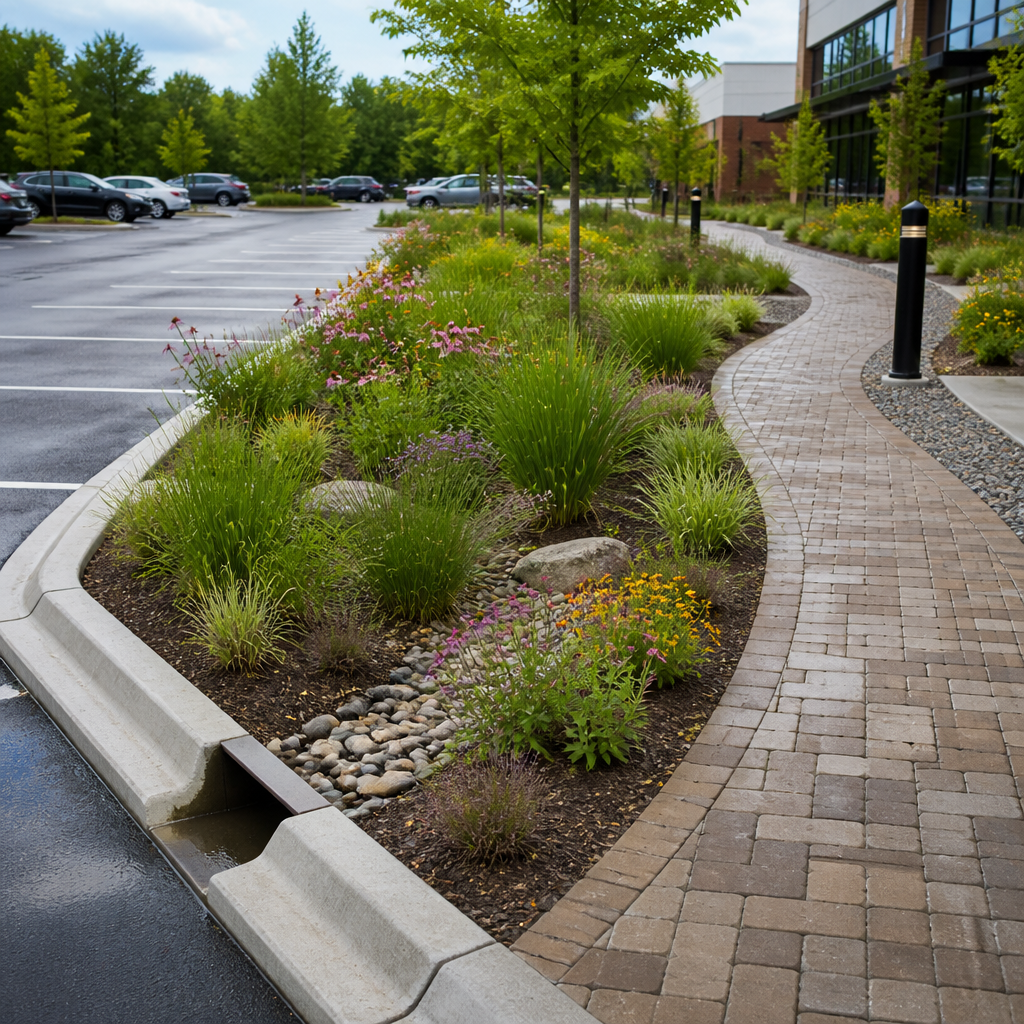
EPA notes that green infrastructure maintenance generally requires more labor and less heavy equipment than gray infrastructure. Weeding, mulching, trimming, replanting, and sediment removal all count, and so does inspecting what the vegetation is doing to the surface. For porous pavement, a common failure is clogged voids from fine sediment, which is why vacuum sweeping and periodic surface cleaning belong in the schedule rather than on an emergency call list.
Pro tip: Photograph each sump or basin with a measuring rod in frame before and after cleaning. A dated pair of photos with a visible depth reading is the fastest evidence an inspector can verify.
Common Mistakes That Turn a Plan Into a Violation
Most violations are not dramatic. They come from a plan that was written correctly, then left alone for two years. The gaps below show up repeatedly on sites that believed they were in good shape.
Assuming the City Maintains Private Systems
A common mistake is assuming that a stormwater pipe or basin near the public right-of-way belongs to the city. Ownership is set by the recorded plat, easement, and maintenance agreement, not by where the structure sits. When those documents are missing, the owner is usually the first name on the notice.
Writing a Plan Nobody Follows
A plan that lists quarterly inspections but has inspection forms dated once a year is worse than having no plan, because it documents the promise and the failure side by side. Keep the plan short enough to use. A two-page checklist with dates and initials beats a forty-page manual that stays in a drawer.
Letting Vegetation Take Over Bioretention
Rain gardens and bioretention cells look after themselves for the first season. After that, vegetation fills the basin, mulch washes out, and inlets block. EPA’s list of basic activities includes weeding, mulching, trimming, and replanting for this reason. Vegetation management is a scheduled maintenance task, not a landscaping favor.
Comparing Ways to Run Your O&M Program
Owners usually choose between three models for running a maintenance program. Each works under some conditions, and each has a predictable point where it starts to fail. The right choice depends on how many systems you manage, how often they need work, and who keeps the records.
The table below compares the three models on the points that matter during a compliance review, not on price alone.
| Approach | Where It Works | Where It Breaks Down |
|---|---|---|
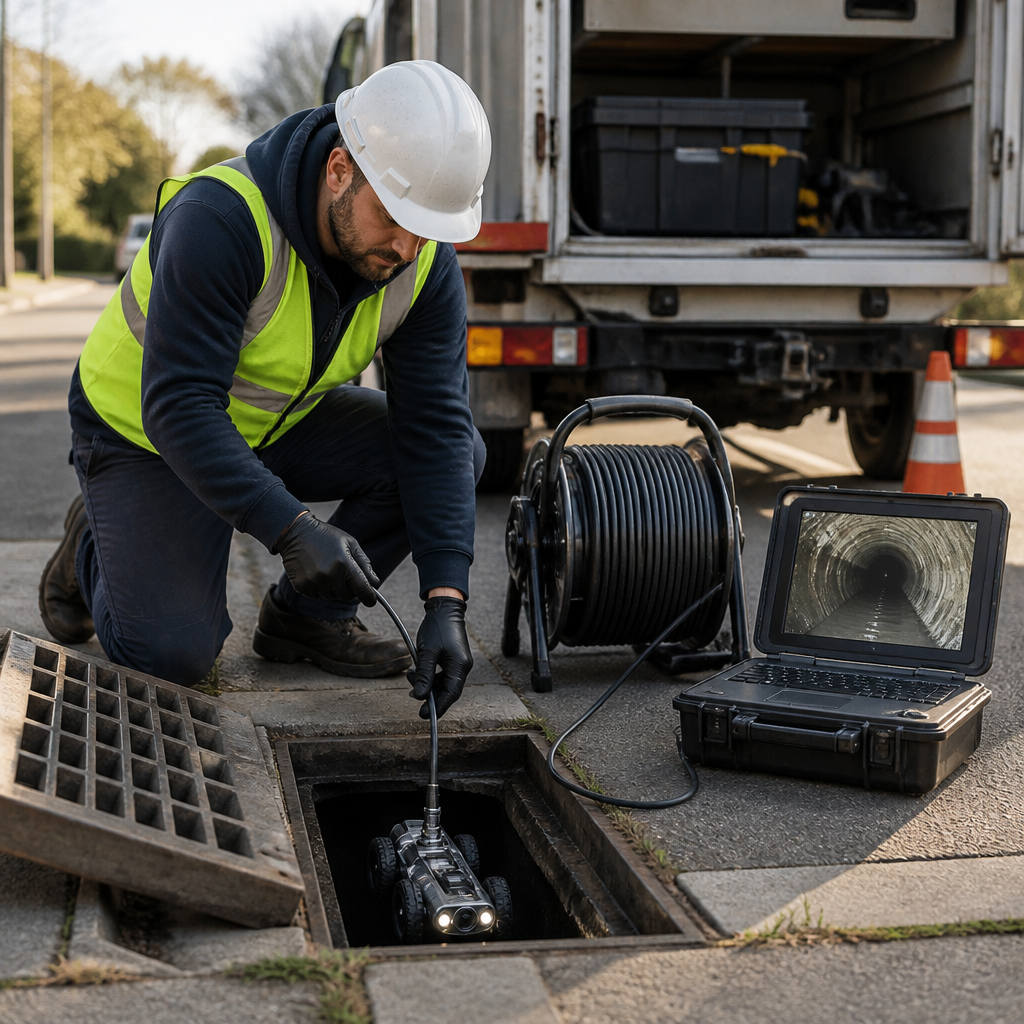
| In-house maintenance crew | Large campuses with dedicated staff, equipment, and training already in place | Vactor and CCTV work is expensive to own, and staff turnover can take training records with it |
| Per-job contractor | Single systems that need a repair or a one-time cleanup | Records scatter across invoices, and nobody owns the schedule between visits |
| Full-lifecycle partner that consults, inspects, maintains, and documents | Multi-site owners and public agencies that need one schedule, one log, and one set of reports | Requires a clear scope and a signed agreement, and the owner still has to make the budget decisions |
Storm Water Compliance (SWC) works in the third model, which is why documentation is part of the service rather than a separate deliverable. The point is not which model is cheapest on paper. The point is which one leaves a complete record when the inspector arrives.
Responding to a Violation Notice
A notice of violation is a deadline, not a verdict. How you respond in the first days often matters more than the underlying issue, because a clear, documented response gives the agency a reason to close the file. A vague letter full of promises does the opposite.
Gather the Records Before Writing Anything
Pull the O&M plan, inspection logs, invoices, and photos before you draft a response. If the records show maintenance was done but never written down, the record gap is the problem to fix. If they show nothing was done, the response has to say what is being done now and when it will be finished.
Fix the Cause, Not Just the Symptom
Clearing a blocked outlet this week without finding out why it blocked is a repair, not a compliance fix. Trace the cause back to the schedule. Did sediment build faster than the cleaning interval? Did vegetation spread because nobody was assigned to it? Change the schedule so the cause cannot return quietly.
Documenting Corrective Work
Corrective work needs the same record as routine work: dated photos before and after, the volume removed, the crew involved, and the next scheduled inspection. Send the package with your response, and keep a copy on site.
Pro tip: Keep one shared folder with the O&M plan, the last twelve months of logs, and recent photos. When a notice arrives, you can answer within days instead of rebuilding the history from invoices and memory.
Frequently Asked Questions
Do I need a stormwater O&M plan if my site is small?
Possibly. Size thresholds decide whether a new development needs a stormwater quality management plan, but permits and approvals can attach maintenance conditions to smaller sites too. Check with your local permitting office and assume a written plan will be requested.
Who is responsible for maintaining a private stormwater system?
The party named in the recorded documents, which may be a property owner, an association, or a tenant under a lease that assigns the work. Responsibility follows the plat, easement, or maintenance agreement, not where the structure sits.
How often should catch basins be cleaned?
There is no single interval that applies everywhere. Set the frequency from your sediment log by measuring what comes out at each cleaning, then adjust. EPA recommends keeping a log of sediment amounts and removal dates.
What is the difference between a SWPPP and a SWQMP?
A SWPPP addresses pollutants from construction activity, while a SWQMP addresses treatment of runoff after construction is complete. The O&M plan keeps the post-construction side working over time.
What records should I keep for a stormwater compliance review?
Keep the O&M plan, inspection forms, maintenance logs with dates and volumes, invoices, before and after photos, and any certifications signed for permit renewals. A reviewer will ask for these in roughly that order.
Can I handle stormwater maintenance in-house?
Yes, if you have trained staff, equipment suited to sediment removal, and a system for keeping records. Many owners find that vactor and CCTV work is where an in-house program stops being practical.
We would like to hear how you handled your first stormwater O&M plan, whether it came from a development approval, a permit renewal, or a violation notice.