

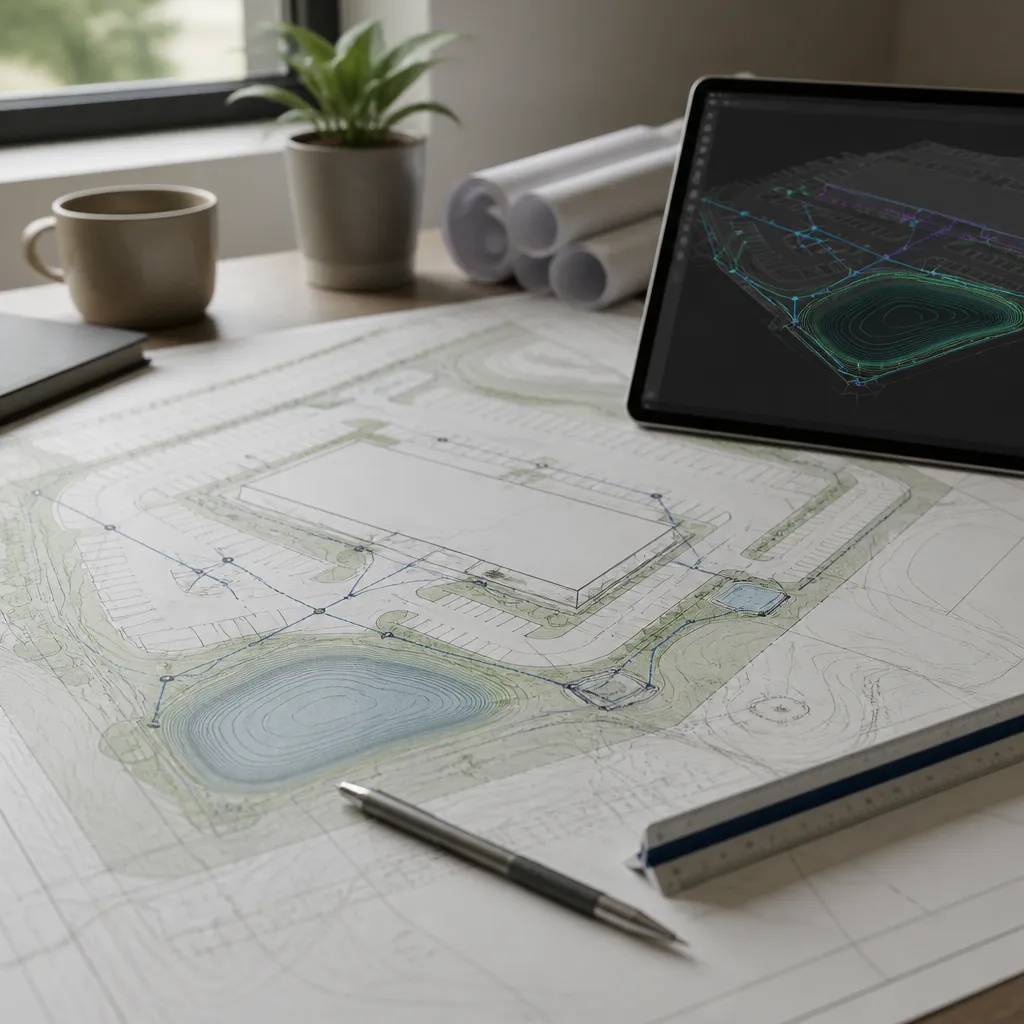
Stormwater problems that surface after construction are expensive, and most of them start on the drawing board. A detention pond that a vactor truck cannot reach, a bioretention cell with no sediment forebay, or an outlet that blocks a maintenance easement can each turn into a violation notice years later. Stormwater consulting during the design phase is where these problems get caught while they are still cheap to fix. This guide covers what engineers need to get right before permit submittal, and where outside review changes the outcome.
Table of Contents
- Quick Takeaways
- Why Stormwater Consulting Belongs at Concept Stage
- Building the O&M Plan Into the Design
- Selecting Controls a Site Can Actually Maintain
- Working With a Consultant Through Design Review
- Comparing Common Design Approaches
- Handing the Design Off to Construction and Inspection
- Reducing Violation Risk After Design Approval
- Frequently Asked Questions
- References
Quick Takeaways
| Key Insight | Explanation |
|---|---|
| Pull maintenance access into the first layout | Vactor and CCTV crews need reachable inlets, a safe approach, and room to set up equipment. Add these to the base plan rather than treating them as later details. |
| Write the O&M plan while you design | Every control needs an inspection frequency, a cleaning method, and a responsible party. Blank fields in the O&M plan become disputes with the owner later. |
| Model the controls you actually plan to build | Low impact development scenarios should use the real soil, slope, and drainage area for each control. Generic inputs produce designs that underperform in the first wet seasons. |
| Match controls to the site’s maintenance capacity | A system that needs specialized equipment every quarter is a liability for a property with one part-time maintainer. |
| Specify sediment storage and cleanout points up front | Sump depth, forebay size, and accessible cleanouts determine how often a device needs cleaning and what each visit costs. |
| Keep design assumptions in one documented file | When an owner, contractor, or regulator asks why a decision was made, the answer should already be written down with the calculation that supports it. |
Why Stormwater Consulting Belongs at Concept Stage
Stormwater is water from rain and melting snow, and on developed land most of it never soaks into the ground. University extension guidance explains that roofs, concrete, and asphalt funnel runoff quickly into storm drainage systems instead of letting it infiltrate. That is why the layout decisions made early carry so much weight, and why engineers who treat stormwater as a closing calculation usually pay for it later.
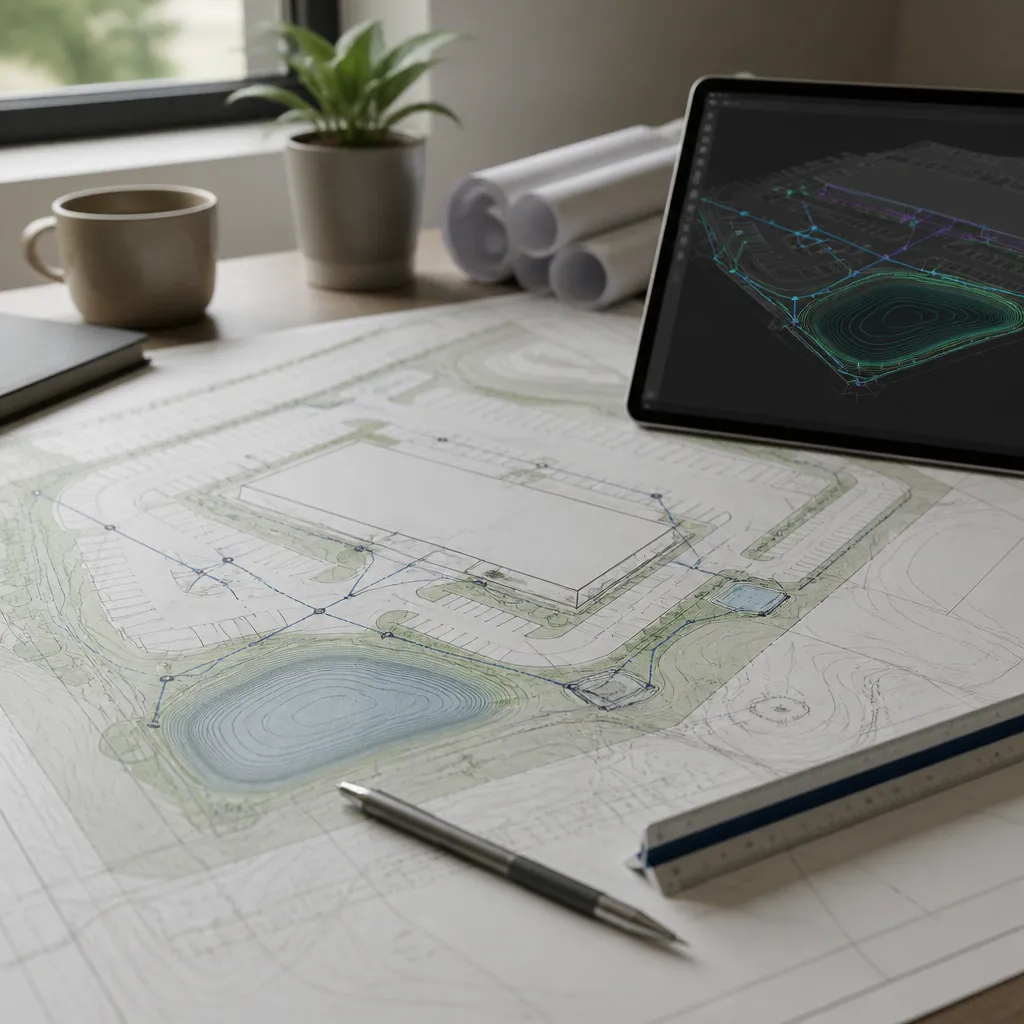
In practice, the best time for consulting input is before the grading plan is locked. A consultant reviewing the concept can flag where runoff will concentrate, where a flow path will cut across a future parking aisle, and where an outlet will sit below the seasonal high water table. These changes cost very little on paper and a great deal after the site is paved.
Site Constraints That Drive Layout
Most stormwater failures trace back to constraints that were visible on the survey but never weighed in the design. Tight lots, shallow bedrock, and existing utility corridors all limit where controls can physically go. A consultant who has inspected systems in similar soils can tell you early which basins will sit wet for days, so infiltration only goes where it will work.
Where Late Consulting Costs Money
A common mistake is bringing in maintenance input after the plan set is approved. At that stage, the only fixes are field changes, change orders, or a request to the municipality to accept a variance, and each one adds time. A review during concept can often keep the same footprint while adding the access and cleanout features the owner will need for years.
The cheapest stormwater fix is the one drawn before the site survey is finalized.
Building the O&M Plan Into the Design
A Stormwater Operation and Maintenance (O&M) Plan is only as useful as the design it describes. Many property owners and public agencies receive plans that list generic tasks like “inspect and clean as needed,” with no schedule, no method, and no named responsibility. That gap is where inspections fail and enforcement begins.
Engineers can close the gap during design by placing maintenance inputs next to the physical features they affect. For each control, the drawing set should identify the inspection frequency, the cleaning method, and the equipment needed to reach the device.
Access, Sediment Loading, and Maintainability
Vactor trucks need a reachable inlet, a safe approach, and room to set up a hose. CCTV inspection crews need clean pipe entry points and a straight run where the camera can travel. A catch basin with a sump too shallow to hold a season of sediment will be cleaned far more often than the owner budgeted for.
Hydrodynamic separators and other water quality devices have their own cleanout geometry. Specify the vault access, the clearance above the cartridge or chamber, and a staging area for dewatering and disposal. If these details are missing from the plan set, the first cleaning will be improvised.
Documenting Assumptions for Future Owners
The O&M plan should carry the design assumptions, not only the maintenance tasks. Record the design storm, the drainage area each control serves, the infiltration rate used, and the sediment load assumed. When a new owner inherits the site, these notes explain why a bioretention cell is sized the way it is and what conditions would change that sizing.
Selecting Controls a Site Can Actually Maintain
Control selection is where many designs quietly take on future risk. General stormwater guidance separates controls into structural controls, non-structural controls, and best management practices. Structural controls work to divert water away, non-structural controls use natural filters like plants and soil, and best management practices focus on changing the activities that cause runoff in the first place.
The useful question is rarely which category is best. The better question is which one matches the maintenance capacity of the owner. A site with a single part-time maintainer can handle a grass swale or a vegetated filter strip, but it cannot reliably handle a proprietary underground device that needs a vactor visit every quarter.
Structural Versus Non-Structural Controls
Structural controls such as detention basins, underground chambers, and proprietary separators give engineers precise sizing and predictable performance on paper. They also require inspection access and cleaning equipment that some owners do not have on call. Vegetated controls are easier to inspect by eye, but they need vegetation management and a plan for erosion at inlets.
Low Impact Development Modeling
The EPA’s Storm Water Management Model lets engineers and planners represent combinations of green infrastructure practices as low impact development controls and test how they perform. The model is only as credible as its inputs. Generic infiltration values or assumed ideal maintenance will make a bioretention design look better on paper than it will function after several years of sediment buildup.
Pro tip: Run the model twice, once with ideal maintenance and once with the maintenance frequency the owner is likely to deliver. If the second run misses the performance target, change the design rather than the assumption.
Working With a Consultant Through Design Review
A stormwater consultant is most useful when the scope is defined before the first review meeting. Engineers who send a full plan set and ask for comments often get general feedback that changes nothing. A narrower request, such as checking outlet protection and maintenance access on three specific structures, produces decisions.
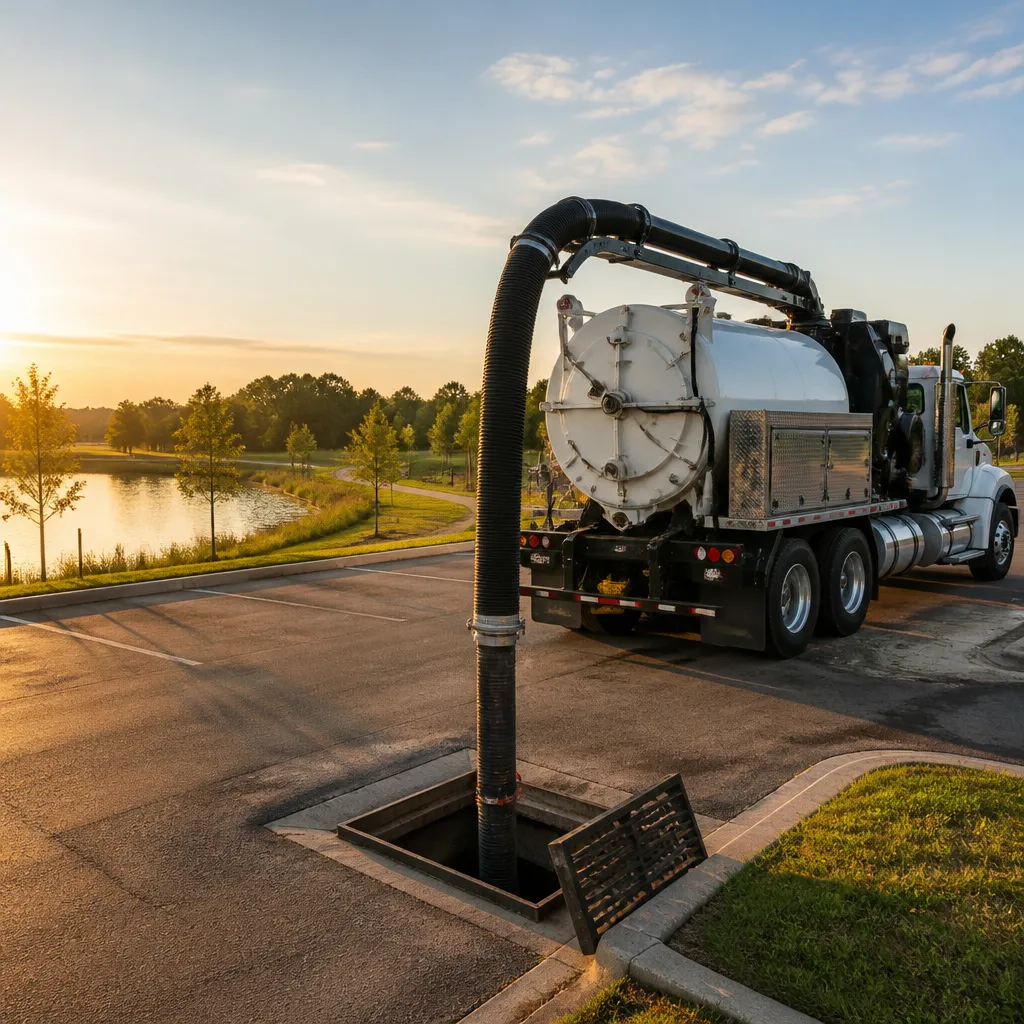
Consultation at this stage should produce a short list of decisions, each with an owner and a date. Each item should state what changed, why it changed, and which calculation or inspection supports it. That record becomes part of the documentation package when the municipality reviews the project.
Defining Scope and Deliverables
Specify the deliverables in writing: the O&M plan draft, a maintenance access exhibit, a cleanout schedule, and an inspection checklist. If the consultant is also responsible for construction observation or as-built review, say so in the agreement. Ambiguous scope is the most common reason stormwater deliverables arrive after they are needed.
Review Checkpoints That Catch Errors
Three checkpoints catch most design errors: a review at concept layout, a review at permit submittal, and a review of construction drawings against the specified materials. At each one, check outlet elevations against the grading plan, confirm every control has a reachable access point, and verify that the maintenance notes match what the drawings show.
A frequent miss is a conflict between a drainage structure and a utility or tree that the plan shows but the field crew does not respect. Walk the route in the field, or check current utility records, before the plan is finalized.
Pro tip: Ask the consultant to sign the decision log, not only the review comments. A signed list shows who approved each change and keeps the file useful years after the project closes.
Comparing Common Design Approaches
Engineers usually choose among a few recognizable approaches for a given drainage problem. The table below compares three of them on the factors that matter most after construction, including who can maintain the system and how often it needs attention. The ratings reflect common field conditions rather than any one product line.
| Design Approach | Design Strength | Maintenance Risk |
|---|---|---|
| Piped conveyance to a detention basin | Predictable sizing and straightforward hydraulic calculations | Sediment builds in pipe inverts and the basin forebay, so it needs periodic vactor cleaning and inspection |
| Bioretention and rain gardens | Strong pollutant filtering and infiltration where soils allow | Needs plant establishment, mulch management, and vegetation control, and clogs if sediment reaches the surface uncontrolled |
| Underground chamber with hydrodynamic separator | Compact footprint for dense urban sites | Depends on access for cleaning and disposal, and cannot be fully assessed by eye without CCTV or confined-space procedures |
No single row is the right answer on its own. The best choice depends on the soils, the available footprint, and whether the owner has a maintenance contract with a crew that can reach the device.
Selecting the Right Mix for Site Conditions
On tight urban lots, a combination often works better than one system. A small bioretention area can take the first flush while an underground unit handles the rest. Each control then has a smaller job and a clearer maintenance task. The tradeoff is more devices to inspect, so the O&M plan has to list every one of them.
Where Each Approach Fails in the Field
Detention basins fail when the outlet structure clogs with debris and nobody checks it after storms. Bioretention fails when the surface ponds for days because the soil mix or underdrain was not built to specification. Underground separators fail when the sump was sized for the design flow but never cleaned, leaving captured material to resuspend in later storms.
Handing the Design Off to Construction and Inspection
The design phase ends on paper, but many stormwater systems are compromised during construction. Soil compaction, premature paving, and sediment left in new inlets all reduce performance before the first storm. A design that does not specify construction sequencing and protection measures will be built according to the contractor’s best guess.
Specifications That Protect Long-Term Function
Specify the materials, compaction targets, and installation order for each control. For bioretention, the soil media mix, underdrain placement, and planting timing should all be explicit. For underground systems, bedding, backfill, and inlet protection requirements belong on the same sheet as the structure details.
Specifications should also name the sequence that protects the system during site work. Keep sediment out of infiltration areas until the contributing drainage area is stabilized, and require inlet protection until paving is complete. These instructions are inexpensive to write and very expensive to skip.
Record Drawings and As-Built Verification
Record drawings are the documents owners rely on for the life of the system, so they must reflect what was built, not what was designed. Require field verification of outlet elevations, pipe slopes, and access locations. CCTV inspection of installed pipes is a practical way to confirm that the pipe network matches the record set before the site is turned over.
A common mistake is accepting an as-built package that is only a marked-up design drawing. Ask for surveyed elevations at key structures and a list of field changes, each with a reason. That list is what keeps the O&M plan accurate after the original designer has moved on.
Reducing Violation Risk After Design Approval
Approval does not end the compliance obligation. Once a site is occupied, regulators expect the owner to maintain controls as designed and to document that maintenance. Violation notices often follow missed inspections, blocked outlets, or sediment leaving a site that was never properly stabilized.
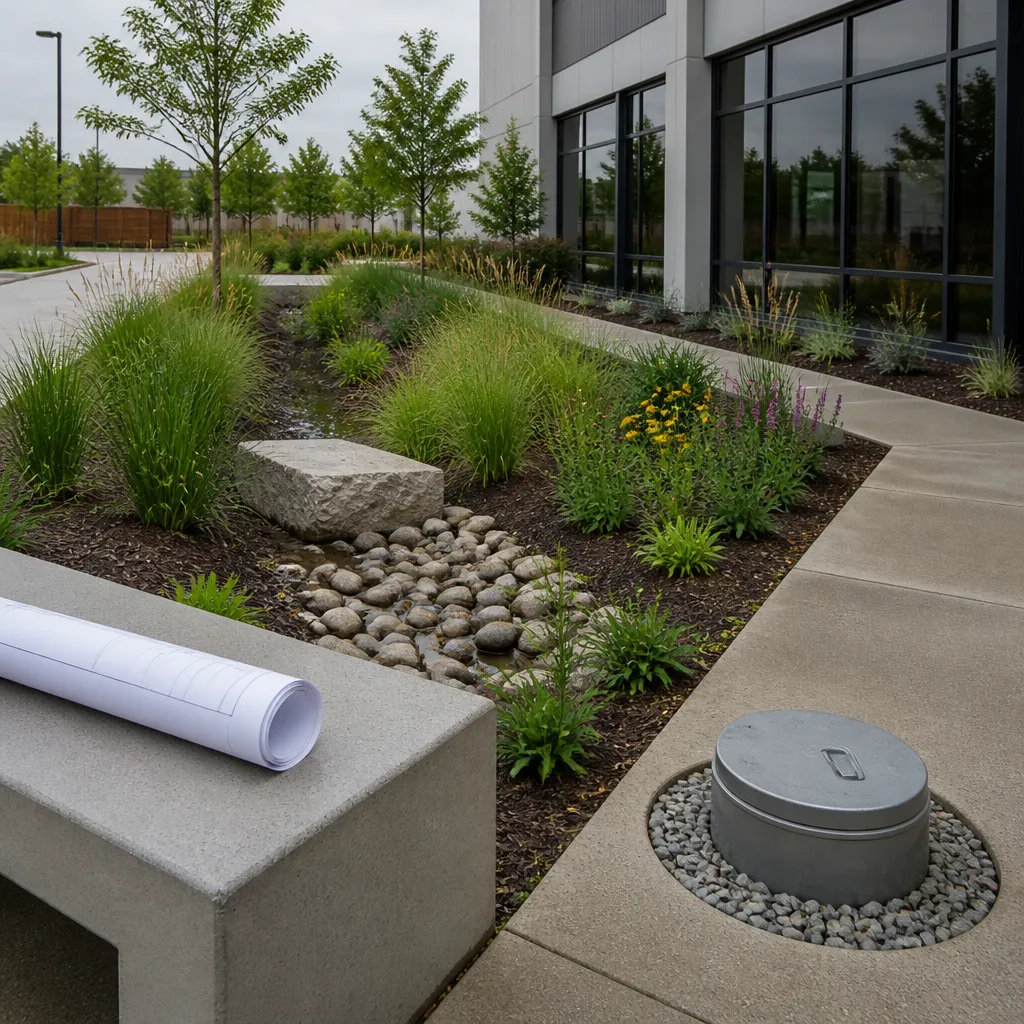
Engineers can reduce that exposure by designing with enforcement in mind. Every control should have a documented inspection record, a clear owner, and a reachable location. When a notice does arrive, the design assumptions and the maintenance history are the fastest way to show the system was built and operated as intended.
Documentation That Holds Up Under Review
Keep inspection logs, cleaning receipts, disposal records, and photos tied to specific structure IDs. Generic statements like “maintenance performed” rarely satisfy a reviewer. Records that show what was removed, from which device, and on what date are the ones that close files quickly.
Vegetation and Sediment Controls After Turnover
Vegetation management is often the first maintenance item to slip after turnover. Overgrown bioretention plantings, woody growth in swales, and vegetation blocking an outlet can all reduce capacity. Assign a seasonal vegetation check to the O&M plan and tie it to a specific crew or contract.
Porous pavement needs the same discipline. Vacuum sweeping at a set frequency keeps the surface pores open, and a clogged surface can look fine from a distance while infiltrating very little. Record sweeping dates and surface condition, because that record separates routine maintenance from neglect.
Frequently Asked Questions
When should engineers bring in stormwater consulting during design?
Bring consultants in at concept layout, before grading and outlet locations are fixed. Plan a second review at permit submittal and a third when construction drawings are checked against the specified materials.
Does stormwater consulting add significant cost to a project?
It adds review hours during design, but those hours usually cost far less than redesigns, change orders, or retrofits after paving. The savings are largest when access and cleanout problems are caught before the site plan is approved.
What should an O&M plan include at the design stage?
For each control, the plan should list the inspection frequency, the cleaning method, the equipment needed to reach the device, the responsible party, and the design assumptions behind its sizing. A plan without these fields is hard to enforce and hard for owners to follow.
Which design approach is easiest to maintain?
Surface and vegetated controls with visible inlets and simple access are generally easier to maintain than buried units. Buried systems can still be the right choice on dense sites, but only when the owner has a reliable cleaning contract and the access points are designed in from the start.
Can a consultant help if a site receives a stormwater violation after construction?
Yes. Storm Water Compliance provides violation response and compliance assistance, and the design documentation, inspection records, and as-built verification are usually the most useful evidence in those cases. You can learn more at swcim.com.
Which design-phase decision has caused the most maintenance trouble on your projects, and how did your team catch it before construction?
References
- University extension guide explaining what stormwater management is and why it matters
- EPA stormwater best management practice design guide, Volume 1
- EPA overview of the Storm Water Management Model for low impact development evaluation
- New York stormwater management design manual with pre and post development comparisons