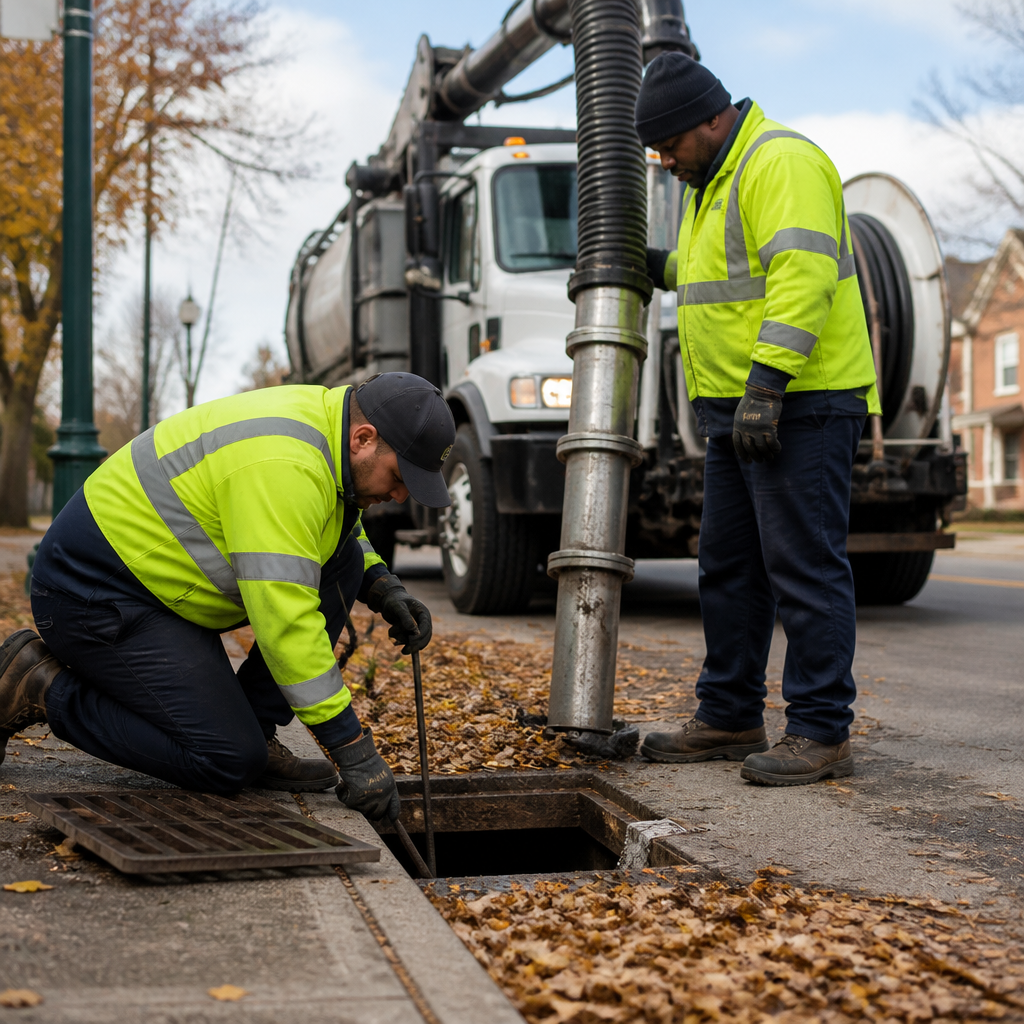


When a regulator opens a stormwater file, the first question is rarely whether the system was designed well. It is whether the owner can prove the system has been operated and maintained as written. For engineers, stormwater O&M documentation is often the thin line between a closed audit and a violation notice that lands on the client’s desk and on the engineer’s stamped drawings. This article explains how engineers use that documentation to protect clients during regulatory audits, based on the records we build, maintain, and defend in the field.
Table of Contents
- Quick Takeaways
- What an O&M Plan Actually Proves
- How Regulatory Audits Actually Unfold
- Building Records That Hold Up Under Review
- Pre-Audit Reconciliation
- Defending Maintenance Gaps Without Overstating Them
- Responding to Violations and Enforcement Notices
- Common Mistakes That Sink Audit Defense
- Frequently Asked Questions
- References
Quick Takeaways
| Key Insight | Explanation |
|---|---|
| Treat the O&M plan as a schedule you can prove | Auditors compare each frequency in the plan against dated field records. Any gap between the two becomes the finding. |
| Log every inspection with the same fields every time | Date, time, inspector, asset ID, condition, and action taken. Missing fields cause more disputes than missing work does. |
| Attach photos and CCTV files to the asset record, not a folder | A photo that cannot be matched to a structure ID proves very little during a review. |
| Write maintenance triggers as measurable thresholds | Sediment depth, drawdown time, or visible clogging gives the crew and the auditor the same answer. “As needed” gives neither one anything to test. |
| Reconcile the plan against as-built drawings before anyone asks | Structures added, moved, or resized after construction often exist in the field but not in the plan. |
| Name one custodian for the records file | Auditors ask who did the work and who signed off. Consistent answers build credibility before the review even starts. |
What an O&M Plan Actually Proves
In most audit files I have reviewed, the O&M plan is the first document requested and the last one anyone reads closely. That is backwards. The plan describes what the owner committed to do, how often, and who is responsible. The records are what prove it happened.

Engineers feel this most because their designs often form the basis of the plan. If the design assumes a rain garden gets quarterly checks and the owner only schedules annual visits, the engineer’s name sits on top of a gap the engineer did not create. Protecting the client starts with making sure the plan and the design describe the same maintenance reality.
The gap between a plan and a record
A plan that says catch basins are inspected twice a year and cleaned when sediment reaches a set depth is a promise. If the file holds one inspection log from eighteen months ago, the auditor does not see a maintenance program. The auditor sees a program that exists only on paper.
Public guidance on stormwater maintenance makes the same point from the other direction. Deferred work tends to become more expensive, and sediment that is not removed can be re-mobilized by later storms. The records show whether the owner caught the problem early or waited until it became a repair.
Why the plan itself needs to be auditable
Auditable means every maintenance trigger in the plan has a measurable threshold and a place in the records where someone checked it. Vague language gives the auditor nothing to test, and it gives the owner nothing to defend. When we draft or revise an O&M plan, we rewrite each trigger until a field crew could answer it with a yes or no.
Pro tip: Before finalizing any O&M plan, write each frequency and trigger as a sentence a field crew could check on a phone. If the crew cannot check it, neither can an auditor, and the owner ends up defending a number nobody measured.
How Regulatory Audits Actually Unfold
Audits rarely begin with a surprise look at a pipe. They usually begin with a document request covering the permit or permit equivalent, the O&M plan, inspection logs, maintenance invoices, and sometimes photographs. The EPA’s 2005 protocol for environmental compliance audits under the stormwater program is a useful reference for how these reviews are structured, although local agencies often add requirements of their own.
What auditors request first
Expect requests for the records covering the review period, not the records that look best. Auditors compare dates in the logs against the frequencies in the plan, then compare invoices against the work described in those logs. When the three documents tell the same story, the review moves quickly. When they do not, the review expands.
A common mistake is assembling a curated binder for the auditor. Curated binders invite questions about what was left out. A complete, indexed file with a short cover memo explaining the review period usually gets a cleaner result.
Where engineers get pulled into the review
Engineers are called when the question shifts from “was the work done” to “was the system built to function as described.” Findings often hinge on whether a device was located, sized, or connected as drawn. A stamped drawing alongside an uncorrected as-built can turn a routine maintenance finding into a design question, and that question belongs to the engineer.
This is why we recommend that engineers review the documentation package before the client submits it. The engineer knows where the design intent is fragile, and a short review can catch those points before an auditor does.
Building Records That Hold Up Under Review
Good records share three traits. They are complete, they are consistent across visits, and they can be traced to a specific structure. Most failed audit files are missing at least one of these, and the missing piece is usually the one the auditor checks first.
Inspection logs with the fields auditors check
Every log entry should record the date, time, inspector name, asset identifier, observed condition, measurement where applicable, and the action taken. If a crew found sediment at 60 percent of sump depth and cleaned the structure, the log should say so. If the crew found nothing to clean, the log should still say that, with the reading.
Consistency matters as much as detail. A log that uses three different naming conventions for the same catch basin forces the reviewer to reconstruct history, and reconstructed history is hard to defend.
Photos and CCTV tied to asset IDs
Photos and CCTV files are strong evidence only when they are linked to the structure they document. Name each file with the asset identifier and date, and store it inside that asset’s record. When we deliver CCTV pipe inspection results, the value to the client lies in matching each video segment to a numbered structure and a dated finding.
Comparing documentation approaches
Engineers and owners usually choose among three approaches. Each has a predictable failure point, and the table below shows where each tends to break down during a review.
| Documentation Approach | Where It Typically Fails | Best Use Case |
|---|---|---|
| Paper field forms scanned after the visit | Handwriting is hard to read, dates are sometimes filled in later, and photos are disconnected from the form. | Small sites with few structures and a single responsible crew. |
| Spreadsheet maintenance logs | Version drift, inconsistent naming, and no native link to photos or video files. | Owners who need a simple schedule view and have a single records custodian. |
| Asset-tagged digital work orders with photos and CCTV files | Setup takes time, and crews need training to use the fields consistently. | Municipal systems and large commercial portfolios where audits are likely and the asset count is high. |
Pre-Audit Reconciliation
Before a client submits anything, the documentation package should be reconciled against three sources: the O&M plan, the field records, and the as-built drawings. Each mismatch is either a records problem, a plan problem, or a construction problem, and each needs a different response. Finding these mismatches internally is far better than letting an auditor find them first.

Reconciling the O&M plan against as-built drawings
Start with an asset list pulled from the as-built drawings and compare it to the structures named in the O&M plan. Structures that appear on the drawings but not in the plan are a gap. Structures that appear in the plan but not on the drawings may be a labeling problem, or they may be a sign that the drawings were never updated after construction.
When we find a structure that exists in the field but not in the plan, we document it as a plan revision rather than quietly adding it to the next visit. The revision date becomes part of the defense, because it shows the owner caught and corrected the gap.
Running a mock records review
Pick a random sample of structures and ask a team member who did not do the work to find the inspection history, the most recent cleaning, and any photos. If that takes more than a few minutes per structure, the records system needs work. This exercise usually reveals naming problems and missing signatures that would otherwise surface during the audit.
Defending Maintenance Gaps Without Overstating Them
Sometimes the records show a real gap. A visit was missed, a structure was skipped during a storm event, or a cleaning was deferred because of access issues. How the owner handles that gap in the file often matters more than the gap itself.
A documented gap with a dated corrective action usually makes a stronger file than a clean-looking log that nobody can explain.
Documenting why work was deferred
A deferral note should state what was planned, what prevented the work, who made the decision, and when the work was rescheduled. Vague notes such as “weather” or “access” invite follow-up questions. Specific notes, such as a blocked parking area and the date the owner obtained access, show the program was managed rather than ignored.
Avoid explaining gaps with conclusions the records cannot support. If the file says a structure was not cleaned because it was functioning, the file needs a reading or an observation to back that statement up.
Showing corrective action with dates
The corrective action record should link back to the original finding. Include the work order number, the completion date, the crew, and a post-work photo or measurement. This closes the loop in a way auditors can verify on their own, without relying on the owner’s word.
Responding to Violations and Enforcement Notices
When a violation notice arrives, the documentation file changes purpose. It stops being a maintenance record and becomes the factual basis for the response. Engineers and consultants who understand that shift can help the client respond with accurate, organized evidence instead of rushed explanations.
Keeping the response file separate from the operating file
Create a separate response file that contains copies of the notice, the records relied on, and a chronology of actions taken. Keep the original operating records intact. Editing historical logs after a notice arrives is one of the fastest ways to turn a manageable violation into a credibility problem.
The chronology should be factual and short. List each date, the action, and the document that proves it. Analysis and argument belong in the response letter, where they can be reviewed separately from the evidence.
Assembling evidence the regulator can verify
Organize evidence by the issue raised in the notice, not by the order the files were created. Each exhibit should have a label, a date, and a one-line description. Regulators can check exhibits quickly when the structure follows their notice. Disorganized packages make the reviewer work harder, and that rarely helps the client.
Pro tip: Export and save a dated copy of the relevant asset records as soon as a notice arrives. Records that were exported before any questions were raised carry much more weight than records that appear to have been assembled after the fact.
Common Mistakes That Sink Audit Defense
Most audit problems we see come from a short list of avoidable habits. They are not complicated, which is why they are worth correcting before an auditor arrives.

A 2013 study comparing maintenance costs and labor demands for low impact and conventional stormwater systems reported that most cities surveyed performed routine maintenance once per year or less. If your plan calls for quarterly work and your records show annual visits, you are in a common position, but auditors know the difference between a common problem and a documented one. The defense is to show the gap was recognized and addressed.
Relying on contractor invoices alone
An invoice shows that someone was paid. It does not show what was cleaned, how much sediment was removed, or whether the structure was returned to function. Pair every invoice with a field log entry and, where practical, a before and after photo. Without those, the invoice proves a transaction, not a maintenance outcome.
Letting the plan drift from the site
Plans become outdated when a site changes, such as a new parking lot, a replaced pipe, or a new water quality device added during a retrofit. Build a simple trigger into your process so that any construction change prompts a plan review. Owners who update the plan on time rarely face the question of whether the plan was ever real.
Frequently Asked Questions
What is stormwater O&M documentation?
Stormwater O&M documentation is the set of records showing that a stormwater system was operated and maintained as its O&M plan requires. It usually includes the plan itself, inspection logs, maintenance work orders, photos or CCTV files, invoices, and corrective action records. Auditors use these documents to test whether the owner’s stated program matches what happened in the field.
Why do engineers care about O&M records during an audit?
Engineers care because findings often connect back to the design, the as-built condition, or the maintenance assumptions in the plan they helped prepare. Clear records help show whether a problem came from operations, from a construction change, or from a design issue. That distinction protects both the client and the engineer’s professional position.
How often should inspection logs be reviewed before an audit?
Review logs against the O&M plan at least once per reporting cycle, and always before submitting records to a regulator. The goal is to catch missing entries, mismatched frequencies, and naming inconsistencies while there is still time to explain them accurately. A mock review on a sample of structures is often enough to reveal systemic problems.
Can a documented maintenance gap help the client in an audit?
Yes, if the gap is documented honestly and followed by a dated corrective action. A file that shows a missed visit, the reason for it, and the work completed afterward is generally more credible than one that hides the gap. The record should never claim more than the field evidence supports.
What should a violation response file include?
A violation response file should include a copy of the notice, the operating records relied on, a factual chronology of actions taken, and labeled exhibits organized by the issues in the notice. Keep the original operating records unchanged. Analysis and argument belong in the written response, supported by the evidence in the file.
What is the one documentation gap you have seen cause the most trouble in a stormwater review, and how did your team resolve it? We would like to hear how other owners and engineers handle these situations in practice.
References
- EPA protocol for conducting environmental compliance audits under the stormwater program
- EPA guidance on stormwater maintenance practices and planning
- Three steps to optimizing operations and maintenance of stormwater assets
- Study comparing maintenance costs and labor demands for stormwater management systems