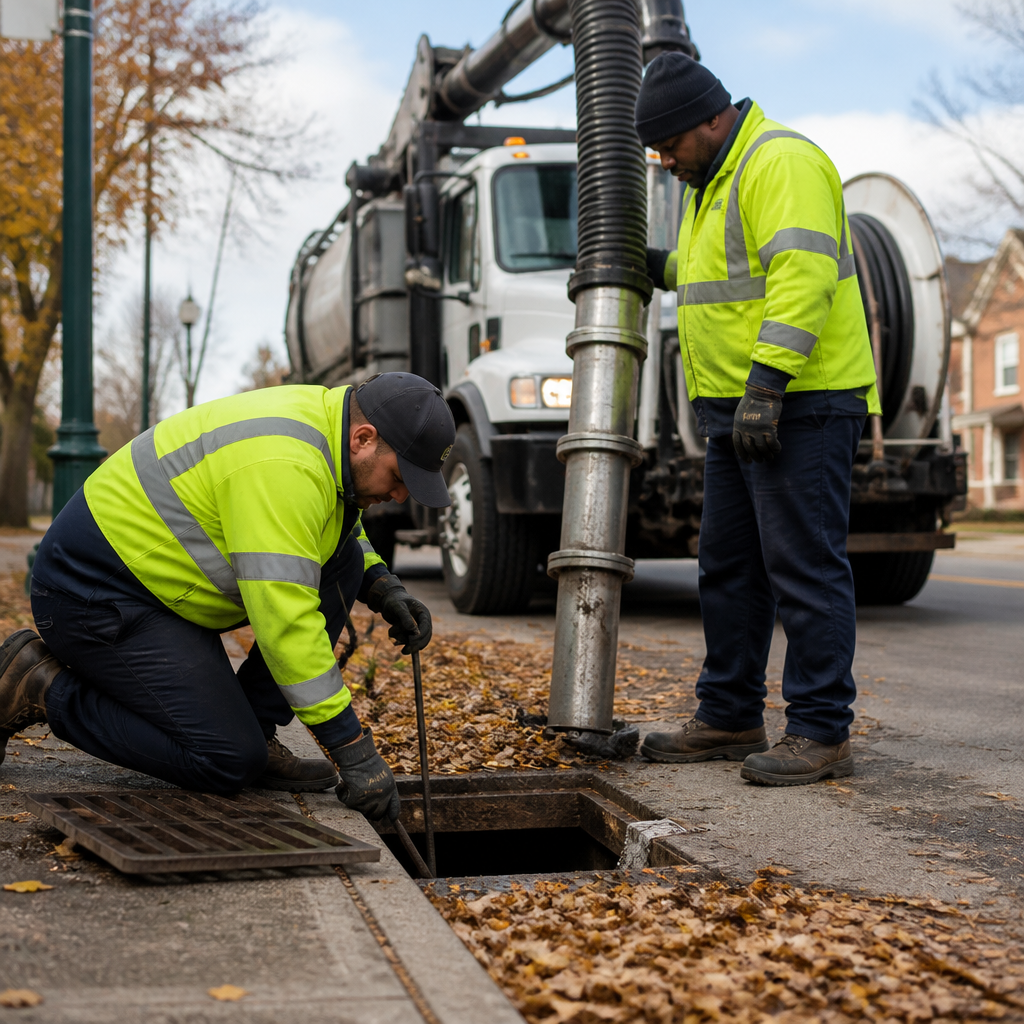


A catch basin can be spotless on Tuesday and still generate a violation on Friday if nobody can prove it was cleaned. That gap between the physical system and the records that describe it is where many stormwater programs lose ground. Stormwater documentation, meaning the inspection logs, maintenance tickets, O&M plan tables, and photos that show what was done and when, is now the first thing a reviewer asks for. Since 2006, we have seen well-built systems fail reviews because the paper trail was thin. This article explains which records matter, how to structure them, and how to keep them useful for as long as the system stays in service.
Table of Contents
- Quick Takeaways
- Why Regulators Start with the Paper
- What an O&M Plan Must Contain
- Inspection Records That Hold Up
- Linking Field Data to Capital Planning
- Maintenance Logs and Proof of Work
- Comparing Documentation Methods
- Violation Response Starts with Your Files
- Retention and Handoffs When Staff Change
- Frequently Asked Questions
- References
Quick Takeaways
| Key Insight | Explanation |
|---|---|
| Records are the proof of work | If a cleaning or repair is not logged with a date, location, and crew, a reviewer will treat it as not done. |
| Your O&M plan is a task list with owners | Every facility needs a named responsible party, a stated frequency, and a plain description of the action. |
| Log condition, not just the visit | Record sediment depth, structural defects, and repeatable photos so the next inspection has a baseline to compare against. |
| Use one asset ID everywhere | Catch basins, hydrodynamic separators, and porous pavement sections need the same identifier on inspection forms, invoices, and maps. |
| Keep disposal records with the cleaning ticket | Sediment and debris manifests show where material went, and agencies often ask about it during a review. |
| Build records for staff turnover | Files kept in one person’s inbox disappear when that person leaves, and the program goes with them. |
Why Regulators Start with the Paper
Most stormwater reviews start at a desk, not at a drainage structure. An inspector or permit reviewer opens a folder, checks whether the required work appears in the log, and only then decides whether a site visit is needed. If the folder is thin, the default assumption is that the work did not happen.

This is why we tell property owners that the physical system and the paper trail are two halves of one asset. A hydrodynamic separator cleaned in May with no record of it is, for compliance purposes, a separator that was not cleaned. The sediment is gone either way, but only one of those facts helps you in a review.
The expectation is also written into many programs. Regulated small municipal separate storm sewer systems must address six minimum control measures under their permits, and the operations and maintenance piece sits under the measure that covers municipal housekeeping. That measure requires a plan that names the facilities, the actions, and the people responsible for them.
A maintenance record that cannot be found during a review is treated the same as maintenance that never happened.
A common mistake is treating records as something you assemble after a problem appears. By then, the dates are fuzzy, the crew has moved on, and the photos are on a phone nobody can access. Documentation built during the work is cheap, while documentation rebuilt after a notice is slow and easy to dispute.
What an O&M Plan Must Contain
An O&M plan is often treated as a binder that sits on a shelf until the permit renewal comes around. In practice it works best as a task list with owners, frequencies, and locations. The municipal guidance we reviewed breaks the work into steps that translate well to private sites as well.
Inventorying Facilities and Activities
Step one is an inventory. List every facility and activity that touches stormwater, from catch basins and outfalls to sweeping routes, detention ponds, and material storage areas. Activities include routine maintenance, long-term inspection procedures, and practices that affect runoff. If an asset is missing from the inventory, it will be missing from the schedule too.
The second step is a table of actions for each item in the inventory. Each row should name the person responsible, how often the action happens, a plain description of the work, and any relevant notes. Roads, parking lots, storage yards, and waste transfer areas also need pollutant control measures and a stated method for disposing of what gets removed.
Assigning Owners and Frequencies
Owners and frequencies are where plans usually fail. “Facilities staff” is not an owner, and “as needed” is not a frequency. A row that reads “Public works crew, catch basin cleaning, twice per year” gives an auditor something concrete to check.
Pro tip: Write each frequency as a number of times per year plus any trigger, such as “after any storm event that exceeds the threshold in the plan.” Triggered actions are the ones most often skipped, so they should be the easiest to find.
Submission is another point people miss. Under one state program described in the guidance we reviewed, the municipality attaches a copy of its O&M plan to its first annual report under the MS4 permit. A plan that exists only in a consultant’s shared drive does not satisfy that requirement by itself.
Inspection Records That Hold Up
An inspection record exists to answer three questions: what was checked, what condition it was in, and what happened next. If your form cannot answer all three, it is a checklist, not a record. We regularly see inspection sheets that mark “OK” without a date or an inspector’s name.
Required Fields for Every Inspection
At minimum, each entry should carry the asset ID, a location tied to a map or GPS point, the date and time, the inspector’s name, and the findings. Add a clear status such as pass, fail, or action required. Missing any of these fields creates an argument later.
For CCTV pipe inspections, the record should include the run identifier, the upstream and downstream structures, the footage reference, and the defect codes used. A note that says “crack” with no location and no severity tells a reviewer very little. It tells a contractor even less.
Photos, Measurements, and Condition Ratings
Photos are most useful when they are repeatable. Take the same frame from the same position on every visit, with the structure number visible in the shot. Sediment depth in a sump, ponding depth in a bioretention cell, and the share of a porous pavement surface that is clogged are all measurements that let you compare one visit to the next.
Condition ratings matter because they show trend. A catch basin at 40 percent sediment storage in March and 75 percent in September tells a maintenance team more than a note that says “dirty.” Pick a rating scale, define each level in writing, and keep the scale unchanged for the life of the program.
Pro tip: Capture a baseline photo set for every asset at the first inspection. When a violation notice arrives, that baseline shows what the system looked like before the problem started.
Linking Field Data to Capital Planning
Documentation has value beyond compliance. Inspection findings are the best evidence for deciding which structures need repair, rebuilding, or replacement, and the same records show whether a budget request is justified. Used well, the paper trail becomes a planning tool.
Field data that stays in a notebook cannot inform a capital plan. The data has to reach the people who schedule work and the people who approve budgets, in a format they can sort and filter. Without that link, a structure gets cleaned on schedule every year while a damaged frame waits for a failure.
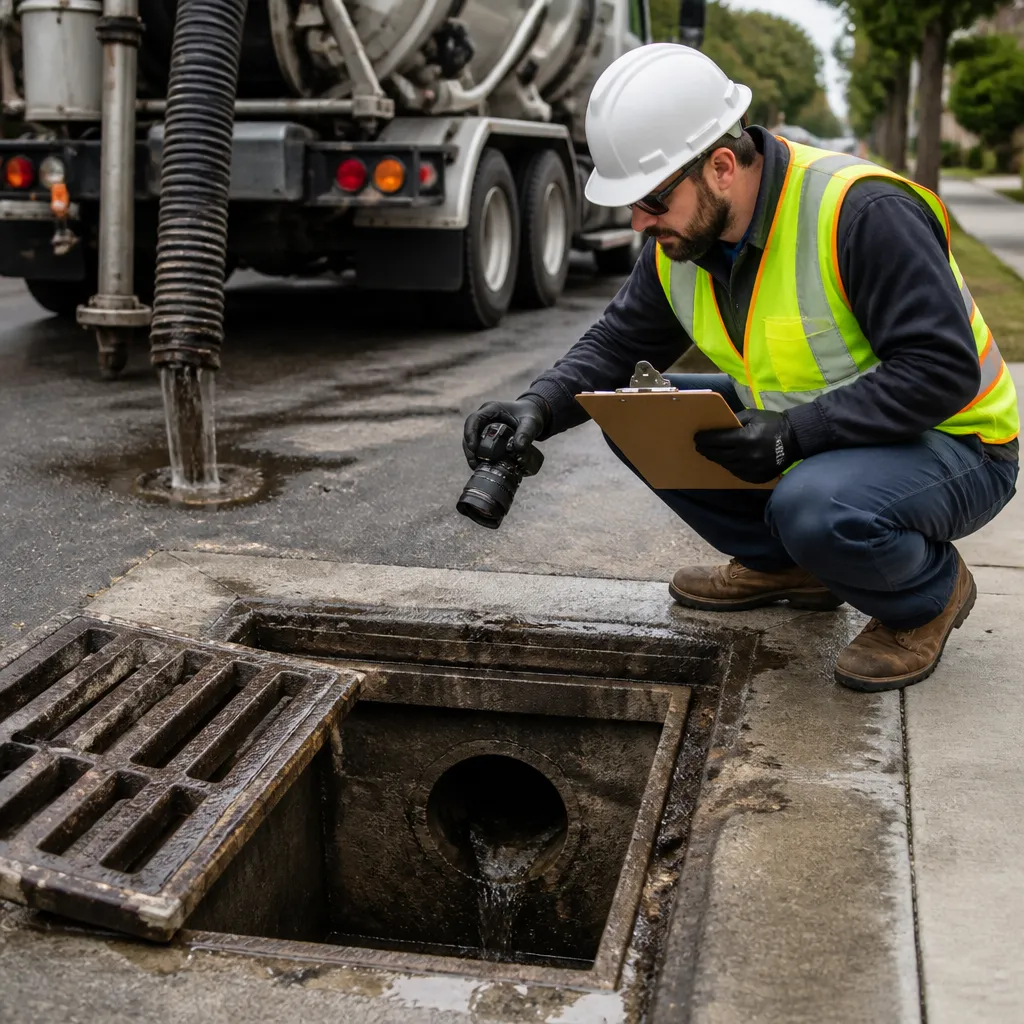
We see this pattern often. A catch basin is cleaned on schedule, but its cracked frame gets noted on three consecutive visits with no work order attached. The inspection recorded the problem, but nothing turned the record into a repair.
Turning Findings into Work Orders
Every finding that requires action should generate a work order that uses the same asset ID as the inspection. Set a rule that a “repair needed” status with no linked work order is an open item that someone must close or justify in writing. That single rule catches more missed repairs than any scheduled audit we have run.
Stormwater Structure Repair and Rebuilds work follows the same logic. A rebuild request backed by three inspection entries and a documented failure history is far easier to approve than one based on a verbal report from a field crew.
Where Documentation Feeds Capital Budgets
Several years of consistent records let you show patterns. You can see which pipe segments need repeated cleaning, which water quality devices fill fastest, and where sediment loads outpace the maintenance schedule. That pattern is what turns a routine maintenance request into a justified capital line.
Maintenance Logs and Proof of Work
A maintenance log proves the work happened, where it happened, and how much was removed. The minimum is a dated ticket that names the crew, the asset, the method, and the quantity. Vactor cleaning of catch basins, pipes, and water quality devices produces this data naturally, so the real question is whether it gets saved and filed.
Cleaning Tickets and Equipment Logs
A usable cleaning ticket records the start and end time, the asset ID, whether the structure was jetted, vacuumed, or both, and whether the outlet was checked afterward. Note any obstruction you could not clear. A ticket that says “cleaned” with no notes about what was left behind forces the next crew to guess.
Equipment logs matter for the same reason. For vacuum sweeping, record the route, the number of passes, and the date. For hydrodynamic separators, record the sump depth before and after cleaning so the reduction in sediment is measurable rather than assumed.
Disposal Manifests and Sediment Weights
Where material goes is part of the record. Keep the disposal receipt or manifest, the approximate volume or weight, and the name of the receiving facility. Reviewers often ask where sediment from a separator ended up, and a missing answer raises doubts about the rest of the job.
Subsurface Stormwater System Cleaning produces large volumes in short windows, so the manifest and the cleaning ticket should share a job number. That one habit makes reconciling invoices and permit reports much faster, and it prevents the same load from being counted twice.
Comparing Documentation Methods
Most owners and municipalities use one of three approaches to stormwater records. Each works for a while, but each fails in a different place as the program grows.
| Approach | Strengths | Where It Breaks Down |
|---|---|---|
| Paper forms and binders | Inexpensive to start, easy for field crews to use on site | Hard to search, photos get separated from forms, and records disappear when staff leave |
| Shared spreadsheets and folders | Searchable, flexible, and low cost | Version conflicts, no enforced fields, and a weak link between inspection findings and work orders |
| Integrated asset and inspection platform | Required fields, photos tied to asset IDs, and work orders and reports drawn from one record | Needs setup, training, and a named data owner to keep the asset list current |
In our experience, the third option pays off only when someone owns the asset inventory. A system holding wrong asset IDs produces clean-looking reports that are still wrong. Choose the approach your crews will actually use every week, then enforce the fields that matter most.
Violation Response Starts with Your Files
When a violation notice arrives, the first two weeks usually decide how the case will be handled. Agencies want to know what happened, what was done, and what will prevent a repeat. Stormwater Violation Response and Compliance Assistance starts with pulling the records that answer those three questions.
A common mistake is answering with a narrative before the evidence is assembled. A letter that says “we cleaned the basin last spring” with no ticket attached invites a demand for proof, and that demand is harder to satisfy after the fact.
Rebuilding a Missing Record
Sometimes the record is gone. Check invoices, crew timesheets, equipment logs, photos on phones, and disposal receipts. A date and crew name recovered from three independent sources carries far more weight than a single document created after the notice.
Do not create backdated records. Label any reconstructed document with the date it was prepared and the sources used. Reviewers forgive gaps far more readily than they forgive records that appear to have been written later.
What to Send an Agency
Send a focused package: the relevant inspection entries, the work tickets, dated photos, disposal records, and a short timeline. Leave out the folder of everything you own. A reviewer forced to dig through unrelated files will assume the important ones are hidden.
Pro tip: Each quarter, pick three assets at random and confirm that the inspection entry, the work ticket, and the disposal record all match. Gaps found in a quarterly check are cheap to fix. Gaps found in response to a notice are not.
Retention and Handoffs When Staff Change
Documentation outlives the people who created it. A facilities manager who kept every record in a personal inbox can take the program with them when they leave. The fix is an agreed storage location, a consistent naming convention, and a rule that records are filed on the day the work is done.
Setting a Retention Rule
Keep records at least as long as your permit or local ordinance requires, and longer if a dispute is possible. Confirm the specific retention period with the agency that oversees your program rather than assuming one. Write the rule into the O&M plan so it survives any change in personnel.
Handoff Checklist for New Staff
A handoff packet should include the current O&M plan, the asset inventory with IDs, open work orders, the inspection schedule, the location of the photo archive, and the contacts for cleaning and disposal vendors. Walk the new person through one asset from start to finish. That exercise exposes gaps faster than any document review.
Treat your records as a reflection of the system itself. If the file shows the same catch basin flagged every spring for three years, the problem is not the paperwork. Use the record to change the design, the cleaning schedule, or the inspection frequency.
Frequently Asked Questions
What counts as stormwater documentation?
Stormwater documentation includes any record that shows a control was inspected, maintained, repaired, or assessed. That covers dated inspection entries, work tickets, photos, measurements, disposal receipts, and the written O&M plan that defines the work.
How long should stormwater inspection records be kept?
Keep them at least as long as your permit or local ordinance requires, and longer if a dispute is possible. Retention rules differ by program, so confirm the specific period with the agency that oversees your system.
What should an O&M plan include?
At minimum, an O&M plan should include an inventory of facilities and activities, a table of actions with responsible parties and frequencies, pollutant control measures for roads and storage areas, and a stated method for disposing of removed material.
Do I need a separate record for every catch basin cleaning?
In practice, yes. Each cleaning should have a dated ticket tied to the asset ID that notes the method, the quantity removed, and any obstruction that could not be cleared.
What is the most common documentation mistake?
The most common mistake is creating records after the fact without dates or sources, or using different asset IDs on inspection forms, invoices, and maps. Both make it difficult to prove what actually happened.
Tell us in a sentence or two about the biggest gap you have found between your stormwater records and the work your crews actually completed.
References
- Guide to building a municipal operations and maintenance plan under MS4 minimum control measures
- Article on linking stormwater field inspection data to capital planning and permit documentation
- Municipal stormwater operation and maintenance program chapter covering activities and costs
- Citizen guide to writing municipal stormwater plans