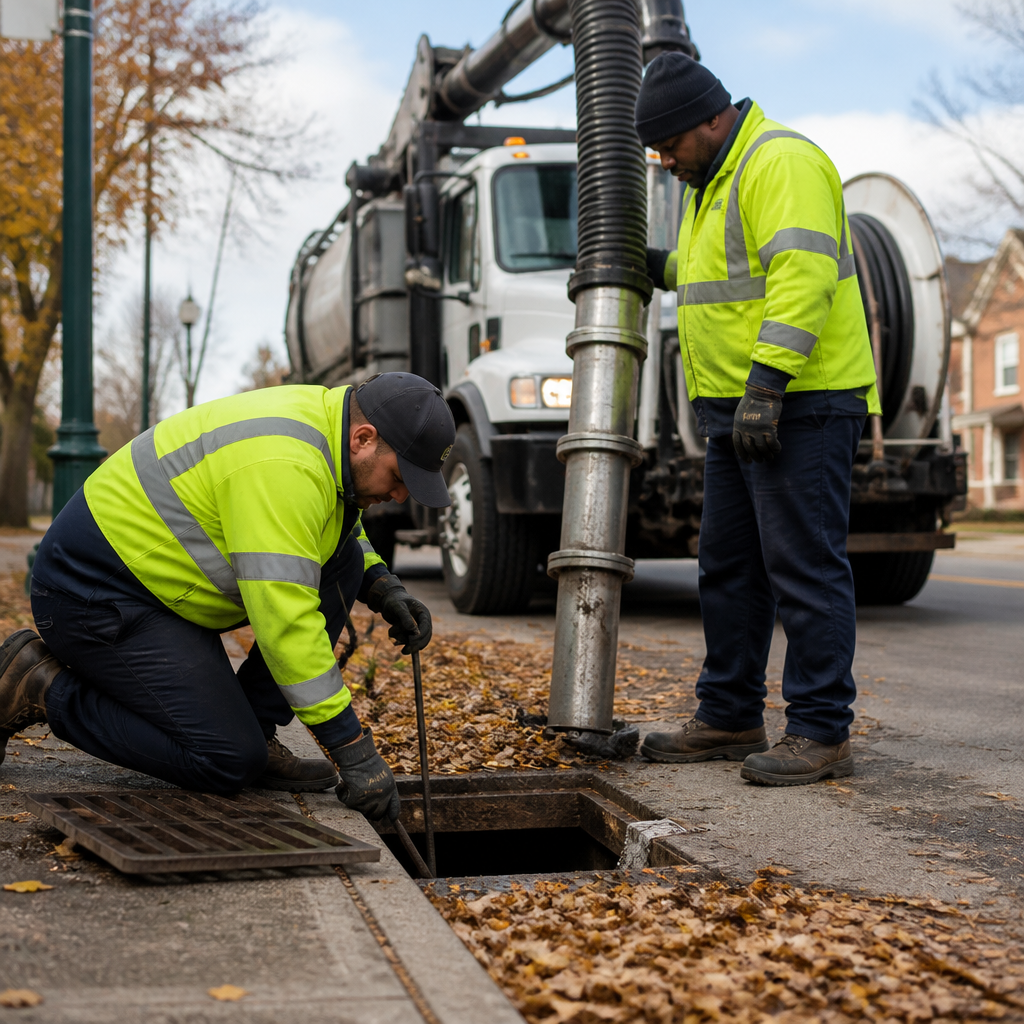

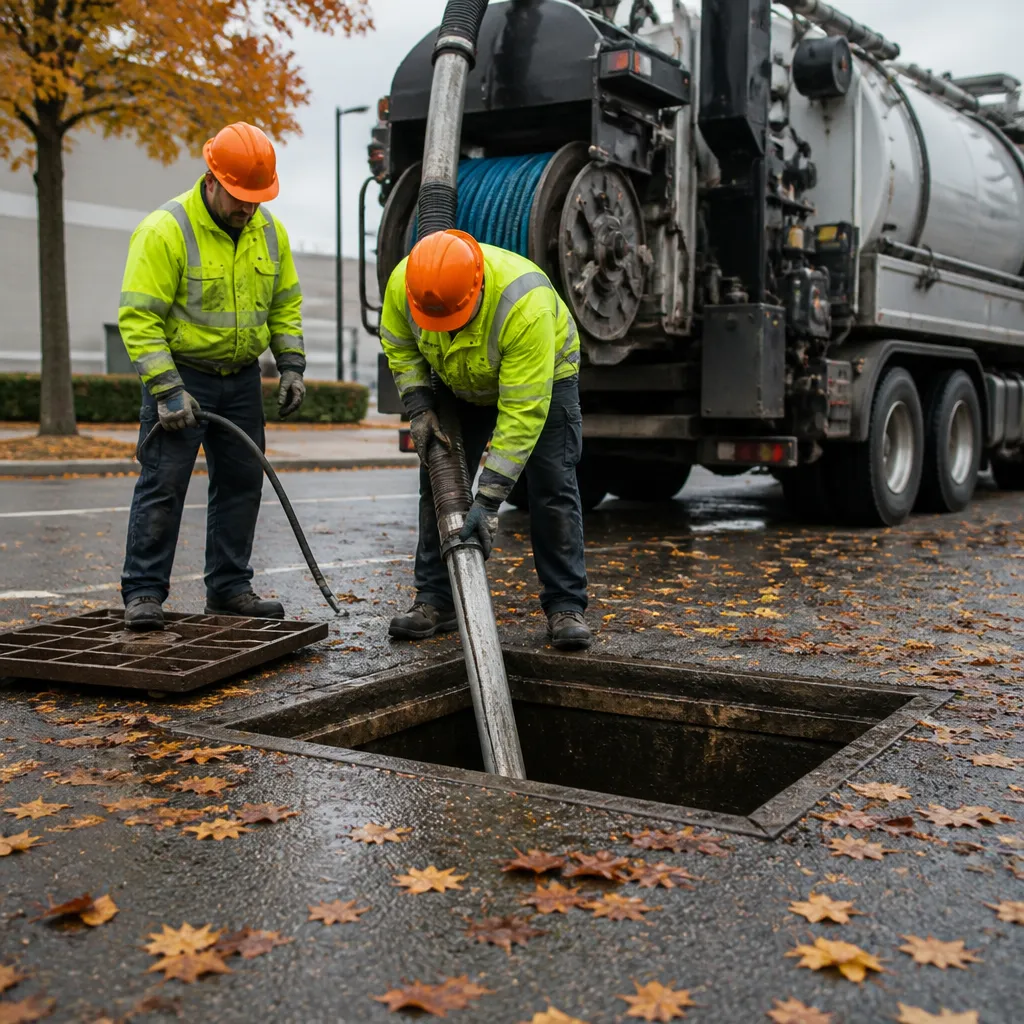
Most stormwater problems that cost property owners money start underground, where nobody looks until a catch basin backs up or a parking lot starts ponding after a storm. Subsurface stormwater systems, including chambers, perforated pipe networks, underground detention vaults, and infiltration galleries, are built to be out of sight. That is the point, and it is also the problem. Fall is the best window to pay attention to them, because leaves, summer sediment, and construction debris have had months to settle into the system before winter tests it. Subsurface stormwater system cleaning belongs on the fall calendar, not on the emergency list.
Table of Contents
- Quick Takeaways
- What Counts as a Subsurface Stormwater System
- Why Fall Is the Right Window for Cleaning
- Inspection Before Cleaning
- Cleaning Methods for Subsurface Systems
- Choosing a Cleaning Approach
- Stormwater Infiltration System Maintenance
- Porous Pavement and Bioretention Above the System
- Documentation and O&M Plans
- Common Mistakes in Fall Programs
- Frequently Asked Questions
- References
Quick Takeaways
| Key Insight | Explanation |
|---|---|
| Inspect before you clean | Cleaning without a baseline hides whether sediment, roots, or cracked joints are the real problem, and you cannot prove later that the work was needed. |
| Measure sediment depth in every structure | Record depth at each manhole, catch basin, and chamber so next year’s crew can tell whether the load is rising or holding steady. |
| Finish before the first hard freeze | Wet sediment that freezes in a pipe run is far harder to remove and often needs jetting or excavation. |
| Treat infiltration systems as a separate job | Chambers and galleries need pretreatment cleaning and drawdown checks, not just a pipe flush at the inlet. |
| Check the outlet after every cleaning | A system that is clean inside but blocked at its outlet still fails during the first large storm. |
| Keep the log with the O&M plan | Reviewers and inspectors ask for dated records, and work that was done but not documented is hard to defend. |
What Counts as a Subsurface Stormwater System
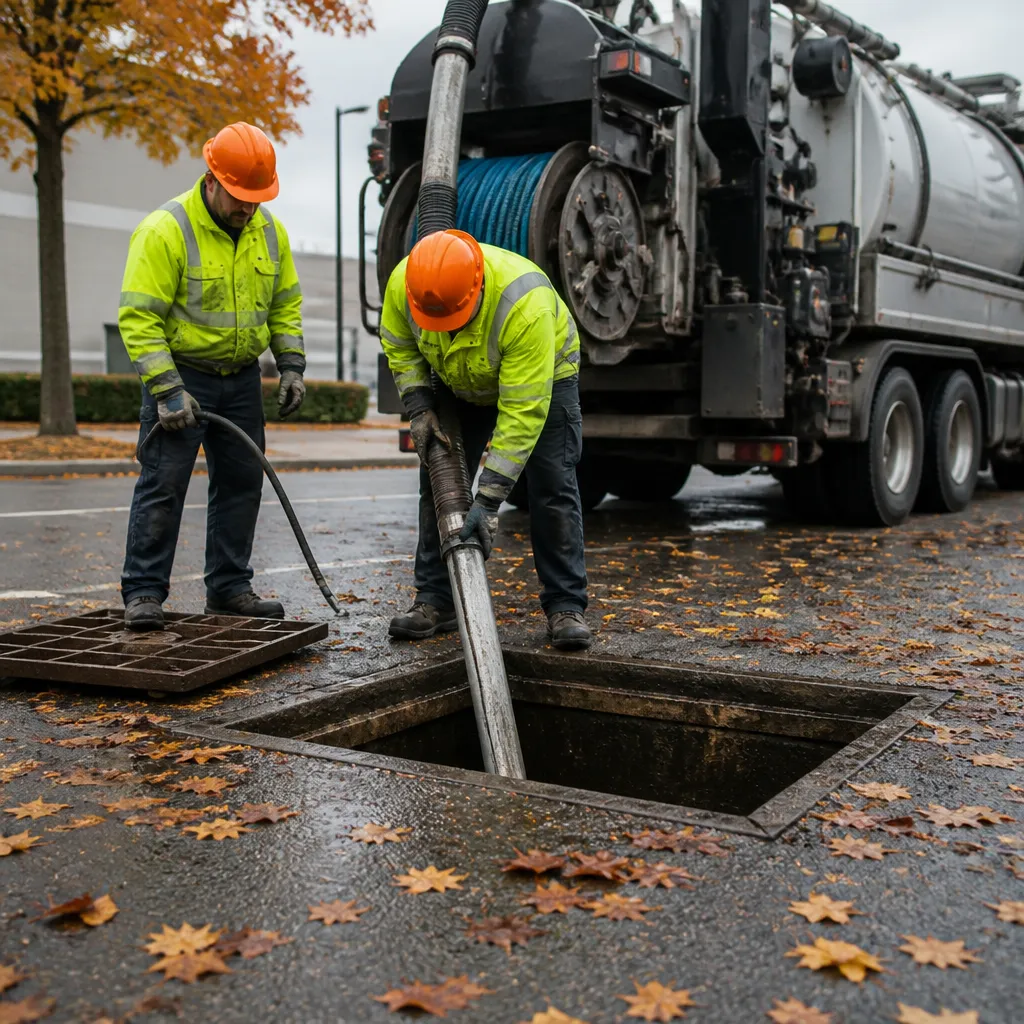
A subsurface stormwater system is any stormwater control that stores, conveys, treats, or infiltrates runoff below ground. In practice that covers perforated pipe networks, plastic or concrete infiltration chambers, underground detention vaults, hydrodynamic separators, and gravel trenches that let water soak into the soil. Most were installed because the parcel had no room for a surface pond, so the design was pushed underground to maximize usable space.
Common underground configurations
Each type fails in its own way. Pipe networks collect sediment at low points and at connections. Chambers and vaults trap fine material on their floors and around inlets. Gravel galleries lose capacity when fines fill the voids near the surface, which shows up as slow drawdown after storms rather than as a visible blockage. Knowing which type you are dealing with decides what the crew brings and what the inspector looks for.
Underground systems are also harder to assess than surface practices. Access is limited, and there is no open water surface to watch. In practice, the first visit to a site is often spent locating access points and confirming which structures connect to which, not cleaning anything.
Why hidden systems fail quietly
The usual failure sequence is not dramatic. Sediment builds up over several seasons, then a heavy storm pushes water back up through a structure, or ponding appears over an inlet that drained fine last year. By the time a surface symptom shows up, the system has usually been underperforming for a long time. EPA’s stormwater maintenance guidance is direct on the point: all stormwater management systems, whether gray or green, require maintenance to keep functioning as expected. Underground systems are no exception. They just hide the evidence better.
Why Fall Is the Right Window for Cleaning
Fall works because it falls between two loads. Summer brings construction dust, pollen, and sediment washed off exposed soil during storms. Leaf drop then sends a concentrated organic load into catch basins, inlets, and any structure near trees. If that material stays in the system, it moves into the lower pipes and chambers with the first heavy rains, and it is far harder to remove once it has packed down.
Leaf litter and organic loading
Leaves do more harm than most property managers expect. Once wet and compacted, leaf mats decompose slowly, generate odor and sludge, and clog the openings that let water into the system. Cleaning after leaf drop, but before the ground freezes, gives the crew a manageable target. A line that is mostly clear is a simple job. A line with a packed mat of wet leaves and grit along the invert is a different job, and the bill reflects it.
Pro tip: Schedule the fall cleaning for the week after the last major leaf drop, not before it. Cleaning too early means the structures refill during the rest of the leaf season, and you pay for the same work twice.
Getting ahead of winter conditions
Freeze and thaw cycles turn wet sediment into a dense plug, especially at low points and pipe bends. Work scheduled in late fall, before sustained freezing, benefits from better access, easier water handling, and a crew that is not racing the weather. Work that slips past the first hard freeze often gets pushed into spring, when snowmelt is already moving through the system and the sediment has hardened.
Fall is also the time to find out what the winter will do to your system. A structure that drains slowly in October will drain worse in February, and a crew on site in November can often correct a problem that would otherwise become a spring emergency.
Inspection Before Cleaning
Cleaning without inspection is guesswork. A crew that vacuums a pipe without knowing its condition may remove the sediment and miss the root intrusion, cracked joint, or offset that is actually causing the backup. Inspection first tells you what kind of job you are bidding, and it is the only honest way to scope the work.
What CCTV pipe inspection reveals
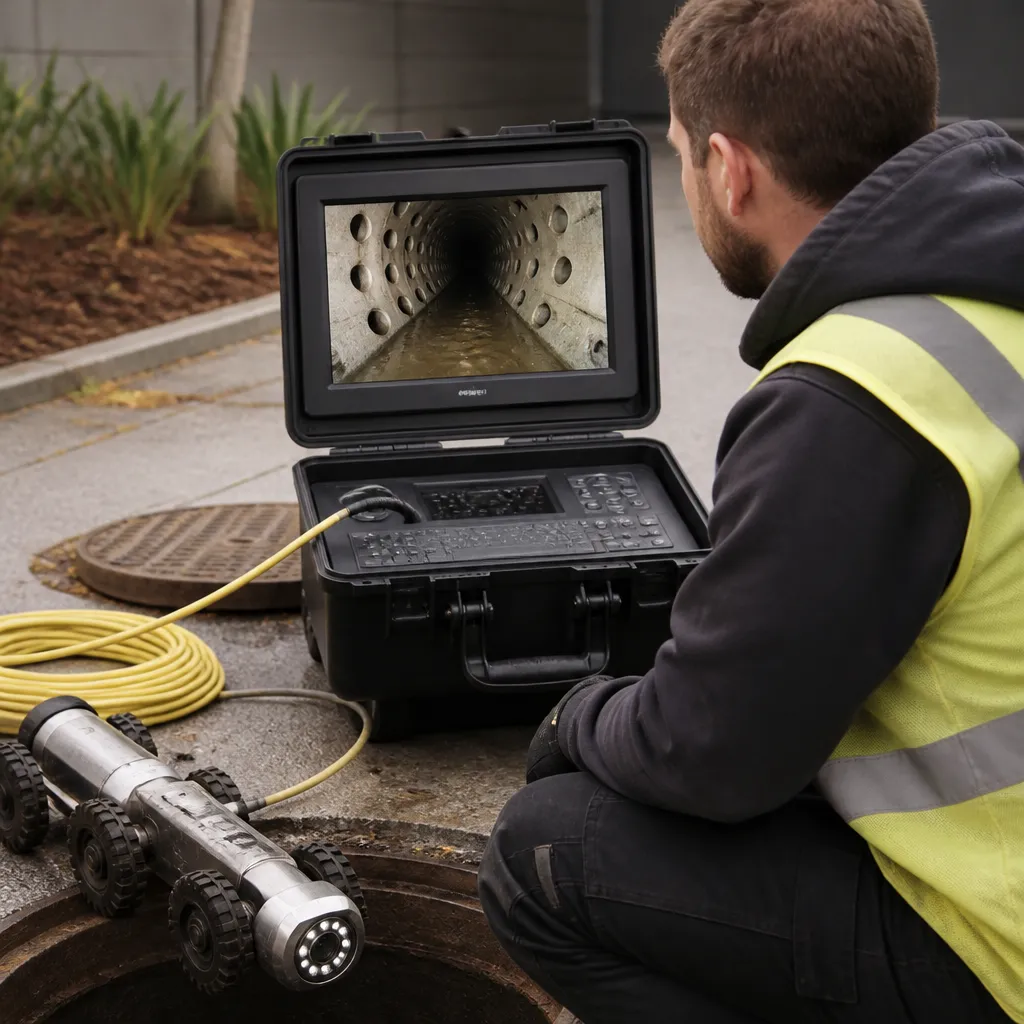
CCTV pipe inspection records the interior of a line from one access point to the next. The footage shows sediment level, pipe material condition, joint separation, root intrusion, and whether connections are open or partly blocked. In our work, that footage is what separates a routine cleaning from a repair scope, and it becomes the baseline the next inspection is compared against.
CCTV also shows what a visual check cannot. A structure can look clean from the surface while the line beyond it is half full. Running the camera before the cleaning crew starts keeps the job from turning into a surprise after the truck has already left.
Recording sediment depth and baseline condition
Every structure should have a dated record of sediment depth, flow condition, and visible damage before the crew leaves. Measure the same way each year so the numbers are comparable. A depth that grows season after season points to an upstream source, such as exposed soil or a gutter discharge, and that calls for source control rather than simply cleaning more often.
A common mistake is to record only that a structure was cleaned. A note that says “cleaned” tells the next reviewer nothing about whether the system is getting worse. Record the starting condition, the amount removed, and anything that needs follow-up.
Cleaning Methods for Subsurface Systems
No single tool fits every underground system. The right method depends on sediment type, pipe diameter, the depth of the structure, and whether the material is loose or compacted. Most good crews combine suction removal with high-pressure jetting, then inspect again before they sign off on the job.
Vactor suction cleaning
A vactor truck pulls sediment, water, and debris out of catch basins, manholes, and accessible pipe segments through a vacuum hose. It is the workhorse of fall cleaning and works well on loose material and standing water. Its limit is hard-packed grit and debris wedged against a pipe wall. Operators need training to protect structures from hose damage and to manage the disposal load properly, because the truck is only as good as the crew running it.
Hydraulic jetting for pipes and blocked lines
Jetting uses high-pressure water to break loose compacted sediment and scour the walls of pipe runs. It is the right tool where grit has bonded to the invert or where roots and grease have built up. Jetting moves material downstream, so the crew has to capture it at the next structure. Jetting a line without a plan for removing what you just loosened is a common way to create a second blockage.
Hydrodynamic separators and water quality devices
Hydrodynamic separators and other water quality devices hold captured sediment and floatables in a chamber that must be emptied on schedule. These units are often the most neglected part of the system, because the treatment chamber is visible only from the top. Servicing them means removing the captured load, inspecting screens or baffles, and checking whether the unit is bypassing or backing up under higher flows.
Pro tip: Ask for a photo or measurement of the captured material from every separator you service. That record shows whether the unit is filling faster than expected, which usually signals an upstream source that needs attention.
Choosing a Cleaning Approach
Owners often ask which method is best. The honest answer is that the right method depends on what the inspection showed, and a sound scope usually uses more than one. The table below compares three common approaches on the criteria that matter most for fall work.
| Approach | Best Use | Main Limitation |
|---|---|---|
| Vactor suction cleaning | Loose sediment, standing water, catch basins, and accessible manholes | Weak against hard-packed grit and debris wedged in pipe |
| Hydraulic jetting | Compacted sediment, grease, and roots inside pipe runs | Moves material downstream and requires capture at the next structure |
| Hydrodynamic separator servicing | Treatment units that hold captured sediment and floatables | Limited to the unit itself, so upstream pipes still need their own cleaning |
In practice, a fall scope is usually vactor first, jetting where the camera shows adhered material, and separator servicing wherever a treatment unit sits in the line. Skipping the second pass after jetting is the most common reason for callbacks, and it is the step owners are most tempted to cut when budgets are tight.
Stormwater Infiltration System Maintenance
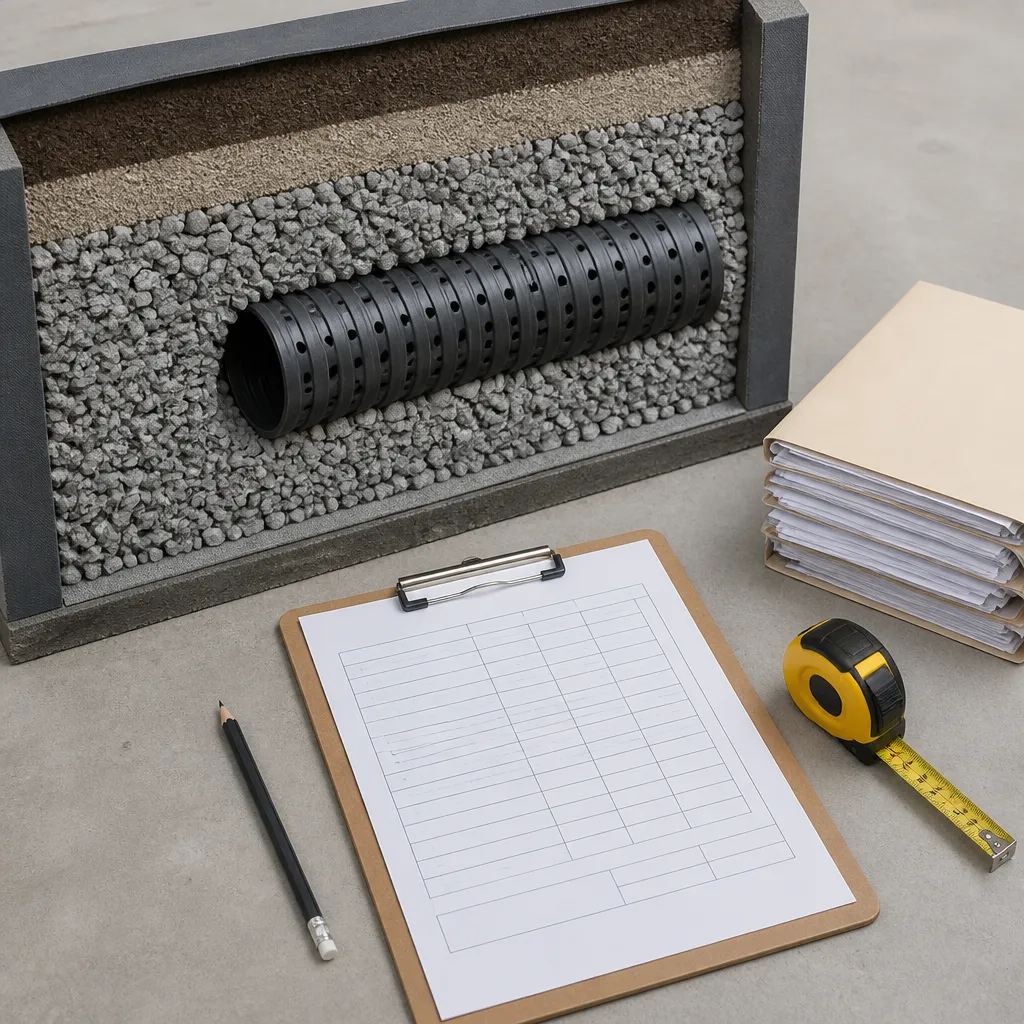
An infiltration system is designed to hand water to the soil, not to convey it away. That changes the maintenance logic. A pipe that is partly full may still function, but an infiltration chamber or gallery that has lost its void space stops doing its job even when it looks clean from the top.
Pretreatment and sediment forebays
Most infiltration failures trace back to fine sediment reaching the infiltrating surface. Sediment forebays, pretreatment sumps, and upstream catch basins exist to capture that material before it arrives. Clean the pretreatment first, every fall. Cleaning the infiltration bed without cleaning the pretreatment simply refills the bed with the same material within a season.
Watching drawdown time after storms
Drawdown tells you what the system is actually doing. After a measurable rain, note how long water remains in or above the system. A healthy system should clear a storm of ordinary size without visible ponding. Slow drawdown after storms it used to handle is an early warning that the infiltration surface is clogging, and it belongs in the same log as the cleaning records.
Underground systems rarely announce their problems. They reveal them during the first storm that exposes a gap in the maintenance schedule.
Porous Pavement and Bioretention Above the System
Many subsurface systems sit beneath permeable surfaces, and the surface maintenance decides how much sediment reaches the underground storage. Porous pavement and bioretention areas are common at commercial sites, and they are often treated as landscaping rather than as stormwater infrastructure. That gap is where a lot of avoidable clogging starts.
Porous pavement sweeping schedule
New York State’s maintenance guidance for stormwater management practices is specific on this point: routine, air-vacuum sweeping in the early spring and fall is the best approach for permeable pavement maintenance. A fall pass clears leaves and grit before they can settle into the pores, and a spring pass clears what winter left behind. Surface sweeping does not replace cleaning inside the system, but it reduces what reaches the underground storage.
Bioretention and vegetation near inlets
Bioretention cells and rain gardens need vegetation work that keeps plant debris and roots from building up at inlets and overflow structures. Cut back dead growth before it becomes a mat, and keep mulch from washing into the underdrain. Vegetation management is part of stormwater system maintenance, not a separate landscaping task, and it should be scoped and logged the same way as the rest of the work.
Pro tip: Ask the sweeping and landscaping contractors to log dates, equipment, and areas covered. A dated record is strong evidence of maintenance if an inspector or permit reviewer asks what was done and when.
Documentation and O&M Plans
A cleaning that is not documented is hard to defend. Stormwater Operation & Maintenance (O&M) Plans are increasingly tied to enforcement, and the plan is where the owner records who maintains each practice, how often, and how the work is verified. A well-built plan turns fall cleaning from a one-time expense into a repeatable program.
Elements every O&M plan should cover
EPA’s stormwater maintenance guidance lists elements a plan may include: the parties responsible for maintenance, maintenance schedules, inspection requirements and frequency, easements or covenants for maintenance, a funding source, and a description of basic maintenance activities such as sediment and debris removal and inlet or outlet cleaning. For subsurface systems, add the access points, the structures that need vactor or jetting access, and every treatment unit that requires separator servicing.
Keeping the cleaning log
EPA also recommends keeping a log of the amount of sediment collected and the date of removal for catch basins, and notes that some cities use GIS systems to track sediment collection and plan future cleaning. A spreadsheet can do the same job if it is current and every entry is tied to a structure ID. The log should live with the O&M plan, not in a technician’s truck.
Common Mistakes in Fall Programs
After enough fall programs, the same mistakes keep coming up. Most are inexpensive to avoid and expensive to fix after a storm.
Cleaning the inlet and ignoring the outlet
Crews often clean the structure owners can see and leave the outlet alone. A system that is clean at the inlet but partly blocked downstream will back up during the first large storm, and the owner will blame the cleaning. Check the outlet, the overflow path, and the first pipe segment after every job, and note what you found.
Scheduling cleaning too late in the season
Work that is pushed into December often becomes work done on frozen or saturated ground, with sediment that has already hardened. Owners who wait for a visible problem usually pay for emergency response rather than planned maintenance. Set the fall date in the O&M schedule and treat it as a fixed obligation.
Treating every structure the same
A catch basin on a grassy lot and a catch basin at a loading dock do not accumulate the same material. Using one cleaning interval across the whole site wastes money on quiet structures and misses the busy ones. Let the sediment log set the interval for each structure, and adjust it when the upstream land use changes.
What does your fall cleaning cycle look like, and has an underground system ever surprised you after a storm? Tell us about your experience, especially where a fall inspection turned up something no one expected.
Frequently Asked Questions
How often should a subsurface stormwater system be cleaned?
Set the interval from your sediment log rather than a fixed guess. If the depth grows each season, shorten the interval or fix the upstream source. Most sites should plan at least one fall cleaning, with extra checks after large storms.
Do I need a CCTV inspection before every cleaning?
Not necessarily every year, but you need a baseline, and you need inspection whenever a system is new to you, has failed before, or is being scoped for repair. Without footage or measured condition data, you cannot tell a cleaning need from a structural problem.
What is the difference between catch basin cleaning and subsurface system cleaning?
Catch basin cleaning removes sediment from the inlet structure, while subsurface system cleaning covers the pipes, chambers, vaults, and treatment units downstream of it. Many properties need both, and the scope should name each structure so nothing is assumed to be covered.
Can vacuum sweeping replace underground cleaning?
No. Sweeping reduces the sediment load reaching the system, which matters a great deal for porous pavement, but material that gets past the surface still has to be removed from inside the system.
Why does an infiltration system stop working when it looks clean?
Fine sediment fills the void space and clogs the infiltrating surface, and none of that is visible from the top. Slow drawdown after storms is the signal to check, and cleaning the pretreatment first helps prevent the problem from returning.
What records should I keep after a cleaning?
Keep inspection footage or notes, starting and ending sediment depths, the amount removed, photos where access allows, and the date and crew. Attach those records to the O&M plan so they are available when an inspector asks.