
Most commercial property managers first hear about stormwater compliance when a letter arrives, not when a plan gets written. A parking lot drain clogs, water pools against a loading dock, and suddenly an inspector wants records you do not have. The rules behind that letter are not exotic, but they touch every catch basin, pipe, and rain garden on your site. This guide explains stormwater compliance for commercial property in plain terms, from what your obligations usually look like to the maintenance habits that keep you out of enforcement trouble.
Table of Contents
- Quick Takeaways
- What Stormwater Compliance Means for Your Property
- Operation and Maintenance Plans Explained
- Inventory Your Stormwater Assets
- Inspection and Cleaning Schedules That Hold Up
- Bioretention and Porous Pavement Upkeep
- Vegetation and Structural Repairs
- Choosing a Maintenance Model
- Responding to a Stormwater Violation
- Frequently Asked Questions
- References
Quick Takeaways
| Key Insight | Explanation |
|---|---|
| Confirm which rules apply to your site | Stormwater requirements usually come from a state permit, a municipal code, or both. Confirm which applies before you schedule any work. |
| Treat the O&M plan as a living document | A plan that sits in a drawer will not satisfy an inspector. Update it after every repair, rebuild, repaving job, or change in tenant use. |
| Map every structure, not just the big ones | Catch basins, underground chambers, and water quality units are where most failures start, and they are often missing from site drawings. |
| Clean on a measured schedule, not a guess | Inspect first, then clean when sediment reaches the threshold in your plan. Waiting for a complaint is the costly approach. |
| Keep records an outsider can follow | Record the date, location, condition before and after, photos, and who did the work. If it is not written down, an inspector will assume it did not happen. |
| Answer notices quickly, with documentation | A fast, organized written response usually limits escalation. Silence or a vague reply often leads to fines. |
What Stormwater Compliance Means for Your Property
Stormwater compliance is the set of obligations that govern how rain runoff leaves your site. Those obligations usually come from two layers. The federal Clean Water Act created the National Pollutant Discharge Elimination System (NPDES) stormwater program, and EPA publishes the rules and notices that apply to it. In most places, a state or local agency then carries those rules out through permits, local codes, or both.
For a property manager, the practical question is simpler: what must be inspected, cleaned, repaired, and recorded on this site, and who is accountable if it is not. The answer depends on the size of the site, whether it discharges to a municipal storm system, and whether it sits in an area with extra requirements.
Who Usually Holds the Responsibility
Ownership of the property typically carries the duty, even when a tenant, a management company, or a contractor performs the work. A lease can allocate costs, but it rarely moves the legal exposure away from the owner. Put maintenance duties in writing with every vendor and tenant.
Why Agencies Are Checking Records
Many agencies now look at paperwork as closely as they look at the pavement. A property with missing logs or an untouched water quality unit gets flagged quickly, even if the site looks clean on the day of the visit.
Most stormwater violations are not about the rain. They are about the gap between what the site plan says and what the property actually does.
Our crews work across the Northeast, Mid-Atlantic, and Southeast, from Boston and Hartford to Philadelphia, Baltimore City, and Atlanta. The same gap between paperwork and pavement shows up in almost every file we review, regardless of the city.
Operation and Maintenance Plans Explained
A Stormwater Operation and Maintenance (O&M) Plan describes how your stormwater system is supposed to work and how it will be kept working. It names each device, the inspection frequency, the cleaning trigger, the responsible party, and the records you keep. Some agencies expect to see one, and some make it a permit condition.
What a Usable O&M Plan Contains
A plan that works has a site map, an asset list, and a maintenance schedule that matches the equipment on the ground. It should define what “clean” means for each device, such as the sediment depth or percent full that triggers removal. Vague language like “clean as needed” gives an inspector nothing to check against.
Pro tip: Ask your maintenance contractor to walk the site with the plan’s asset list during the first visit. Mismatches between the plan and the pavement are the most common gap we find.
Keeping the Plan Current
Update the plan when you repave, add a tenant with a different load, replace a device, or change drainage. A plan written in a rush during a notice period tends to be wrong on the first page. Review it on a set schedule and after any storm event that caused flooding or overflow.
Inventory Your Stormwater Assets
Most compliance problems start with a device nobody remembered existed. Parking lot catch basins are easy to find, but underground detention chambers, oil-grit separators, and older storm lines often appear only on a construction drawing from decades ago, if at all.
Walk the Site With Drawings in Hand
Compare the as-built drawings to what is actually on the ground. Lift covers, note pipe sizes and flow direction, and mark anything that does not match the drawing. In practice, a half-day walk with a crew that can open structures finds more than a desk review ever will.
Records an Inspector Can Follow
Log each asset with an ID number that matches the map, along with its location, material, condition, and last service date. Photos before and after cleaning are the cheapest evidence you can collect. A simple spreadsheet works for a small site, while larger portfolios benefit from a digital work-order system that timestamps each entry.
Inspection and Cleaning Schedules That Hold Up
A schedule that exists only on paper fails the first time a storm backs water into a lot. Inspection and cleaning are separate tasks. Inspect first, then clean when the device reaches the threshold in your plan, and record both steps.

Catch Basins and Pipes
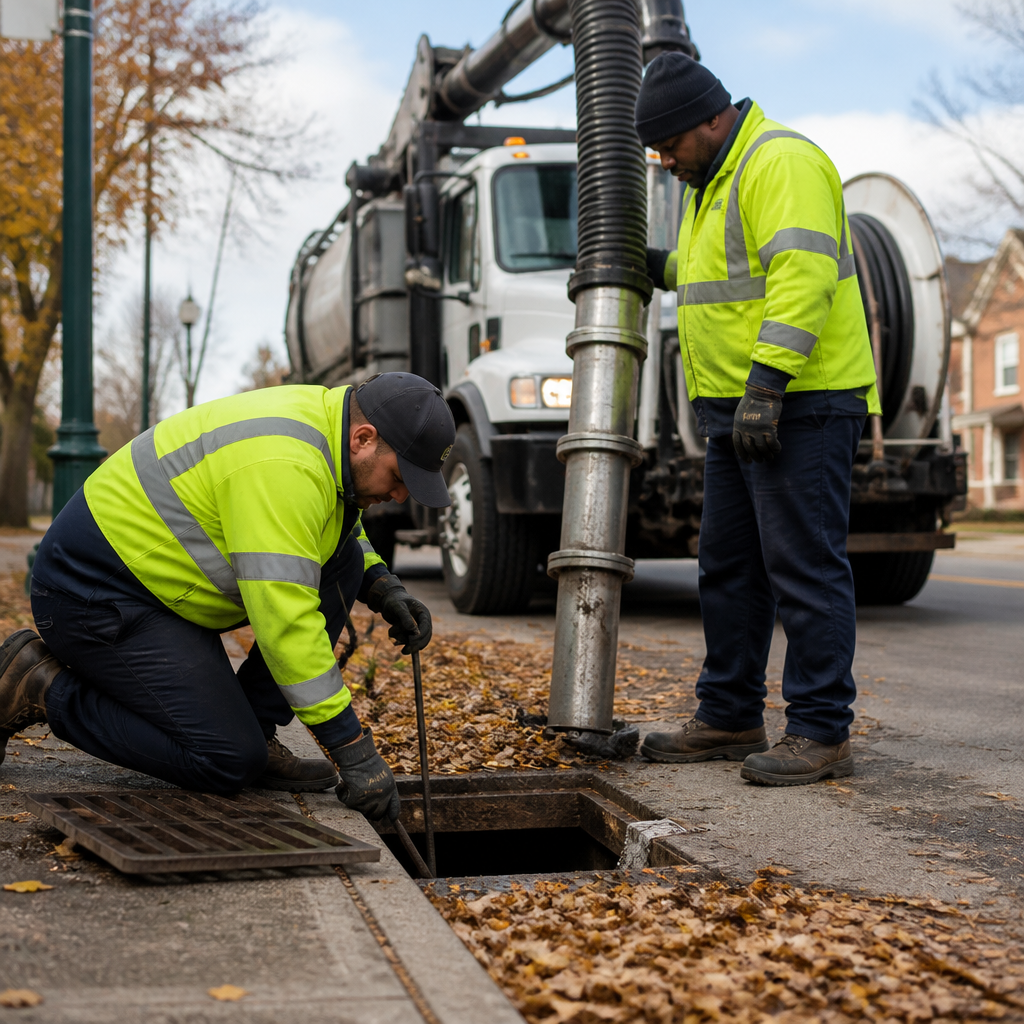
CCTV pipe inspection is the most direct way to see what sits inside a storm line. A camera run can reveal offsets, root intrusion, collapsed sections, and sediment buildup that a surface look misses. Pair it with catch basin cleaning and pipe jetting, because debris pushed downstream during high flows often causes the blockage you find later.
Hydrodynamic Separators and Water Quality Devices
These units trap sediment and oil, and they stop working once their storage fills. Cleaning on a fixed calendar date without measuring sediment depth either wastes money or leaves the unit full during a storm. Measure first, clean when the record shows it is needed, and log the depth before and after.
Vacuum Sweeping and Parking Lot Debris
Sweeping keeps fine sediment and litter from reaching catch basins. Frequency matters more than the machine. A lot that sees heavy leaf fall or construction traffic needs more passes during those periods. Keep sweeping logs with dates and areas covered, because they support everything else in the file.
Pro tip: Photograph every structure at the start and end of each cleaning visit, with a tape or rod in view for scale. Those two images are often the strongest evidence you have if a notice arrives months later.
Bioretention and Porous Pavement Upkeep
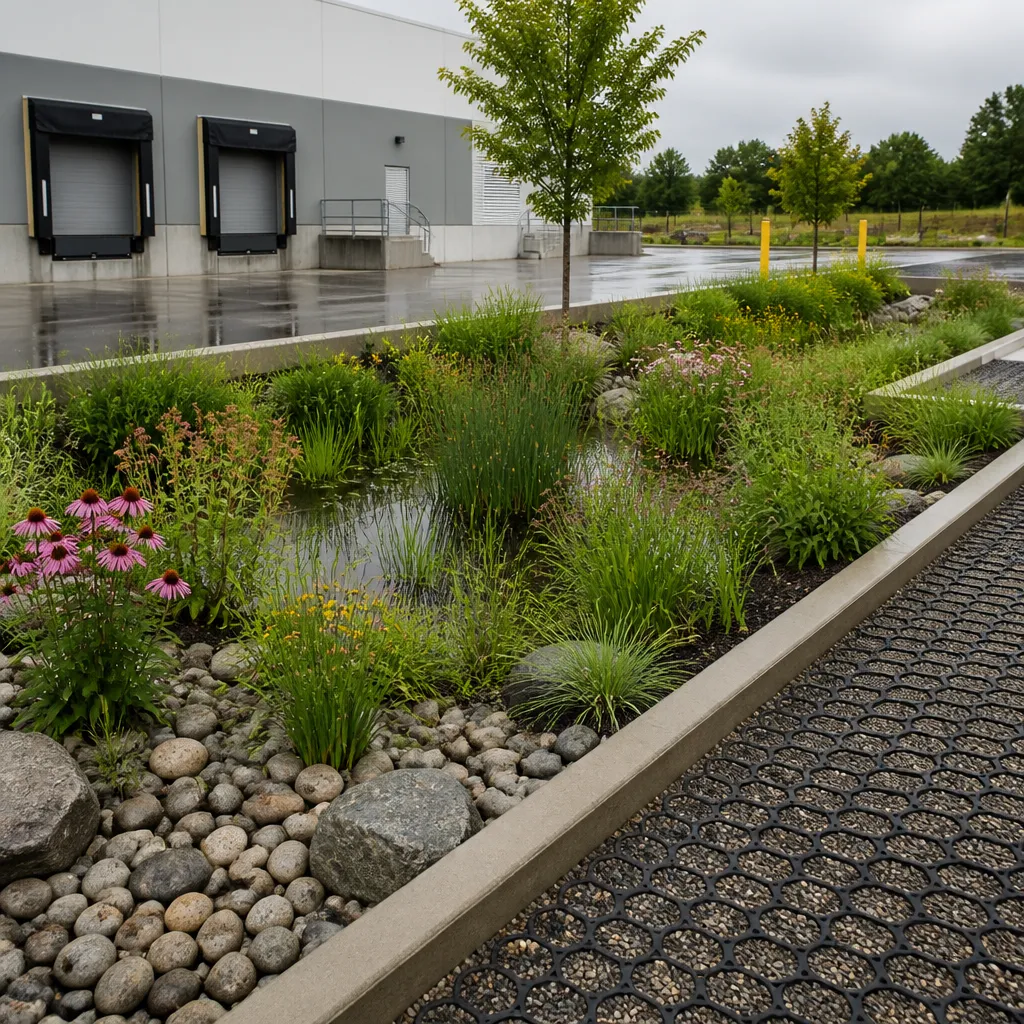
Rain gardens, bioretention cells, and porous pavement are often sold as low-maintenance. In practice, they need targeted upkeep, and they tend to fail quietly. A clogged surface looks fine until water starts ponding in the middle of a lot.
Bioretention and Rain Garden Maintenance
Check inflow points for litter and sediment after storms, and remove accumulated silt before it seals the surface. Plant care should follow the design, and the plant list belongs in the O&M plan. Replace mulch and dead vegetation, but do not disturb the soil media without a plan for how the bed will drain again.
Porous Pavement Maintenance and Rehabilitation
Porous asphalt and pervious concrete depend on open pores. Vacuum sweeping with equipment designed for porous surfaces clears the voids. Pressure washing alone can push fines deeper into the pavement. When a surface clogs beyond routine cleaning, rehabilitation is a separate job, and it should be documented with before and after infiltration checks.
Vegetation and Structural Repairs
Vegetation and structure problems are where small maintenance items turn into violations. A shrub that grows over an outlet or a cracked grate that lets debris into a chamber both reduce how the system functions. Both are easy to fix early and expensive to fix late.
Vegetation Management Around Inlets and Basins
Trim growth that blocks inlets, outlets, or overflow paths, and remove woody roots from basin edges when they threaten embankments. Avoid herbicide use near water quality devices unless your plan and the applicator’s licensing allow it. Record each treatment with the date, area, and method.
Structure Repair and Rebuilds
Cracked walls, failed frames, and misaligned pipe joints should be repaired before a cleaning crew enters. A damaged structure can collapse under equipment or lose stored water. Note each defect with a photo and a repair date, and treat a full rebuild as a separate capital item with its own documentation.
Choosing a Maintenance Model
Property managers usually choose between a few ways to keep up with stormwater work. Each one balances cost, control, and documentation quality differently. The right choice depends on how many sites you run and how quickly you need a response when something fails.
| Approach | Where It Works Best | Main Risk |
|---|---|---|
| In-house maintenance staff | Large single campuses with trained facilities crews | Staff turnover erases institutional knowledge, and records are often inconsistent |
| Scheduled contract with a stormwater specialist | Multi-site portfolios and properties that face regular agency inspections | Contracts that bill per visit without measured thresholds can miss the real need |
| Reactive callouts after a problem | Very small sites with low runoff risk | Every visit becomes emergency work, and the file shows nothing preventive |
In practice, owners who move from reactive callouts to a scheduled contract usually get their records in order first, because the contractor’s visit logs become the file. That shift matters more than the price per visit. A cheaper contract with no measured thresholds often costs more over a year of notices and repairs.
Responding to a Stormwater Violation
A violation notice is not the end of the story, but how you respond sets the tone for everything that follows. Agencies generally want to see that you understand the problem, have stopped the source, and have a plan to prevent a repeat. A short, organized written reply does more than a long defensive letter.
The First Week After a Notice
Read the notice closely for the deadline, the specific device or discharge, and any required action. Assign one person to own the response. Photograph the condition, pull the records, and call the contractor who can start corrective work. Stick to the facts in your reply and avoid speculation about causes.
Common Mistakes That Escalate a Problem
The most common mistake is sending a reply with no records attached. Other frequent errors include cleaning a device without documenting its condition first, promising repairs without a schedule, and letting the O&M plan contradict what the crew actually did. Each one turns a maintenance issue into a credibility issue.
Frequently Asked Questions
Do I need a stormwater O&M plan if my property is small?
Size alone rarely decides it. Whether your site discharges to a municipal storm system, holds a permit, or sits in a regulated area matters more. Check with the local agency, and if a plan is requested, a short plan that matches your actual devices beats a generic template.
How often should catch basins be cleaned?
There is no single correct interval. Inspect first, record the sediment depth, and clean when the level reaches the threshold in your plan. Lots with heavy leaf fall or construction traffic often need more frequent checks.
Who is responsible when a tenant causes a problem?
The property owner usually remains responsible to the regulator, even when the lease assigns maintenance costs to a tenant. Write cost-sharing and maintenance duties into the lease, and keep vendor records that prove the work was done.
Can I use my regular parking lot sweeper on porous pavement?
Usually not. Standard sweepers can push fines into the pores, and some porous surfaces need equipment designed to vacuum the voids. Ask any sweeping vendor how they handle porous surfaces before you sign a contract.
What should I do first when I receive a notice?
Read the deadline and the specific finding, assign one owner, and gather photos and records. Then start corrective work and send a short written reply that states what you found, what you have done, and when the remaining work will be finished.
Tell us about your own stormwater compliance experience, including what caught you off guard, and we will use that feedback to shape future guides for property managers.
We would love your feedback and any insights you would share with others. What perspective would you add?