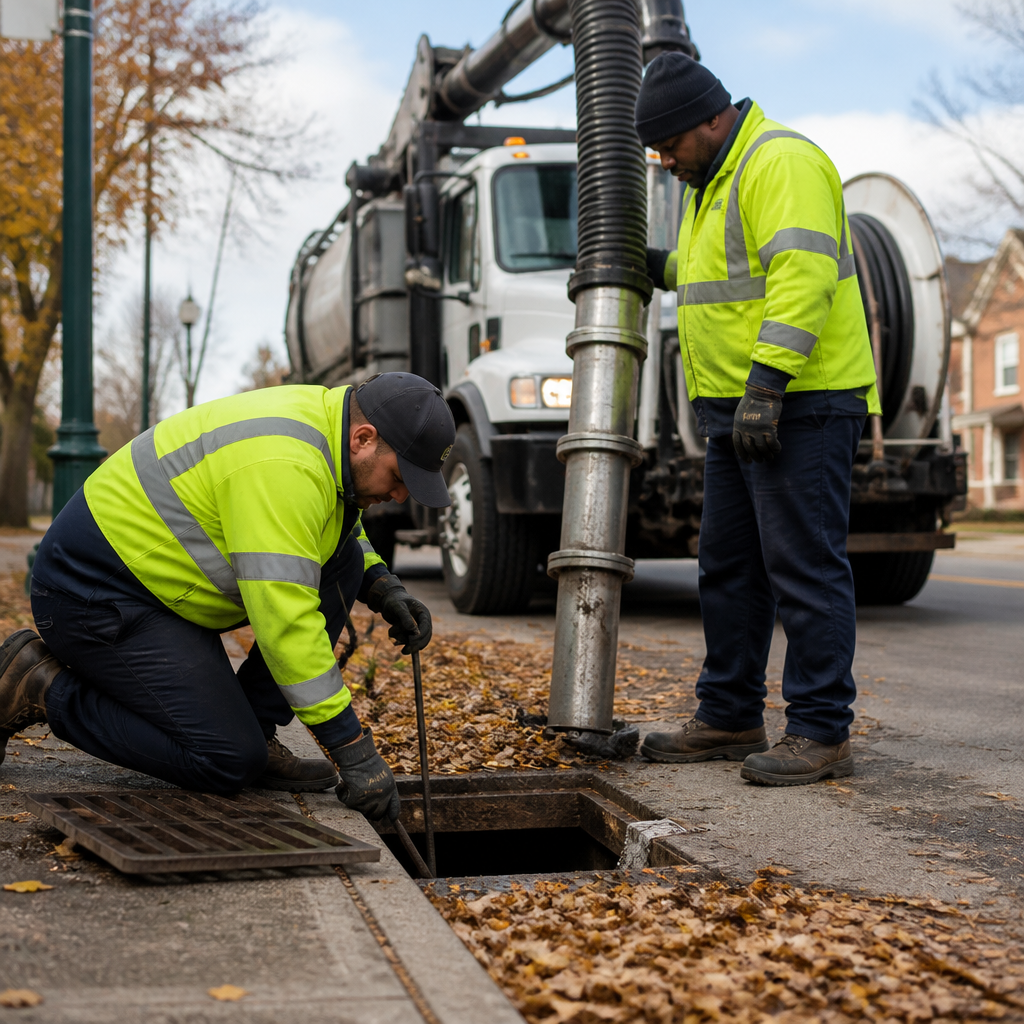

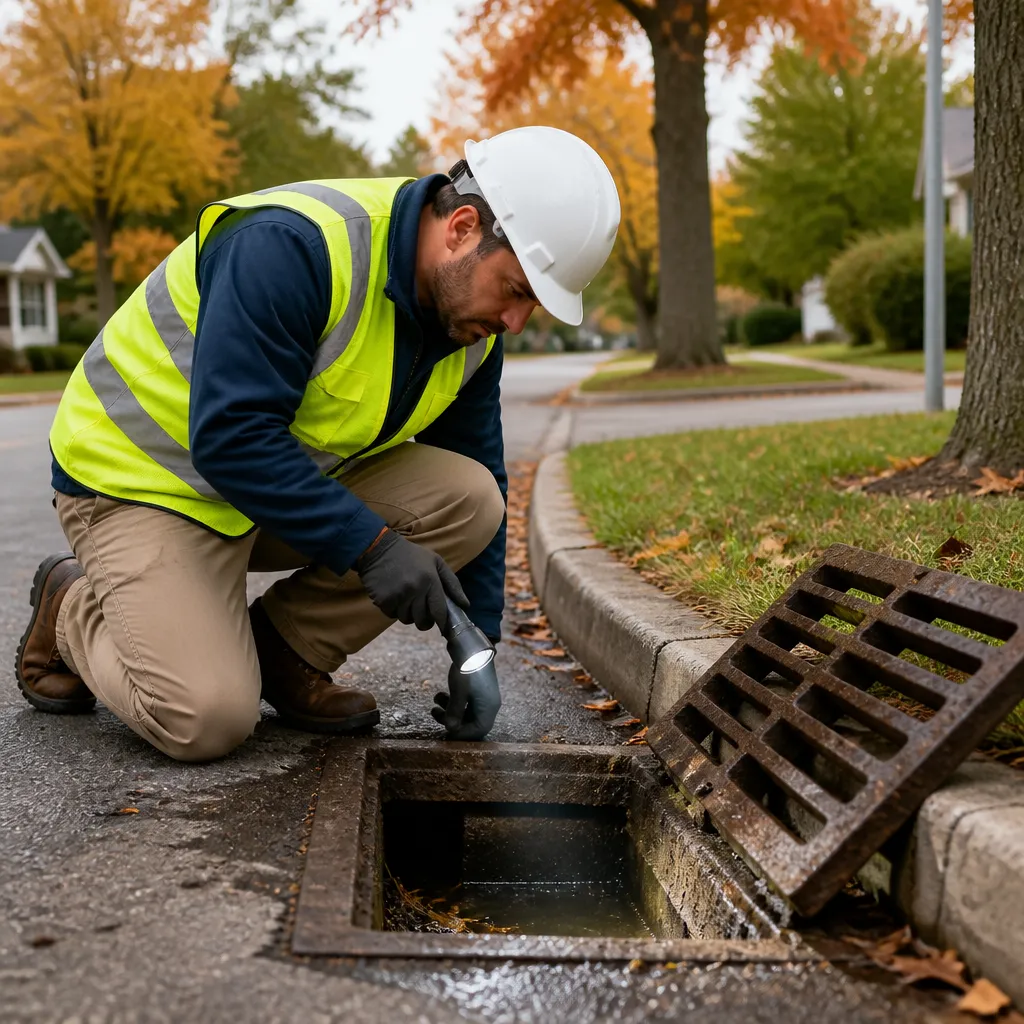
Most stormwater failures do not announce themselves in October. A catch basin packed with leaf litter, a grate half buried in mulch, or an outlet pipe with a cracked collar will sit quietly until the first hard freeze or a heavy storm turns it into a flooded parking lot. That is why a proper stormwater structure inspection before winter is worth far more than a quick walk-by.
This guide explains how to evaluate the condition of catch basins, pipes, water quality devices, and green infrastructure before the 2026-2027 winter sets in. It covers what to look for, how to rate what you find, and how to document it so the record holds up under an O&M plan or a regulator’s review.
Table of Contents
- Quick Takeaways
- What a Structure Inspection Should Cover
- Catch Basin Condition Assessment in the Field
- Pipe and Outlet Checks Before Freezing Weather
- Water Quality Devices and Subsurface Systems
- Porous Pavement, Bioretention, and Vegetation Checks
- Rating Condition and Choosing Inspection Methods
- Documenting Findings for Your O&M Plan
- Frequently Asked Questions
- References
Quick Takeaways
| Key Insight | Explanation |
|---|---|
| Inspect before the first freeze, not after | Sediment and debris washed in by fall storms can harden into the sump and cut capacity right when snowmelt arrives. |
| Measure sediment against the outlet | Schedule cleaning when accumulated material approaches the outlet invert, and log the depth and date every time. |
| Check dry practices for standing water | Infiltration basins, swales, and bioretention cells that still hold water days after a storm are not draining as designed. |
| Inspect structure, not just flow | Cracked hoods, displaced grates, and deteriorating materials can release pollutants or fail under load even when water is moving normally. |
| Use CCTV when the lid cannot tell the story | Joint separation, offsets, and root intrusion are hidden from the surface and only show up on camera after cleaning. |
| Rate every structure with the same scale | A consistent three-level rating lets you compare conditions across seasons and set repair priorities with evidence. |
| Tie each finding to a dated action | Every deficiency should have an owner, a due date, and a closed-out entry so the O&M record matches what was actually done. |
What a Structure Inspection Should Cover
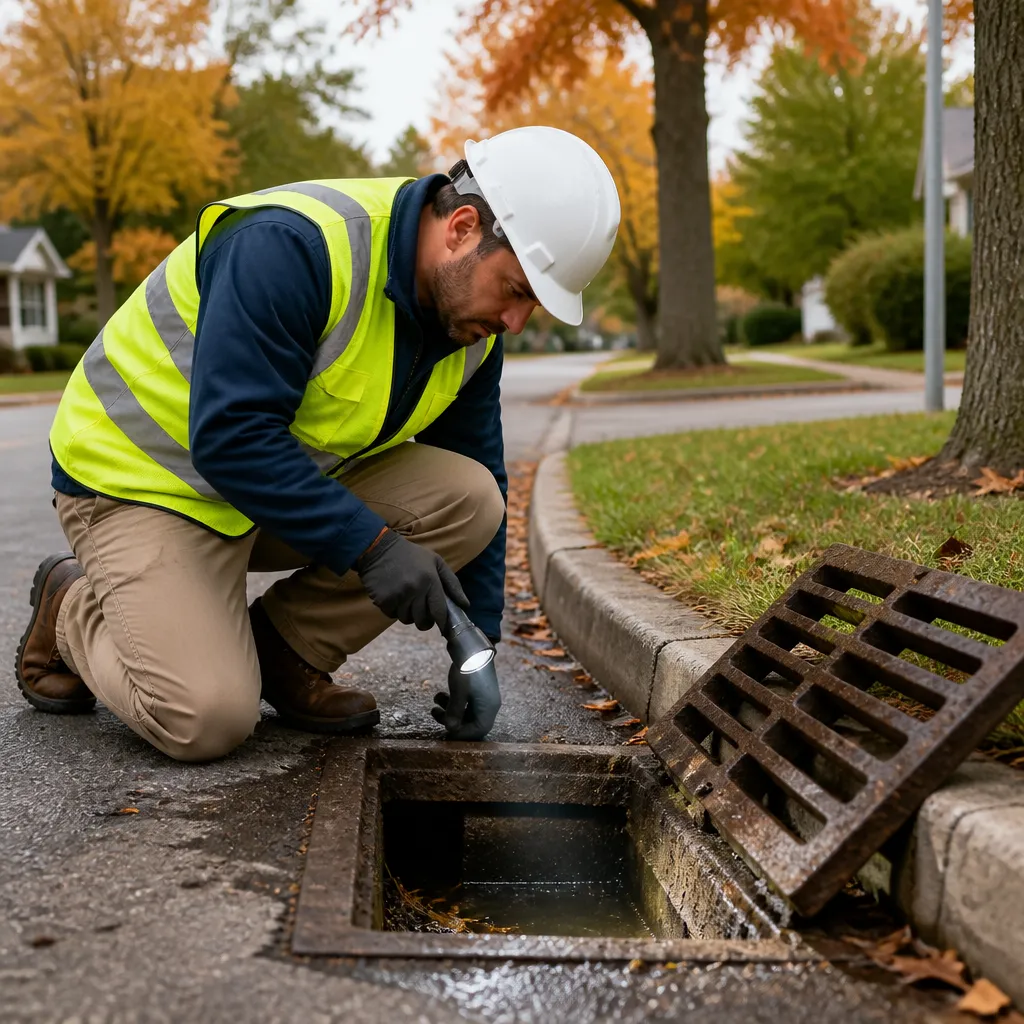
A useful inspection starts with an inventory, not a truck. Before anyone opens a lid, the structure list should match the asset map, including catch basins, manholes, inlets, outfalls, detention structures, hydrodynamic separators, infiltration practices, and any porous pavement or bioretention cells. The structures that fail first are usually the ones that were never on the list.
Scope: Which Structures Belong on the List
Minnesota’s MS4 General Permit, which is a useful model even outside that state, requires annual inspections of structural stormwater best management practices to determine structural integrity, function, and maintenance needs. It also requires inspections of ponds and outfalls at least once each permit term. Those categories translate well to a pre-winter program, with structural BMPs getting annual attention and outfalls and ponds getting a condition review.
In practice, the most common gap is the orphaned structure, a basin in a back corner of a lot that predates the current owner. Walk the site with the original plan set and mark anything you cannot find on the map. Those unmapped units are the ones that flood a loading dock in January because nobody knew they were there.
Timing: Why Late Fall Beats Spring
Inspect in late fall with enough time left to schedule vactor cleaning or repairs before the ground freezes. A spring inspection tells you what winter did, which is useful for the record but useless for prevention. A fall inspection gives you a window to remove sediment that would otherwise freeze into place.
A common mistake is booking the inspection and the cleaning crew for the same week. If the inspection reveals a cracked structure, you need time to get the repair done before the freeze, so build a buffer of at least a few weeks into the schedule.
Catch Basin Condition Assessment in the Field
Catch basin condition assessment is where most pre-winter work pays off. A catch basin looks simple, but its condition has several layers: the frame and grate, the hood or screen, the sump, the walls and benching, and the outlet connection. Each layer can fail in a different way, and each failure calls for a different fix.
Sediment Depth and Sump Capacity
EPA guidance on stormwater maintenance describes catch basin upkeep as removal of sediment using a vactor truck, performed by trained operators, with a log kept of how much material was collected and when. Treat that log as your core dataset. Measure the sediment depth in each sump at inspection and compare it with the depth recorded at the last cleaning. A basin that refills in one season needs a shorter cleaning interval than one that holds for two.
Clean when accumulated material gets close to the outlet invert. Sediment that reaches the outlet can be carried downstream in the first storm of winter, and at that point the cleaning is no longer preventive. Do not wait for the sump to look full before you schedule the work.
Pro tip: Carry a measuring rod or weighted line on every catch basin visit. Judging sediment depth by eye from the grate consistently underestimates the load, and that error pushes cleaning later than it should be.
Frame, Grate, and Hood Damage
Look for rocking frames, cracked or corroded grates, and hoods that are bent or missing. A grate that moves under foot traffic will rattle under a plow, and a loose hood lets floating trash bypass the sump. Note whether the frame sits flush and whether the grate can be lifted safely by hand, since a stuck or damaged cover is also an access hazard for crews.
Check debris screens and inserts as well. EPA notes that where a screen or other debris-capturing device is used, trash removal is part of typical maintenance. A full insert will bypass flow during the first heavy rain of winter, and that bypass is often the first sign that the basin has been silently overwhelmed.
Pipe and Outlet Checks Before Freezing Weather
Surface inspection tells you where water enters a system. It does not tell you what happens after the water leaves the basin. Pipe defects are the largest blind spot in most programs, and they become expensive when they fail under a driveway or road in January.
Pipe Joints and Connections
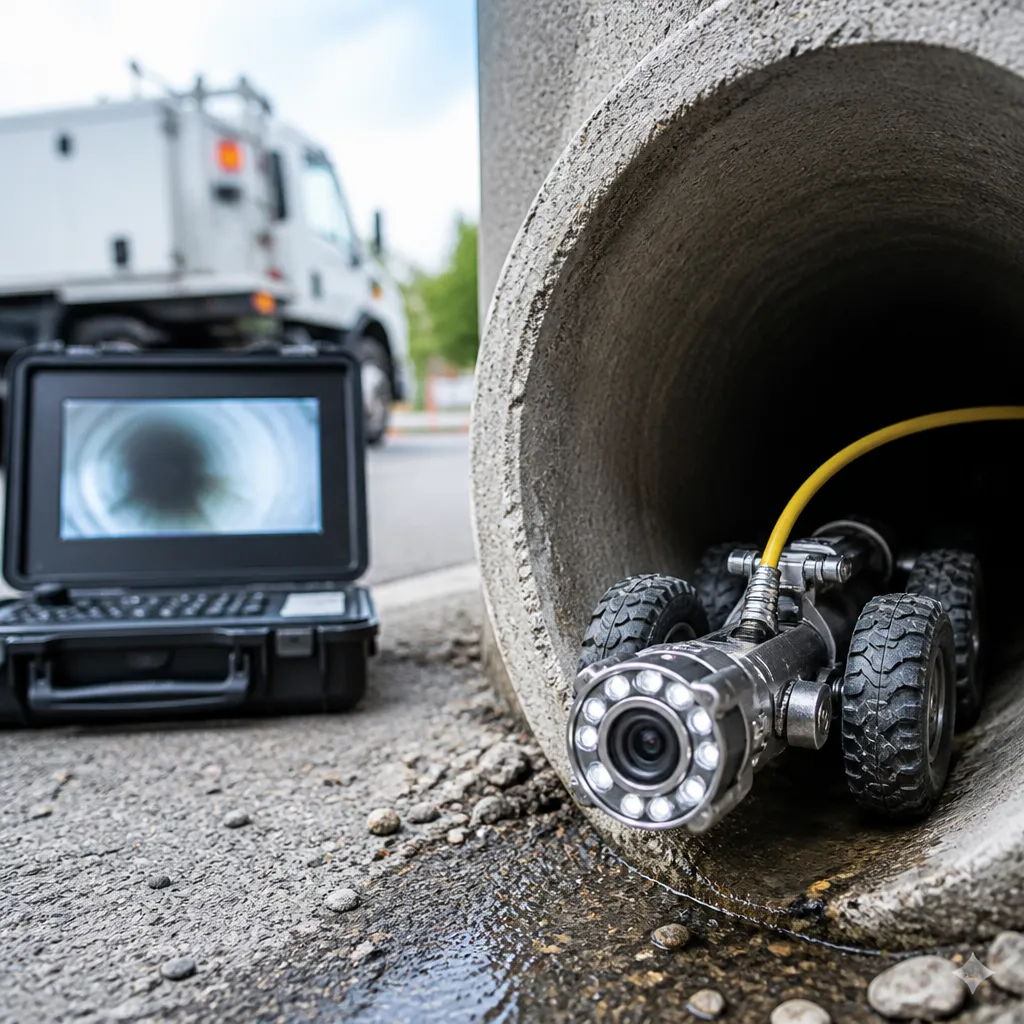
CCTV pipe inspection is the most reliable way to see joint separation, offset connections, root intrusion, and cracking inside a run. Prioritize lines that carry heavy sediment loads or pass under traffic. Clean first, then camera, because debris can hide defects and produce false clean bills of health.
Published research on pipe condition has compared ordered probit and neural network models for predicting the structural condition of individual pipes. Field crews do not need the statistics to benefit from the idea behind them. Keep prior camera ratings in a searchable form, because a pipe that was marginal two years ago is the one most likely to fail next.
Most pipe failures that show up in January were visible in the previous fall’s footage, to anyone who was looking for them.
Outlet and Headwall Condition
Outfalls and headwalls show erosion, undercutting, displaced riprap, and sediment buildup at the discharge point. The Minnesota inspection guidance lists these same signs as problems to identify during structural inspections. Check the apron, the pipe end, and the channel below for scour, and note any gap between the pipe and the headwall.
A cracked outlet collar that lets water escape at the joint can saturate the soil behind it. During a thaw, that saturated soil can slump, taking the outlet and part of the slope with it. Catching that gap in the fall costs a fraction of a spring slope repair.
Water Quality Devices and Subsurface Systems
Hydrodynamic separators, cartridge filters, and other water quality devices are often the hardest structures to read from the surface. Their performance depends on what is trapped inside, and a unit that looks fine from the lid can be bypassing flow because its chamber is full. The inspection has to open the unit and measure what is inside.
Hydrodynamic Separators and Cartridge Devices
The Minnesota guidance includes hydrodynamic devices among structural BMPs that need annual inspection for clogging, overload, and deteriorating materials. For separators, compare the sediment level against the maintenance threshold in the manufacturer’s documentation and check the chamber for debris that has settled out of the flow path. Record whether oil or floating material is present and whether the unit was cleaned after the last storm that moved material through it.
Pro tip: Photograph the sediment level with a scale reference before and after cleaning. Those photos are the fastest way to prove the unit was serviced and the best evidence for setting the next cleaning interval.
Subsurface Chambers and Storage
Subsurface stormwater systems, including chambers and storage vaults, can only be inspected through their access points. Look for sediment at inlet ports, standing water that should have drained, and settling around access covers. Water sitting in a system designed to be dry usually means infiltration has slowed, and that problem gets worse over winter if it is not addressed.
The MS4 guidance points to the 48-hour drawdown requirement as the test for infiltration practices that should be dry between events. Apply the same logic to subsurface storage, timing the drawdown after a known rain and recording the result. Subsurface cleaning usually requires jetting and vacuuming with equipment matched to the depth and access, so book it early, since access limits and weather can delay a job that looks simple on paper.
Porous Pavement, Bioretention, and Vegetation Checks
Green infrastructure fails differently from gray infrastructure. Instead of a cracked pipe, you see clogged surfaces, dead plants, and ponded water that never leaves. Maintenance of green practices generally requires more labor and less heavy equipment, so the inspection should focus on surface behavior and plant health as much as on structure.
Porous Pavement Surface Checks
Check porous pavement by watching how water behaves during and after a rain. If water sits on the surface or runs off the edges, the voids are clogged. Look for fine sediment accumulating in the surface, weeds rooting in the joints, and any dips that suggest the base has settled. Vacuum sweeping before winter removes fine material that would otherwise compact into the voids and reduce infiltration when the thaw arrives.
Pay attention to where the pavement meets adjacent surfaces. Sediment from landscaped areas or from sand used on the pavement in winter can migrate onto the porous surface, and it is far easier to remove in the fall than after it has compacted through a season of traffic.
Bioretention Drawdown and Plant Health
Bioretention cells should be dry between storms. Check for standing water several days after a rain, and inspect the mulch layer for erosion, channels, and washed-out areas. Note any dieback, weed invasion, or invasive species, since the plant community is part of how the system is designed to work.
Fall vegetation work differs from spring work. Cut back what has to come out, such as dead growth that holds water or blocks inlets, but leave material the design expects to protect the soil over winter. The MS4 guidance asks inspectors to identify excess or unwanted vegetation, such as long grass or tree growth, and to confirm that designed vegetation is healthy, appropriately dense, and free of weeds and invasive species. Those are the same questions to answer before the first freeze.
Rating Condition and Choosing Inspection Methods
A condition rating is what makes an inspection useful. Without one, two inspectors will describe the same catch basin in different words, and nobody can compare results from one year to the next. Use a simple scale that every field crew applies the same way, such as good, needs maintenance, and needs repair, with a physical definition for each level.
Choosing the right method matters as much as the scale. Surface checks are fast and cover the whole site. Cleaning-based inspection shows sediment and interior condition. Camera work reveals pipe defects that nothing else can see. The table below compares three common approaches and where each one earns its cost before winter.
| Inspection Approach | What It Reveals | Best Use Before Winter |
|---|---|---|
| Surface and visual inspection | Grate condition, visible sediment, standing water, and erosion at outlets | Fast whole-site screening to identify priority structures |
| Cleaning-based interior inspection with sump measurement | Actual sediment depth, sump condition, damaged hoods and screens, and interior cracks visible after cleaning | Catch basins and water quality devices where cleaning is already due |
| CCTV pipe inspection | Joint separation, root intrusion, cracking, offsets, and blockages inside the pipe run | Pipes that carry heavy sediment or sit under traffic loads |
Building a Rating Scale That Holds Up
Define each rating with a physical test that a crew can check in the field. A structure that needs repair might have a loose frame, a cracked wall, or a damaged outlet. A structure that needs maintenance might have sediment near the outlet or a full screen. A structure rated good passes the function check with nothing to correct.
Pro tip: Rate the structure, not the crew. Have two inspectors rate the same three structures before the season starts and compare results. Disagreement at that stage is inexpensive to fix, and expensive to discover during a dispute over a failed basin.
Setting Repair Priorities Before the First Freeze
Rank repairs by consequence rather than by the order you happened to walk the site. A cracked pipe under a road outranks a sediment-heavy basin in a grass lot. Flooding risk, traffic loads, proximity to buildings, and the receiving waterway should drive the order. Winter is when a small deficiency becomes a closed road, so the priority list should reflect what would hurt most if it failed during a storm.
Documenting Findings for Your O&M Plan
An inspection without documentation does little for compliance or for the asset. The Minnesota guidance calls for inspection findings and dates, adjustments to inspection frequency, dates and descriptions of maintenance, and maintenance schedules to be recorded. Use that structure as a checklist even if your own permit or local rule is different.
EPA’s guidance on operation and maintenance plans lists basic elements that include the parties responsible for maintenance, maintenance schedules, inspection requirements and frequency, easements or covenants, a funding source, and descriptions of routine work such as sediment removal and inlet and outlet cleaning. Your inspection records should map directly onto those elements so the plan and the field data tell the same story.

What a Usable Inspection Record Includes
Each record should show the structure ID, location, date, inspector, condition rating, measured sediment depth, photos, and the action taken. Keep the field form simple enough to complete on a wet day with cold hands. If a field is hard to fill in, crews skip it, and the gap shows up later as a missing year in your history.
Photos are worth more than they look. A dated photo of a sump at the measuring rod, taken before cleaning, is the clearest evidence you will ever have of how fast a structure is filling. Store photos with the structure ID in the filename so they can be found without a search.
Turning Findings Into a Repair Schedule
Every finding that needs action should get a due date and an owner. Log what was done, when it was done, and what remains open. Adjust inspection frequency for structures that filled faster than expected, and record the reason for the change. That adjustment history is often the first thing a reviewer asks for.
A winter-ready record is one a new crew member could follow without calling the person who wrote it. Hold your documentation to that standard, and the next pre-winter inspection will take half the time.
Frequently Asked Questions
How often should stormwater structures be inspected before winter?
At minimum, inspect once in late fall so that cleaning and repairs can be finished before the ground freezes. Structures with a history of rapid sediment buildup, or those near traffic and buildings, deserve a second check after the first major storm of the season.
What is the difference between a catch basin inspection and a catch basin cleaning?
An inspection records condition, including sediment depth, frame and grate damage, and outlet function. Cleaning removes the material that the inspection found. Doing both on the same visit saves money, but the inspection should be completed first so the crew knows what it is looking at.
Do I need CCTV for every pipe in the system?
No. Start with the pipes that carry heavy sediment, pass under roads or parking areas, or have a history of backups. Use the results to set a schedule for the rest, and keep the footage with the structure records so future comparisons are possible.
Can a visual inspection replace cleaning?
A visual inspection can tell you that a structure is full or damaged, but it cannot show what is happening inside the sump or the pipe. Use visual checks to screen the whole site, then clean and measure the structures that are close to their limit.
What should I do if I find damage that cannot be repaired before the freeze?
Document the damage with photos and a dated rating, then take temporary measures to keep the structure from getting worse, such as clearing the inlet and protecting the outlet from erosion. Schedule the permanent repair as the first job of spring, and make sure the O&M record shows the interim steps.
What condition problem has caught you off guard at a stormwater structure, and how did you find it?
References
- Minnesota guidance on municipal operation inspections for stormwater best management practices
- US EPA overview of stormwater maintenance and O&M plan elements
- Guide to stormwater control measure inspection and maintenance programs
- Manual on post-construction stormwater management inspection and maintenance
- Study comparing structural deterioration models for individual pipes