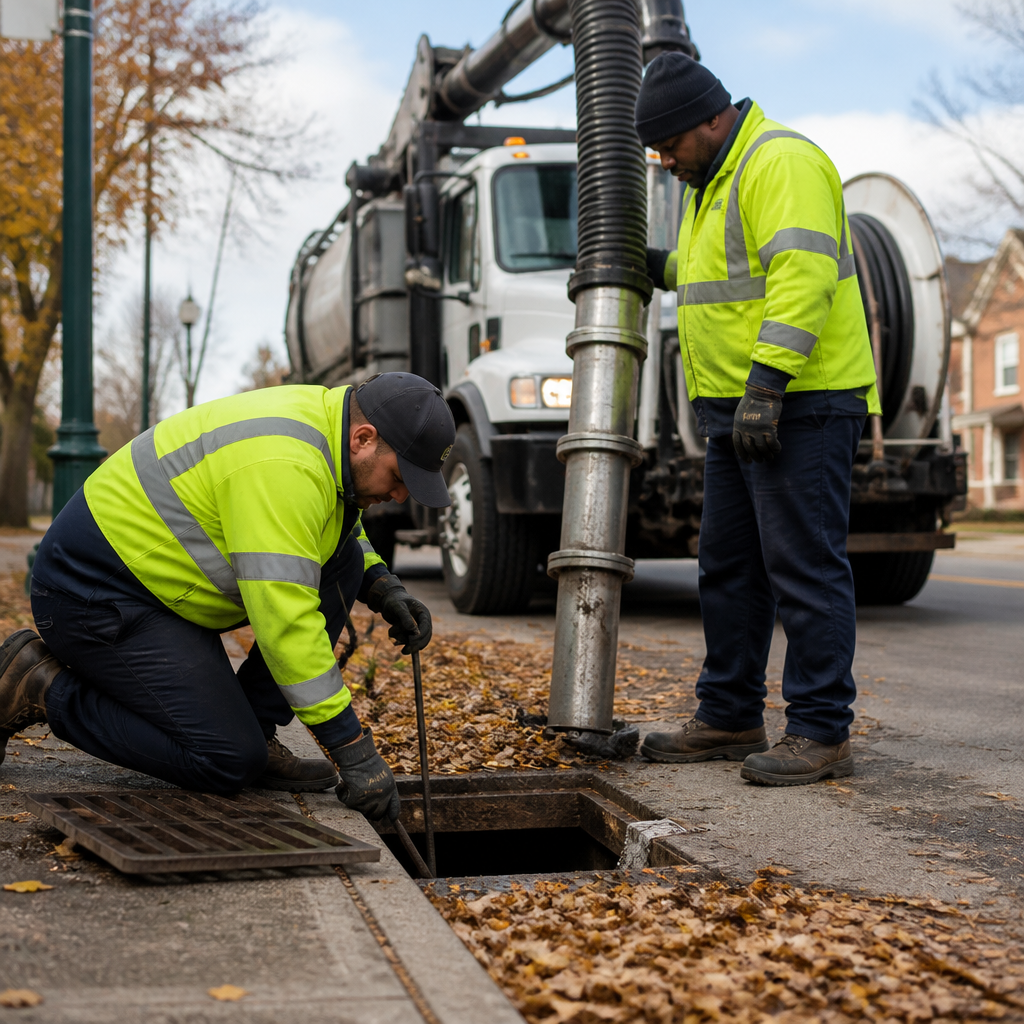


A CCTV camera run through a storm drain can produce hours of footage, and the hard part is deciding which defects need a crew on site this week and which can wait for the next maintenance cycle. Engineers who treat every crack and every sediment line as the same priority end up spending budget on the wrong repairs while a collapsed section keeps carrying load it cannot handle. This guide sets out the CCTV pipe inspection findings that should trigger immediate repair, the ones that belong in a monitoring plan, and how to write observations that hold up when a repair decision is challenged.
Table of Contents
- Quick Takeaways
- What Makes a Finding Urgent
- Structural Failures That Demand Immediate Action
- Joint Failures and Soil Infiltration
- Lateral and Connection Defects
- CCTV Versus Other Assessment Methods
- Blockage Findings When Cleaning Is Not Enough
- Documenting Findings for Repair Decisions
- Frequently Asked Questions
- References
Quick Takeaways
| Key Insight | Explanation |
|---|---|
| Change in geometry is the strongest signal | A pipe that has dropped, flattened, or lost its continuous profile is no longer performing as designed, and it should be escalated rather than logged for later. |
| Active soil infiltration is an urgent finding | Soil entering through an open joint or a cracked wall means voids are forming outside the pipe, which can undermine pavement and adjacent structures. |
| Displacement matters more than a crack alone | A hairline crack in a sound barrel is usually a monitoring item. An offset between sections means the joint or bedding has failed. |
| Blockages at bends and size changes need engineering review | Recurring debris at these points often points to a structural or design cause, so cleaning alone will not solve the problem. |
| CCTV shows condition, not capacity | Video documents visible conditions but cannot establish structural capacity or confirm the exact surveyed location of a defect. |
| Record location precisely for every defect | Station, distance from the access point, and orientation let a crew find the same defect again, which is the difference between a useful report and a wasted mobilization. |
What Makes a Finding Urgent
The first question to ask about any defect is whether it threatens the pipe’s ability to carry flow or the ground around it. Cosmetic surface wear, light staining, and minor hairline cracks in an otherwise sound barrel usually belong in a monitoring schedule. A defect that changes the pipe’s geometry, lets soil migrate in, or restricts flow during a storm moves into the immediate repair category.

In practice, we sort findings by three questions. Is the pipe still round and continuous? Is soil entering the line? Is flow being restricted at a point where a storm event could back water into a parking lot or onto a roadway? A yes to any of these means the report goes to the engineer with a recommendation to act, not a note to revisit next season.
A defect is urgent when it changes what the pipe does, not when it simply looks bad on video.
A camera shows visible conditions inside the pipe, but it does not by itself prove the cause of a drainage problem or determine structural capacity. That gap is why an urgent finding should be confirmed before a full excavation is authorized. Confirmation can mean a second camera run from the opposite access point, probing at the surface, or a review by the engineer of record.
Pro tip: Ask the inspector to record the station, the distance from the access point, and the clock position of every defect. Without those three details, a crew cannot find the same defect again, and the repair estimate will be built on guesswork.
Structural Failures That Demand Immediate Action
Structural failures are the findings that most often justify stopping routine work and escalating the report. They include pipes that have deformed, sections that have fractured, and runs where pieces have shifted out of alignment. Each of these changes how the pipe carries load and how water moves through it, and each can worsen quickly once a storm event adds water and pressure.
Collapsed and Deformed Pipe Sections
A pipe that has sagged, flattened, or lost its circular profile is a repair priority, particularly under a roadway or a loading area. Standing water in a sag holds sediment, and a sag often means the bedding beneath the pipe has moved. On video, the sign is usually a flat or egg-shaped opening, or a visible low point where the camera has to climb to pass.
When you see deformation, record its length, the percentage of the cross section that appears lost where you can estimate it, and whether the deformed zone sits at a joint. A deformed section at a joint with soil coming in is an emergency. A deformed section in an isolated run with no infiltration can still need repair, but it gives the engineer time to plan the excavation properly.
Fractures and Displaced Sections
A fracture alone is not the trigger. Many fractures are stable for years, and the footage often cannot tell you whether a crack is old or new. The findings that justify immediate action are fractures where pieces have shifted, where edges are missing, or where a crack is visibly wider than it was on the previous inspection.
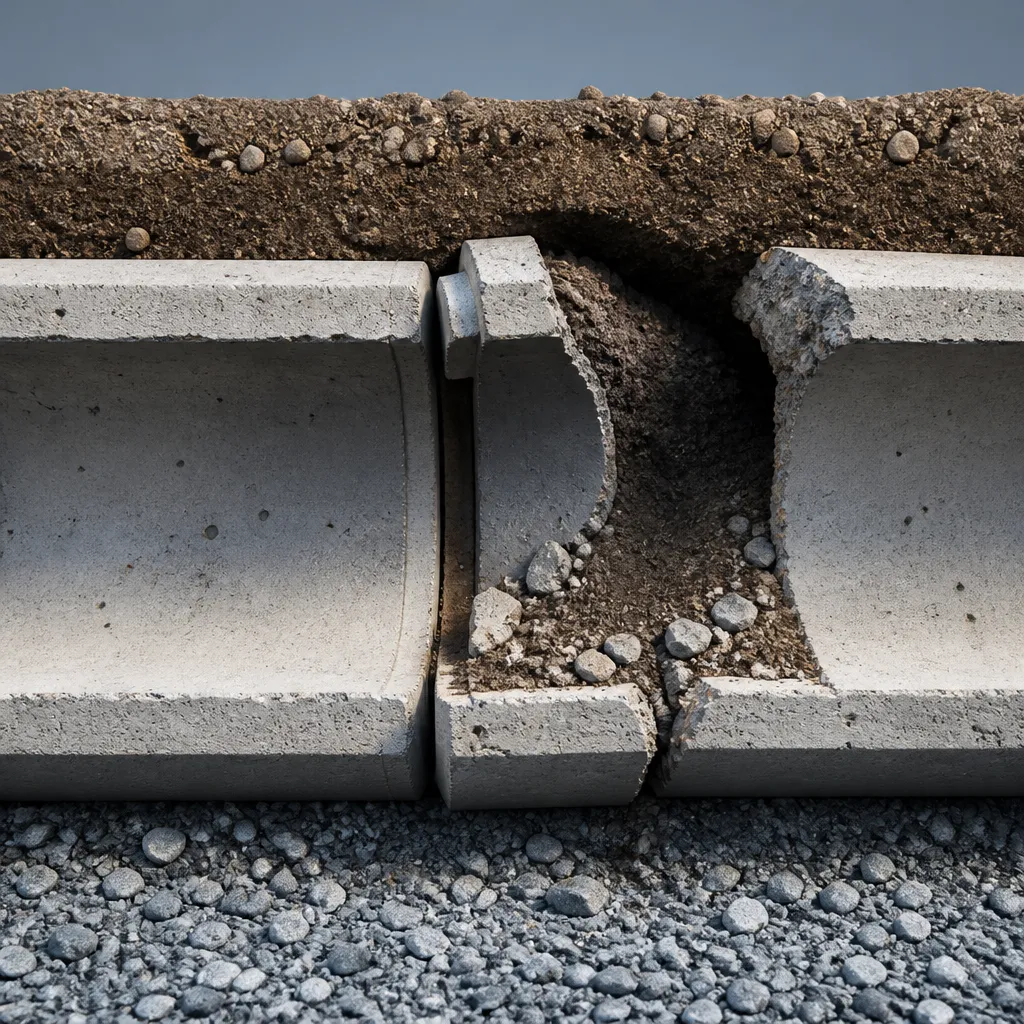
Displacement, where one section sits offset from the next, is the stronger signal. It means the joint or the bedding has failed, and the pipe is no longer supporting itself the way the design assumed. Visionary-style field work treats offset joints as a core inspection question for exactly this reason, because an offset can look minor on the camera while the load path has already changed.
Joint Failures and Soil Infiltration
Joints are where storm drains lose their integrity most quietly. A joint can look intact from the surface and still let soil move into the pipe, creating a void outside that grows with every storm. Engineers who only review the pipe barrel tend to miss this, so the joint footage deserves a slower review.
Open Joints With Visible Soil Migration
An open joint with fine material building up on the pipe invert, or a visible sand or silt line trailing from the joint, is an active infiltration path. The problem is not only the sediment in the pipe. The soil leaving the bedding is creating a void, and a void under pavement can show up later as a sinkhole, a settled curb, or a cracked parking lot.
When you find this, do not stop at the joint. Trace the upstream and downstream sections, note whether the infiltration is continuous or appears only at one joint, and check the surface for any depression above the run. Active infiltration with a surface depression should be escalated the same day.
Root Intrusion at Joints
Roots enter through joints because the joint is the weakest point in the wall. A fibrous root mass at a sound joint can usually be removed by cleaning, and the joint can be re-inspected afterward. A root mass at a displaced joint, with soil loss around it, is a different situation, because removing the roots will also expose the failed joint.
In practice, the cleaning crew and the inspector should work from the same report. If the roots come out and the joint is still open with soil moving, the finding moves from maintenance to repair. Pairing root removal with a re-inspection is the simplest way to avoid repeat calls for the same location.
Lateral and Connection Defects
Connections are where recurring drainage problems hide. Laterals, inlet leads, and branch connections often enter the main line at points that do not match the as-built drawings, and a defect at a connection can be the reason a catch basin floods even when the main line looks clean.
Laterals That Enter at the Wrong Point
When a lateral does not appear where the drawing says it should, stop and document it before moving on. An unmapped connection can carry runoff from a source nobody has accounted for, and it can also explain why a repair in the main line did not fix the flooding. Mark the location, photograph the entry, and flag it for the engineer.
A common mistake is to assume the connection is a benign side branch because it is small. A small lateral that is partly blocked or cracked at its entry can hold water back into the upstream structure during a storm, and that is exactly when the damage shows up.
Failed Connections at Structures
The most urgent connection defects sit where a lateral meets a manhole or catch basin wall. A broken collar, an open annulus around the pipe, or a gap that lets soil pass into the structure is a path for infiltration and a potential point of structural failure. If soil is entering through the connection, or if the connection is the only path for flow, the finding is urgent.
Our structure repair work often starts at these connections, because the fix is usually local but the consequences of leaving it alone are not. A targeted rebuild at the connection, followed by a re-inspection, is typically faster and cheaper than waiting for the surrounding pavement to fail.
CCTV Versus Other Assessment Methods
CCTV is the most widely used tool for storm drain assessment, but it is not the only way to see inside a system. The right choice depends on pipe diameter, run length, bends, access points, and what the engineer needs to decide. The table below compares three common approaches and where each one falls short.
| Method | Best Use | Limitation |
|---|---|---|
| Push camera through a manhole or cleanout | Short runs, smaller diameters, and quick checks at a suspected defect | Limited reach around bends and in longer runs, and the operator controls the viewing angle |
| Robotic crawler | Longer runs, bends, larger diameters, and detailed recording of joints and walls | Requires more setup and access, can be slowed by heavy debris, and costs more to mobilize |
| Visual inspection from access structures | Screening catch basin and manhole condition, checking rims and sumps, and deciding whether a full run is needed | Cannot see beyond the first section of pipe, and misses most joint and crack detail |
In practice, the push camera and the crawler are not competing options. A visual screen at the structures tells you where the problem is, a push camera confirms it at short range, and a crawler documents the full run when the engineer needs a complete record. Using only one method is the most common reason an urgent defect gets missed.
Some systems also need other tests that CCTV cannot replace. Visible footage shows the pipe’s surface and joints, but it does not reveal voids behind the wall or the exact surveyed alignment, so the engineer may need to add those checks when the stakes are high.
Blockage Findings When Cleaning Is Not Enough
Blockages are the findings most often treated as a cleaning problem, and that is often the right first response. The trouble starts when the blockage returns, because a repeat blockage means the cleaning was treating a symptom. Recording what comes out, where it sits, and how quickly the pipe refills is the core of this assessment.
Sediment That Refills After Cleaning
If a pipe refills with sediment soon after it has been cleaned, you have an active source. The source might be upstream construction runoff, an open catch basin sump, or soil coming through a defect. Cleaning removes the material, but it does not stop the source, which is why the upstream trace matters more than the cleaning itself.
Fine sand or silt in a pipe with a joint or crack is especially serious, because it suggests soil is moving through the wall. Escalate these findings and avoid treating them as routine maintenance. Subsurface stormwater system cleaning should be paired with a defect assessment whenever soil fines appear in the debris.
Debris That Points to a Structural Cause
Blockages at a bend, a connection, an outfall, or a change in pipe size deserve a closer look. These points concentrate flow and debris, and they are also where geometry changes. A repeat blockage at one of these locations often points to a design, alignment, or structural issue rather than a maintenance one.
Cleaning these points and moving on is a common mistake. The report should state the location, the material recovered, and whether the blockage is likely to recur. The engineer can then decide whether the fix is a repair, a re-grade, or a change in maintenance frequency.
Pro tip: Before you finalize a report on a recurring blockage, compare the new footage with the previous inspection at the same station. A defect that has not changed is a monitoring item, while a defect that has grown or moved is a repair item.
Documenting Findings for Repair Decisions
A finding is only as useful as the record that supports it. Municipal reviewers, permit staff, and the engineer of record all need to see what was observed, where it sits, and how severe it is. A vague report makes a repair harder to justify, and it makes the next inspection harder to compare.

Writing Observations That Hold Up
Describe what you saw in plain terms. Write “joint offset at station 42 with soil entering at the invert,” not “bad joint.” Terms like severe, significant, or major mean different things to different reviewers, so define them in the report or avoid them entirely. Every observation should have a location, a timestamp on the video, and a still image.
Link each defect to a specific recommendation. If the recommendation is repair, state the repair type and the reason it is urgent. If it is monitoring, state the condition to watch for and the trigger that would move it into repair. This structure is what makes a report defensible when a budget decision is questioned.
Where CCTV Falls Short for Certification
CCTV is a strong tool for finding defects, but it is less reliable as the only check once a repair is complete. Published work on sewer inspection notes that CCTV may not give a complete picture of pipe condition, especially when the question is whether a repair has been done correctly. Video shows the visible surface, and it can miss voids, poor bonding, or problems hidden behind a new liner or patch.
For certification, the engineer should specify the verification method in advance. That might include a post-repair camera run, a comparison with the pre-repair footage at the same stations, and any additional testing the engineer considers necessary. Planning this at the start avoids arguments after the crew has demobilized.
Pro tip: Keep the inspection video, the defect log, and the as-built sketch linked to the same asset ID. When a repair is questioned months later, a single record that connects all three is far easier to defend than a folder of files with different naming conventions.
Frequently Asked Questions
Which CCTV findings always require immediate repair?
No single finding applies to every system, but collapsed or deformed sections, displaced joints, active soil infiltration, and blockages that cause water to back up toward the surface are the ones we escalate right away. The decision also depends on where the defect sits, such as under pavement or in a low-lying area that floods.
Can CCTV confirm the structural capacity of a damaged pipe?
No. CCTV documents visible conditions inside the pipe, but it does not determine structural capacity. If a defect raises a question about load or stability, the engineer needs a structural review in addition to the video.
Is a hairline crack a reason for urgent repair?
Usually not. A hairline crack in a sound pipe is typically a monitoring item. It becomes urgent when it is widening between inspections, when pieces have shifted, or when soil is visibly entering through it.
How should I set re-inspection intervals for monitored defects?
Set the interval based on the defect’s trend, not a fixed calendar. Re-inspect sooner after a major storm, after cleaning that reveals new material, or whenever the surface above the run shows any sign of settlement.
Does clean post-repair CCTV footage prove the repair is sound?
It confirms the visible condition, which is important, but it does not prove everything about the repair. Engineers often need additional verification, and the method should be specified before the work begins.
What should a municipal engineer require in a CCTV inspection report?
At minimum, the report should include the location of each defect, a plain description of what was observed, a severity statement with a defined basis, still images, the video timestamp, and a clear recommendation for repair or monitoring. Reports missing any of these are hard to act on and harder to defend.
What is the most surprising defect you have found on camera in a storm drain, and did it turn out to be the real cause of the flooding?
References
- Guide to proactive CCTV sewer inspection and maintenance planning
- Practical process for investigating recurring storm drain problems with CCTV
- Hybrid review of sewer inspection tools and automated inspection technologies
- Comparison of CCTV pipe inspection with other inspection methods