

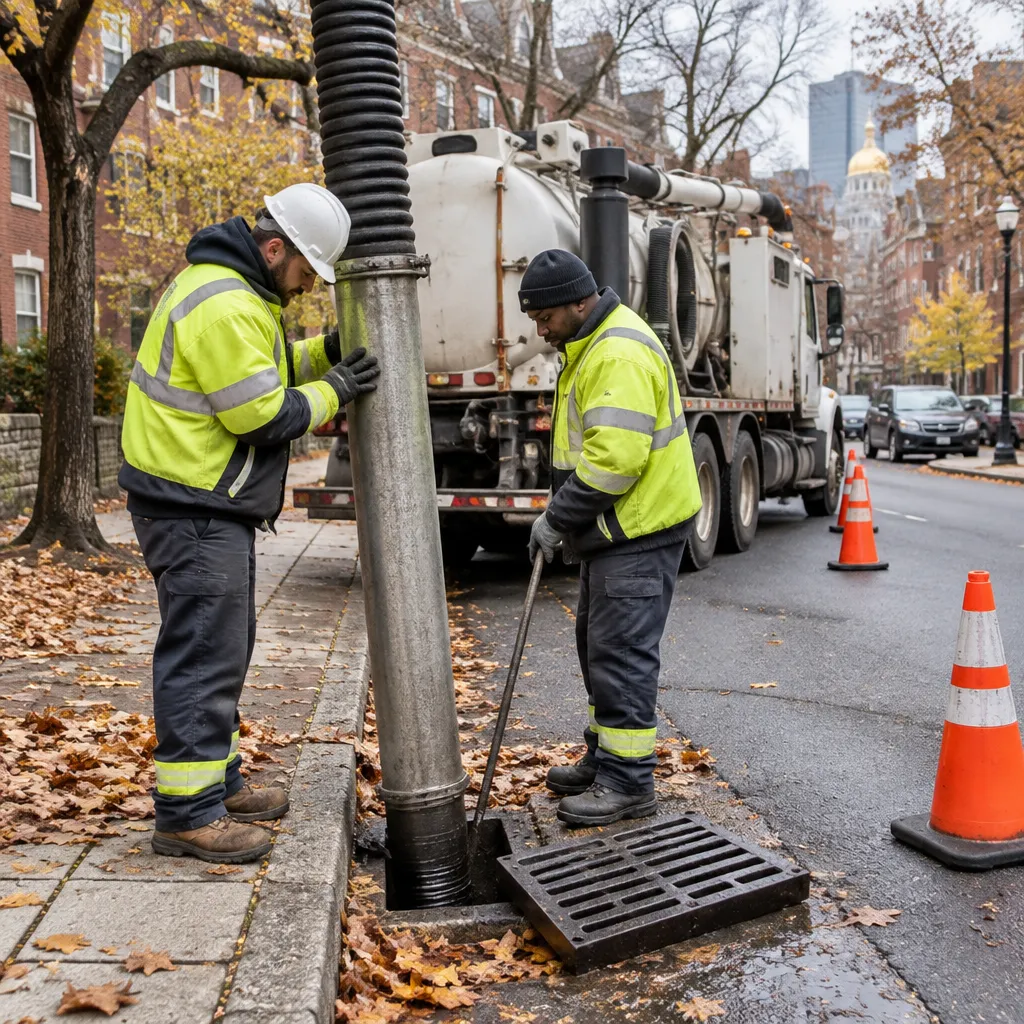
Every winter, the same pattern repeats across Boston and Worcester. A catch basin that was half full of leaves in November becomes a pond at the first real thaw, a porous parking lot stops draining, and a property manager gets a letter from an inspector. Stormwater maintenance in Boston is not a spring cleanup task. It decides whether your system can absorb snowmelt or sends that water across your lot. This guide covers what to inspect, clean, and document before the ground freezes, and where property owners most often go wrong.
Table of Contents
- Quick Takeaways
- Why Winter Changes How Stormwater Behaves
- Pre-Freeze Inspections That Find Problems Early
- Cleaning Catch Basins, Separators, and Subsurface Chambers
- Snow Storage, Sanding, and Salt Practices
- Porous Pavement and Bioretention Before the Snow Flies
- Vegetation and Landscape Choices That Affect Winter Runoff
- What Inspectors Expect on Paper in Boston and Worcester
- Frequently Asked Questions
- References
Quick Takeaways
| Key Insight | Explanation |
|---|---|
| Clean catch basin sumps before the first freeze | A sump full of sediment has no room for snowmelt or a heavy rain. Clean it in late fall, not after the first thaw floods the lot. |
| Snow piled on inlets is a flooding risk | Keep a clear path to every grate and inlet, and mark them so plow drivers and crews can find them under snow. |
| Freeze-thaw cycles find weak pipes | Schedule a CCTV inspection in the fall so cracks and offset joints are documented before repeated freezing widens them. |
| Sand and salt need covered storage | Uncovered piles wash into structures during every melt. Store and mix materials under cover and keep the area swept. |
| Porous pavement clogs faster than owners expect | Vacuum the surface and clear the voids before winter, then set plow blades high so the surface is not gouged. |
| Records are part of maintenance | Log every inspection, cleaning, and repair with dates and photos. Reviewers ask for this paperwork before they ask about the pipe. |
Why Winter Changes How Stormwater Behaves
Winter changes the way water moves across a site. Rain runs off and drops into a structure within minutes, but snow sits on grates, inlets, and curb cuts until it melts. When it melts all at once, the system receives a surge it was never sized to handle.
Freezing adds a second problem. Water that gets into cracks and joints expands as it freezes, and repeated freeze-thaw cycles pry those openings wider. A small crack that looks harmless in October can be a serious defect by March.
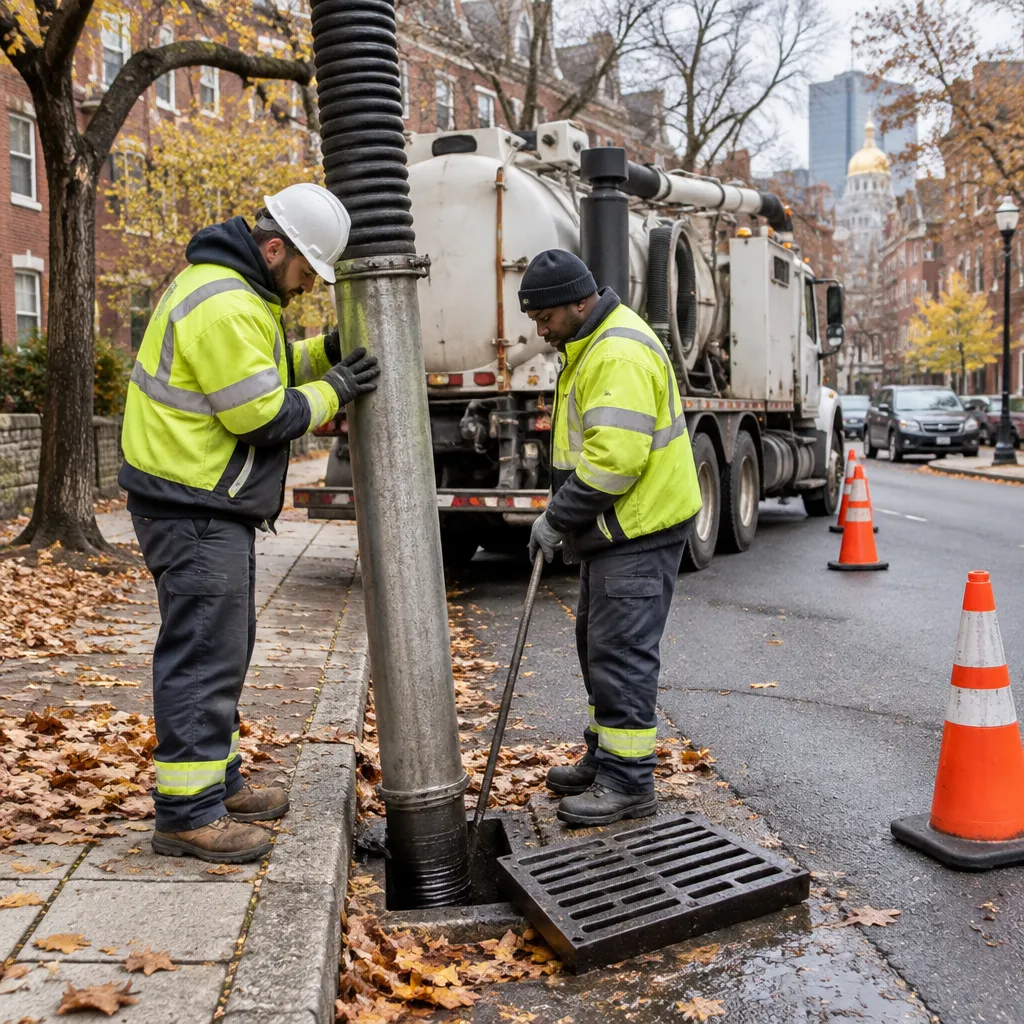
Snow blocking inlets and grates
The most common winter failure is not a broken pipe. It is an inlet buried under a plow windrow that nobody thought to check. In practice, a property with a clear parking lot can still flood at the low corner because the one grate that drains that corner sits under two feet of packed snow.
A common mistake is assuming the plow contractor will keep structures open. Plow crews clear the drive lanes, not your inlets. Put the inlet locations in your snow removal contract, and mark each grate with a stake or a painted cap so the crew can find it after a storm.
Freeze-thaw damage to pipes and structures
Freeze-thaw damage is slow and hidden. Water sits in the bottom of a pipe or in a cracked structure wall, freezes, and pushes the material apart. The next melt then moves more water through a path that is now larger, and the problem compounds over several winters rather than in one event.
This is why we push owners to treat the first freeze as the deadline for inspection, not the first thaw. Once ground is frozen, you cannot see joints, and you cannot easily dig to fix them.
Pre-Freeze Inspections That Find Problems Early
A pre-freeze inspection answers one question: will this system pass the next melt? It should cover every catch basin, outlet, and visible pipe run on the site, and it should record what was found, not just what was fixed. A tidy report with no measurements is of little use when a town inspector asks why a sump was full in January.
A structure that looks fine from the surface can be half blocked underneath, and winter is when that hidden gap turns into a flooded lot.
Inspecting catch basins and outlets
Open every catch basin and measure the sediment depth against the sump. Check outlet pipes for debris and look for water standing above the invert. A sump that is more than half full before winter needs cleaning now, regardless of what the maintenance calendar says.
Check the outlet end too. A clean inlet feeding a blocked outlet is still a flooding risk, and it is the detail most often missed in quick walk-throughs.
What CCTV pipe inspection shows before winter
Camera inspection shows what the surface cannot. In older systems around Boston and Worcester, the usual findings are root intrusion at joints, offset pipes, and sediment bars that form where the grade flattens. Each one holds water that freezes and then expands.
Schedule the camera work before the first freeze, then clean and re-inspect anything flagged. Our stormwater system inspections are built around this sequence, so the findings drive the cleaning and repair list instead of the other way around.
Cleaning Catch Basins, Separators, and Subsurface Chambers
Cleaning is where most of the winter risk is removed. Vacuum trucks pull sediment, leaves, and grit out of sumps, pipes, and chambers faster and more completely than hand tools, and they leave you with a documented volume removed. The key is sequencing: clean the upstream structures first so debris does not migrate into cleaned downstream pipes.
Catch basin sumps and pipe jetting are the first priority. Jetting clears the pipe between structures so water can move once the basin is empty. Skipping the jetting step is a mistake that shows up the first time a melt pushes water back into a newly cleaned sump.
Hydrodynamic separators and water quality devices need different attention. They trap oil, sediment, and floatables in chambers that are easy to overlook because they look like manholes. A separator that is full of sediment cannot treat the next storm, and the flow path can bypass the device entirely.
Pro tip: Before the crew leaves, photograph the sump depth gauge and the removed volume. That single photo set answers most questions an inspector will ask about the cleaning.
For subsurface storage, the same sequencing applies. Our vactor services for subsurface stormwater systems cover chambers and pipe runs that cannot be reached from the surface.
Snow Storage, Sanding, and Salt Practices
Snow storage and deicing are where good intentions often undermine the drainage system. Piles of plowed snow carry sand, salt, and road grit, and they release all of it during the next thaw. Where the pile sits upslope of an inlet, you have built a sediment delivery system.
The question is not whether to use materials but how to store and apply them. The table below compares three common approaches we see on commercial and municipal sites in the region.
| Approach | Where it works | Where it falls short |
|---|---|---|
| Uncovered sand and salt piles | Cheap and quick to set up on a small lot | Runoff carries salt and sediment straight into inlets, and it is hard to defend in a violation review |
| Covered salt storage with mixing inside | Keeps material dry and contained, and the swept pad is easy to document | Needs dedicated space and a written mixing procedure that crews actually follow |
| Reduced sanding with dry cleanup after storms | Lowers the sediment load reaching inlets and matches the sanding reduction the Massachusetts Stormwater Handbook lists as a practice | Depends on crews sweeping up promptly after every event, which many sites skip |
Covered salt storage and mixing
A written procedure for salt and sand storage is the most useful document a site can have before winter. One stormwater pollution prevention plan for a Massachusetts cemetery requires that mixing of salt and sand take place inside a covered, enclosed area, and that the storage area be swept regularly. That standard is a good template for any property with a salt pile.
In practice, the storage pad should drain away from inlets, and the sweeping schedule should be written into the plan with a name next to each task. Without a name, the task does not happen after the third storm.
Dry cleanup and equipment washing
Equipment washing is a quiet source of pollutants. Southbridge’s winter road maintenance procedure calls for washing equipment with proper procedures to keep pollutants out of the stormwater system, and it calls for dry cleanup where possible. A plow truck washed on a pad that drains to a catch basin is a pollution source you control.
The practical rule is simple. Sweep first, then wash only where the wash water is captured and treated.
Porous Pavement and Bioretention Before the Snow Flies
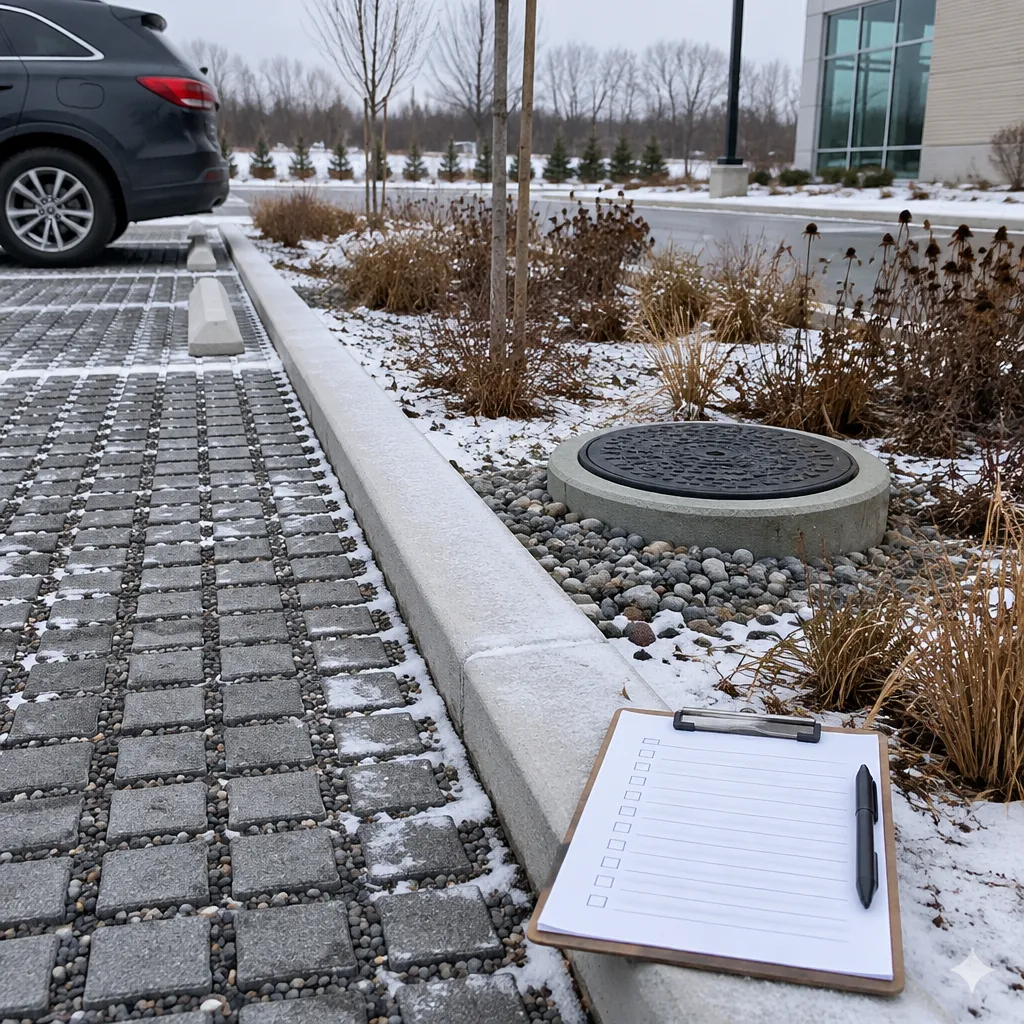
Porous pavement and bioretention areas are often the best-performing parts of a stormwater system, and they are also the easiest to damage with the wrong winter practices. Their infiltration depends on open voids and healthy soil, and both are compromised by sediment and by heavy equipment. A site with these features needs a different winter plan than a site with only pipes and grates.
Vacuuming porous pavement before voids fill
Fall leaves and grit fill the voids in permeable pavers and porous asphalt faster than most owners expect. Once those voids clog, the surface behaves like ordinary pavement and sends water to the edge. Vacuum sweeping before the first freeze keeps the infiltration rate high through the winter.
Our porous pavement maintenance and rehabilitation work starts with a surface assessment, so you know whether a clogged section can be restored or needs replacement before the freeze locks it in place.
Pro tip: Set plow blades high and avoid sand on porous surfaces. Sand and blade contact both seal the surface, and the damage is rarely visible until the first heavy rain.
Bioretention cells and plow damage
Bioretention cells and rain gardens need a clear boundary. Plow piles dumped into the cell compact the soil and bury the plants that hold it together. Mark the edges with stakes or curbing, and direct plowed snow to a designated area that drains away from the cell.
Before winter, check that the cell is draining within its design window and that the outlet is clear. A cell that still holds water in late fall will hold ice in January. For sites with planting beds, our bioretention and rain garden maintenance service includes the soil and outlet checks that matter before freeze-up.
Vegetation and Landscape Choices That Affect Winter Runoff
Landscape practices feed the stormwater system whether anyone plans it that way or not. Leaf litter, grass clippings, and bare soil all become sediment when the melt arrives. Managing them in the fall is cheaper than dredging sediment from pipes in the spring.
Leaf litter and sediment entering inlets
Leaves are the single largest seasonal load on most catch basins in this region. They form a mat over the grate and then break down into fine sediment that settles in the sump. Scheduling one leaf removal pass after the last major leaf drop saves a second cleaning later.
A common mistake is blowing leaves toward inlets during the final mow. Blow them away from grates and into a collection area, or bag them, and keep landscape crews aware of the inlet locations on the site plan.
Landscape practices in municipal guidance
Municipal guidance often treats turf and landscape management as part of stormwater control, not as a separate concern. The Sudbury stormwater standard operating procedures manual offers general guidance on turf and landscape practices that may reduce stormwater-generated runoff. Owners who adopt those basics, such as keeping fertilizer and bare soil away from inlets, lower the sediment and nutrient load their system must handle.
Where the site has significant plantings or turf, our vegetation management for stormwater systems service can set a seasonal schedule that protects inlets and infiltration areas together.
What Inspectors Expect on Paper in Boston and Worcester
Inspectors do not evaluate a stormwater system on appearance alone. They look at whether the owner knows where the system is, what it has received, and what was done about it. Good records turn a difficult inspection into a routine one, and missing records turn a minor issue into a violation.
Outfall monitoring and municipal oversight
Municipal systems are watched closely. The City of Worcester’s drainage and green infrastructure master plan notes that the city’s Sewer Operations staff regularly inspect stormwater outfalls and perform dry and wet weather water quality sampling. Private property owners should expect the same attention to discharge points, especially where a site drains toward a municipal system.
That means a private site should be able to show its outfall condition, the date of the last inspection, and any sampling or observations from storms. If you cannot produce those in a few minutes, the site is already at risk.
Pro tip: Keep a single binder or shared folder with the site map, inlet locations, inspection dates, cleaning volumes, and repair photos. Reviewers ask for the map and the last cleaning date first.
Records that hold up in a violation review
Records should show the date, the work performed, who performed it, and what condition the system was in. A cleaning log with volumes and before-and-after photos is far more persuasive than a general statement that the site was maintained. Our stormwater violation response and compliance assistance team regularly sees sites that could have resolved a notice quickly with records they already had but could not find.
Whether your site is in Boston or Worcester, the principle is the same. Document the work as it happens, not after an inspector arrives.
Frequently Asked Questions
When should stormwater maintenance be completed before winter in Boston?
Aim to finish cleaning and inspection in late October or early November, before the ground freezes. Plan a second leaf removal pass after the final leaf drop, and keep the pre-freeze report with the site records.
How often should catch basins be cleaned?
Once a year before winter is the minimum for most sites. Any catch basin that is more than half full of sediment should be cleaned immediately, regardless of the regular schedule, because it has no capacity left for snowmelt.
Is sand or salt better for stormwater systems?
Neither is harmless, but they cause different problems. Sand fills structures and pipes with sediment, while salt dissolves and moves through the system to outfalls. Reduce sanding where you can, store salt under cover, and sweep up loose material after every event.
Does a site need a Stormwater Operation and Maintenance plan for winter?
A Stormwater Operation and Maintenance plan should define who cleans and inspects each structure and when. Winter tasks such as pre-freeze cleaning, snow storage locations, and salt handling belong in that plan, so they happen on schedule rather than after a complaint.
What should I do if an inspector issues a notice after a winter storm?
Respond in writing and on time, and gather the inspection, cleaning, and repair records for the affected structures before you respond. If the records are incomplete, a structured response that shows corrective action can still protect the site, and our violation response team can help prepare it.
Can porous pavement be plowed in winter?
Yes, with care. Keep plow blades raised, avoid sand, and use a deicer approach that does not seal the surface. Plowing with blades set low or applying sand is the most common cause of premature clogging on permeable surfaces.
Share your own experience with winter drainage on your site, whether it was a flooded lot, a clogged separator, or a letter from an inspector, and tell us what you would change first.
References
- Guide to how snow, ice, and snowmelt affect stormwater drainage systems
- Massachusetts Stormwater Handbook checklist for redevelopment projects, including sanding reduction
- Southbridge, Massachusetts procedure for winter road maintenance and equipment washing
- Example stormwater pollution prevention plan covering covered salt and sand storage
- City of Worcester drainage and green infrastructure master plan executive summary