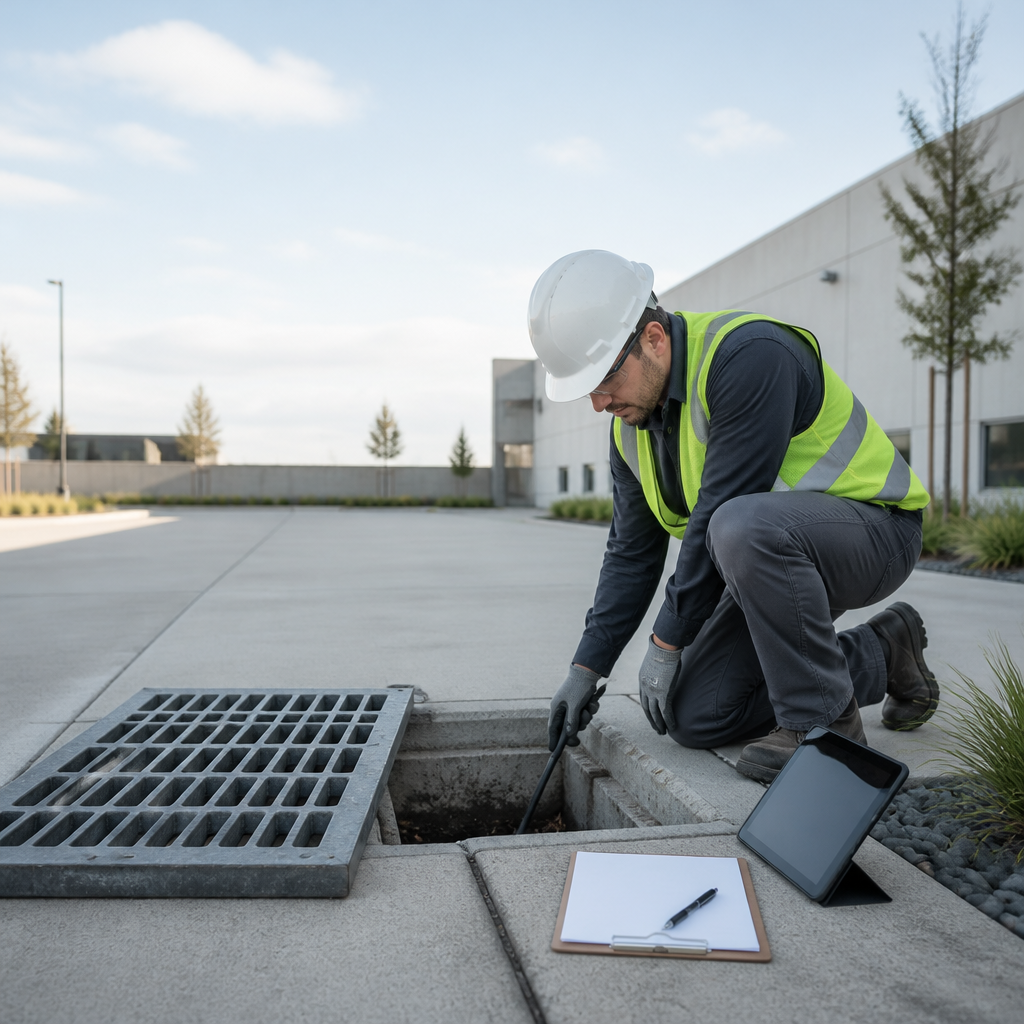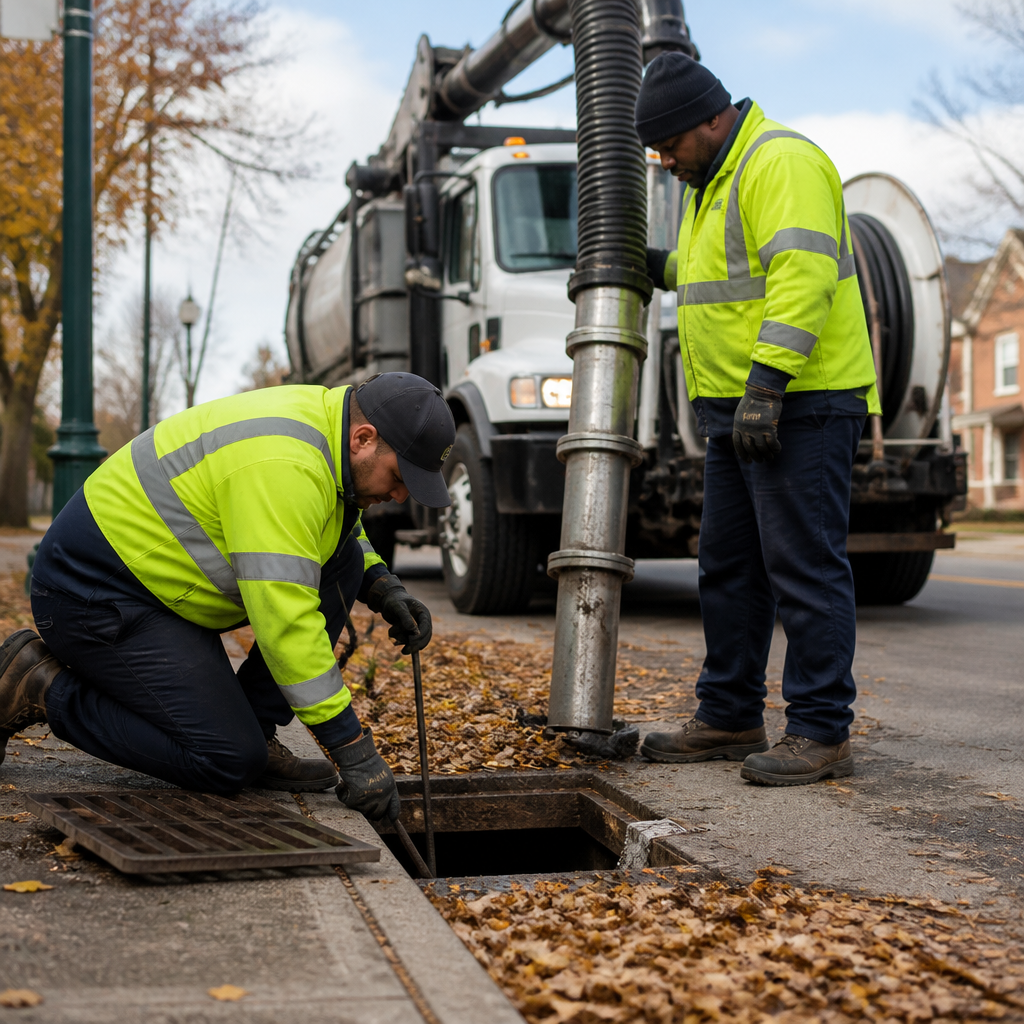

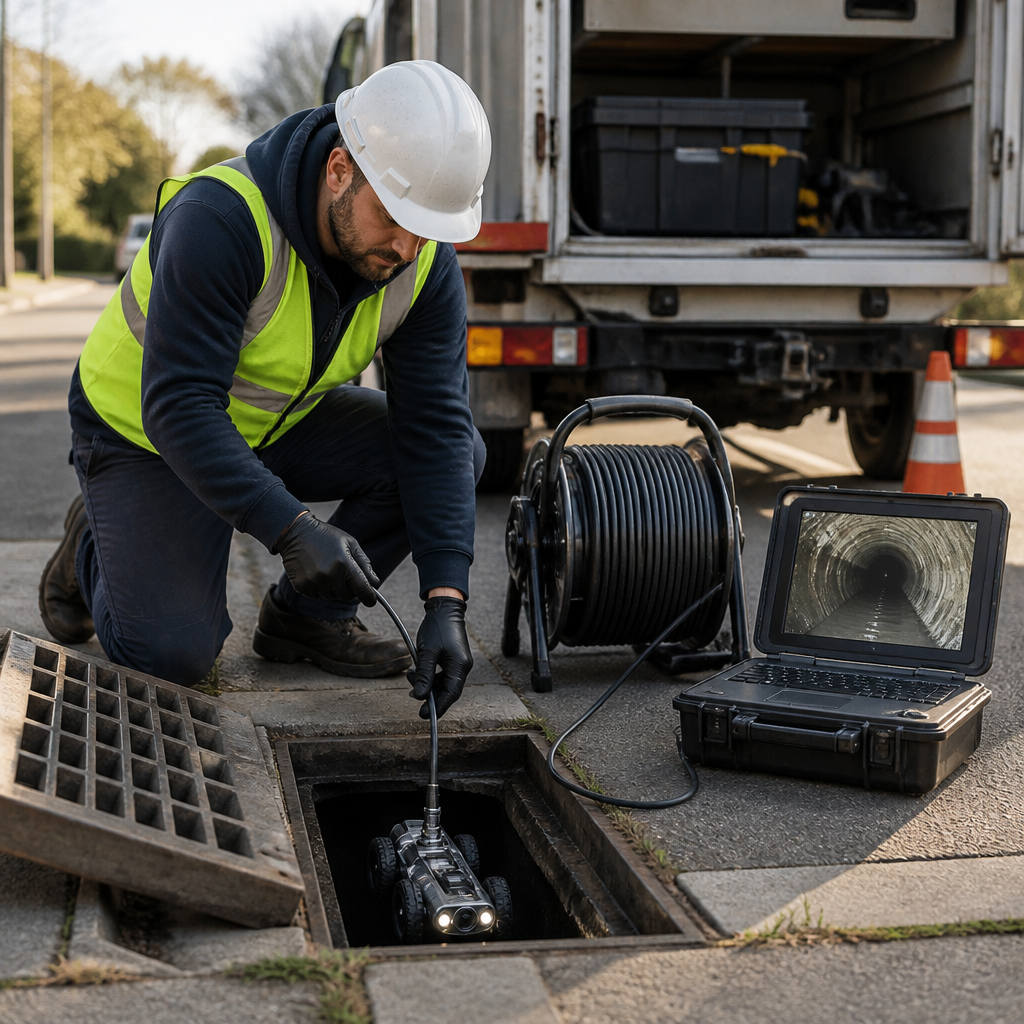
Most stormwater problems stay hidden under the pavement until a catch basin backs up or a street sinks. A walk-through shows you the structures and the water surface, but it tells you very little about the pipe running between them. CCTV pipe inspection closes that gap by moving a camera through the line and recording what it sees. In this guide, we explain what the footage reveals that visual checks miss, where the method has real limits, and how to turn a video file into a maintenance decision that a municipality or property team can defend.
Table of Contents
- Quick Takeaways
- What the Camera Sees That a Walk-Through Cannot
- Where Visual Checks Stop Working
- How a CCTV Crawl Runs in the Field
- Reading the Footage: Logs, Gaps, and Baselines
- CCTV Versus Other Inspection Methods
- Where Cameras Fit in a Stormwater Maintenance Program
- Common Mistakes That Waste an Inspection
- Frequently Asked Questions
- References
Quick Takeaways
| Key Insight | Explanation |
|---|---|
| Visual checks stop at the access point | A walk-through sees the structure and the water surface. It cannot see joints, offsets, root entry points, or debris lodged farther down the run. |
| Sediment depth is only half the story | Footage shows whether a line is partly blocked, where the restriction sits, and whether the flow path is still open. |
| Clean first when a line is heavily silted | Deposits hide the pipe wall and invert. Plan a jetting or vactor pass before filming so the camera records the pipe, not the sediment. |
| Crawler head movement changes what you see | A fixed forward view misses branch connections. Require full pan and tilt when laterals are part of the scope. |
| Video does not certify a repair by itself | CCTV can miss defects when certifying repair work, so pair it with other checks wherever a repair must be proven. |
| Footage needs a defect log | Record each defect with its location, type, and severity so the file supports a maintenance schedule or a violation response. |
What the Camera Sees That a Walk-Through Cannot
A visual check looks at what the pipe lets you see from the top. A CCTV crawl looks at what happens along the full run, from one structure to the next. In practice, that difference decides whether your records describe the whole system or only its entrance. Stormwater lines are rarely uniform, and the defects that matter most often sit out of view.
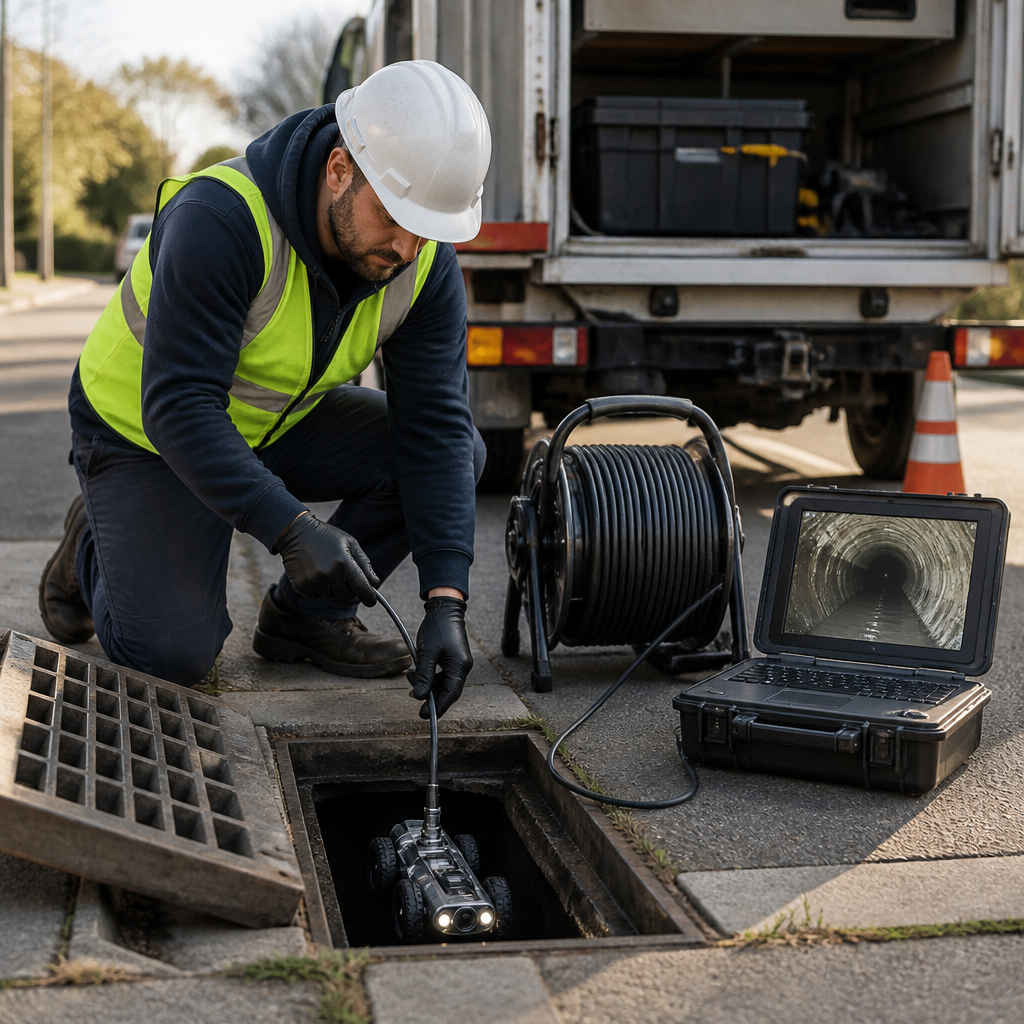
Cracks, joint offsets, and hairline defects
High-resolution imaging is the main reason this method works. Cameras pick up hairline cracks, separated joints, and surface loss that are invisible from a manhole or catch basin. Those small defects often grow into collapses or infiltration paths if nobody records them early. Published guidance on sewer inspection makes the same point: recorded footage becomes a reference for later inspections and for regulatory questions.
Joint offsets deserve special attention. A joint that has shifted a fraction of an inch can change how sediment settles and how water moves through the line. You will not notice that from the surface, but the footage shows the step in the wall clearly enough to flag for follow-up.
Root intrusion and pipe connections
Roots enter through joints and at lateral connections, and a walk-through shows you none of it. The camera shows whether a connection is open, partly blocked, or displaced. A common mistake is to log a lateral as clear because the mainline looked clean at the nearest structure.
Connections are where many billing and responsibility disputes start. A clear record of where each lateral joins the main, and what condition it is in, saves a lot of argument later about who owns the problem.
Debris, corrosion, and sediment bridges
Sediment is visible from the surface only where it reaches the access point. Footage shows whether a deposit is a thin film on the invert or a bar that narrows the flow path. Corrosion and surface loss on concrete or metal pipe appear as texture changes on the wall, and a reviewer can trace them along the run rather than guess at them.
Where Visual Checks Stop Working
Visual checks are fast, inexpensive, and useful for triage. They do not answer questions about the condition of the pipe between structures, and that is where most expensive surprises sit. The honest answer is that a visual check is the right first step and the wrong final answer.
Lines longer than your sightline
A flashlight or a look down a grate tells you about the first few feet. Once a line bends, changes diameter, or drops, nothing visible from the surface confirms what lies beyond. Mapping data is only as good as the last time someone actually saw the inside of the pipe.
Water and silt that hide the invert
Standing water and silt hide the pipe floor. Staff who rely on a glance often report a line as clear when the flow path is partly blocked. If you cannot see the invert from the access point, assume the inspection is incomplete until a camera has confirmed the condition.
Pro tip: Before you film, record the water depth and sediment depth at each structure. If a line is more than partly silted, schedule a cleaning pass first so the camera records the pipe wall instead of the deposit.
Repairs you cannot prove from the surface
After a liner, spot repair, or joint seal, the surface look tells you almost nothing about bond, gaps, or finish. This is where CCTV is strongest and where it still has limits. Published guidance notes that CCTV may not always provide a complete assessment of pipe condition, especially when certifying repair work, so a clean video does not close the file by itself.
The camera answers what is inside the pipe. It does not answer every question about the pipe, and a good report says which questions remain open.
How a CCTV Crawl Runs in the Field
A crawl is simple on paper and easy to do badly. A camera on a motorized crawler moves through the line while a technician at a mobile control unit records, annotates, and watches for problems. The crews that produce useful results plan the setup, the cleaning, and the reporting as one job rather than three separate tasks.
Traffic control and crew size
Most inspections need two technicians and a traffic control operator, especially on public streets. One contractor’s published guidance describes that setup as cost-effective for both small and large jobs, and it reports that well-equipped crews can inspect thousands of linear feet in a day. On busy municipal streets in cities such as Boston or Philadelphia, traffic control often sets the pace of the day more than the camera does.
Crawler head movement
Crawlers with pan and tilt let the operator look at the crown, the sides, and the connections. Some published guidance cites 360-degree panning and 90-degree tilting on robotic crawlers. Ask whether the head rotates fully before you accept a lateral inspection, because a fixed forward view misses branch connections entirely.
Pace and footage quality
Speed matters, but rushed crawls miss things. A camera that moves quickly through a run can blur small cracks and hide the edges of a joint. Set a pace that lets the operator stop at joints, connections, and any section where the wall or the flow changes.
Reading the Footage: Logs, Gaps, and Baselines
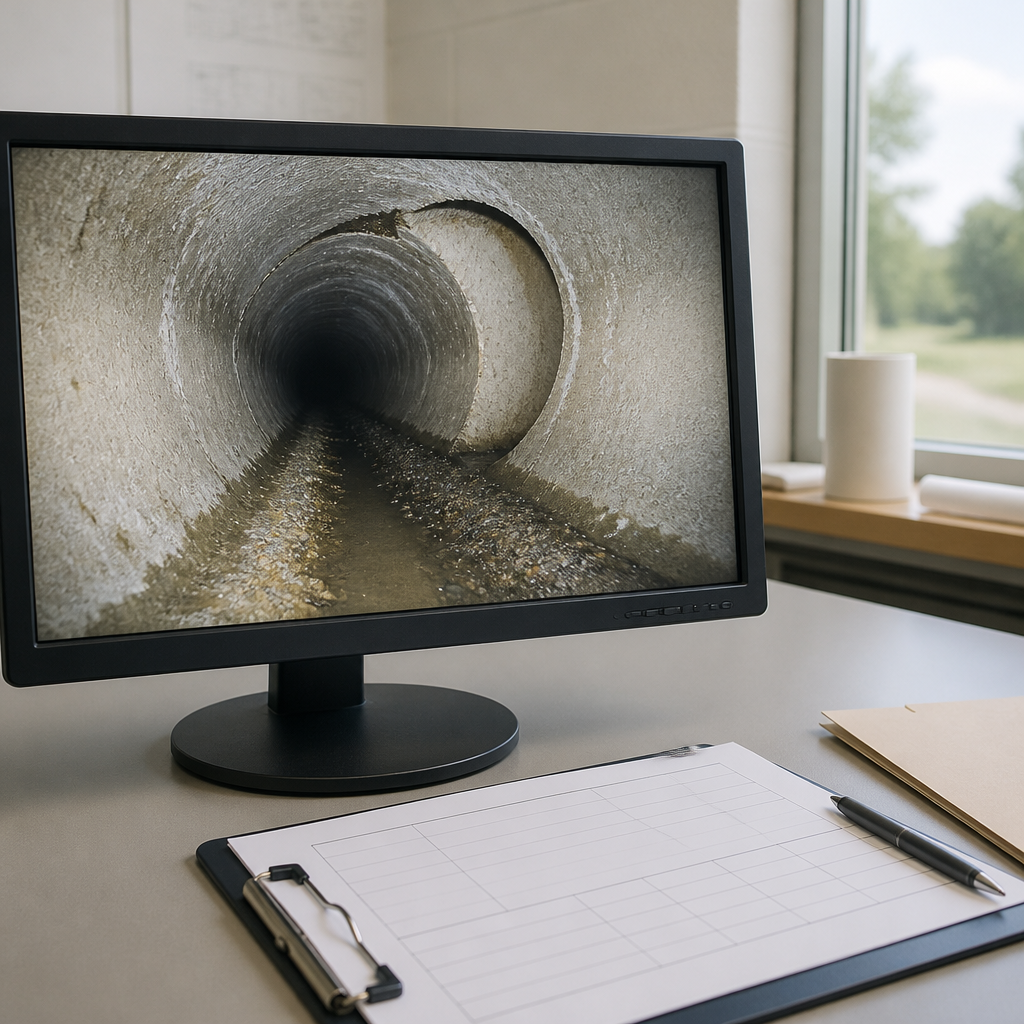
A video file is not the deliverable. The deliverable is a defect log tied to specific locations, with a condition rating that a public works director or property manager can act on. Footage without that log is just an archive that someone will have to watch again later.
Defect logs that a maintenance plan can use
Log each defect with its pipe segment, its distance from the upstream structure, its type, and its severity. A note such as “crack, 2 feet downstream of MH-14, moderate” can be scheduled and tracked. A note such as “some cracks” cannot, and it leaves the owner guessing at what to fix first.
What the report should say about gaps
Good reports state what the camera could not see. Mention standing water, heavy silt, blocked laterals, and any section where the crawler stopped or could not pass. A report that hides gaps invites disputes later, and it gives a reviewer no way to judge how much of the line was actually checked.
Keeping footage for future comparison
Recorded footage gives you a baseline. When you crawl the same line again, you can see whether a crack has opened, a joint has shifted, or a deposit has grown. Without the earlier record, you are estimating the rate of change from memory, which is not a defensible basis for a capital decision.
CCTV Versus Other Inspection Methods
CCTV is not the only tool, and it should not be used for every question. The right choice depends on what you need to know. The table below compares three approaches that show up on stormwater and sanitary lines.
Matching the method to the question
If the question is whether a line is structurally sound, CCTV is usually the starting point. If the question is where an unexpected flow comes from, a dye or smoke test may find the source faster and more cheaply. Visual checks still earn their place for triage, grate condition, and surface flow.
Comparison of common approaches
| Method | Best Use | Main Limitation |
|---|---|---|
| Visual inspection from access points | Fast triage, structure condition, and surface flow observations | Cannot see beyond the first few feet of pipe or below standing water |
| CCTV crawl with pan and tilt | Defects, joints, lateral connections, and invert condition along the full run | Limited by water or heavy silt, so cleaning may be needed first, and it does not prove a repair bond on its own |
| Dye or smoke testing | Tracing unexpected connections and suspected flow paths | Does not show pipe wall condition, and results depend on site access and conditions |
Pick the method by the question, and be willing to combine them. A line that smells of sewage at a grate may need smoke testing to find the source and a crawl to judge the pipe. Treating either test as a substitute for the other is where most wasted money comes from.
Where Cameras Fit in a Stormwater Maintenance Program
Cameras pay off most when their results feed a maintenance plan rather than sit in a file. For property owners and municipalities working under a stormwater Operation & Maintenance (O&M) plan, footage ties inspection directly to scheduled cleaning, repair, and documentation.
Cleaning first, filming second
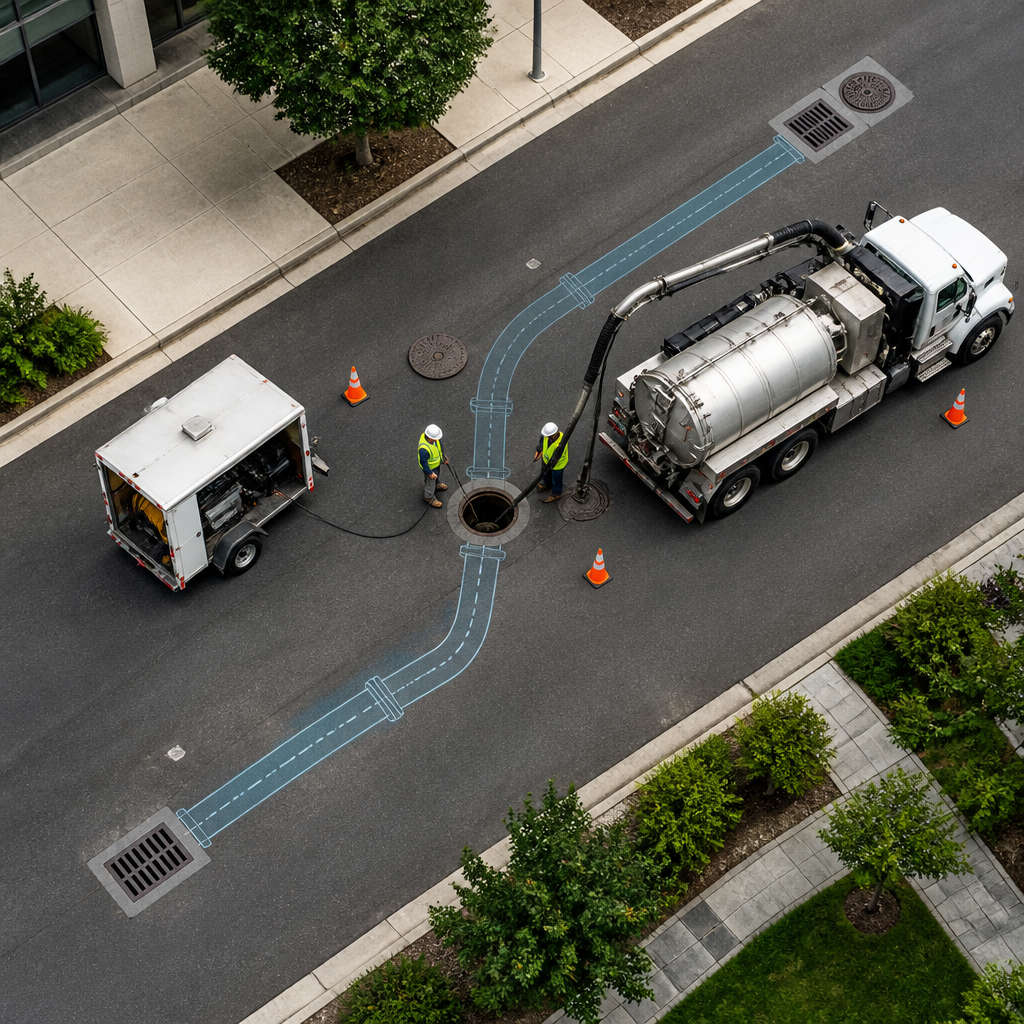
Vactor cleaning of catch basins and pipes is usually the step before a crawl on heavily silted lines. Jetting first lets the camera record wall condition instead of sediment, and it often means you can finish the crawl in a single visit rather than returning after a second cleaning. Plan both steps on the same work order so nobody has to guess what the camera will see.
Subsurface systems and water quality devices
Subsurface chambers, pipe networks that feed hydrodynamic separators, and outlet lines each need different checks. A camera can confirm whether an outlet is open and whether deposits have built up to a level that needs cleaning. It cannot judge treatment performance by itself, so keep the camera results separate from any claim about how well a device is working.
Setting an inspection interval
One contractor’s published guidance recommends inspecting pipelines about every five years as a baseline. Treat that as a starting point rather than a rule. Lines near outfalls, lines in high-traffic areas, and lines with a history of roots or silt usually need a shorter cycle, and the footage from the last crawl should set the next date.
Common Mistakes That Waste an Inspection
Most failed inspections fail for predictable reasons. The problems below show up again and again on municipal and commercial jobs, and each one can be avoided with a few lines in the scope of work.
Filming through standing water
Running a camera through standing water produces footage that shows the surface glare and nothing underneath. If the invert is submerged, record that fact, pump or clean the line, and film again. Calling the line clear based on footage you could not read is a mistake that is hard to undo.
Skipping laterals
Many inspections stop at the mainline and treat laterals as optional. That leaves the most likely entry points for roots and infiltration unexamined. Make lateral inspection a separate line item so it gets priced, scheduled, and reported on its own.
Accepting footage without a log
A disc or file with no written log is not a finished inspection. Insist on a defect table tied to locations and a summary of gaps before you accept the job. Without it, the next person who needs the information will have to watch hours of video to find it.
Pro tip: Put the crawler’s pan and tilt requirements, the lateral inspection scope, and the log format in the scope of work before the bid goes out. Changing those terms after the crew arrives usually costs more than writing them down at the start.
Frequently Asked Questions
How is a CCTV pipe inspection different from a visual inspection?
A visual inspection looks at the structure and the water surface from an access point. A CCTV pipe inspection moves a camera through the run between structures, so it records joints, cracks, connections, and sediment that a visual check cannot reach.
Can CCTV find every defect in a stormwater pipe?
No. Standing water, heavy silt, and some connection geometry can hide defects, and published guidance notes that CCTV may not always provide a complete assessment. A good report records those gaps so the owner knows what remains unchecked.
Do I need to clean a pipe before a CCTV inspection?
If the line is heavily silted or has standing water covering the invert, yes. Cleaning first lets the camera record the pipe wall and joints rather than the deposit. For lightly silted lines, the crew can often film directly and note the conditions in the log.
How often should a stormwater pipe be inspected?
There is no single answer, but one contractor’s published guidance suggests about every five years as a baseline for many systems. Lines near outfalls, in high-traffic areas, or with a history of roots or silt usually need more frequent checks.
What should a CCTV inspection report include?
The report should include a defect log with segment locations, distances from the upstream structure, defect types, and severity ratings. It should also list gaps, such as sections with standing water or blocked laterals, and link the footage to each entry so reviewers can verify the findings.
Is CCTV enough to certify a pipe repair?
Often it is not enough on its own. CCTV can show the finished surface and obvious gaps, but bond quality and some repair details may need additional checks. Use the footage as one part of the verification, and state clearly in the report what the camera could and could not confirm.
What is the most surprising defect you have seen on camera in a line that looked fine from the surface?
References
- Guide to proactive CCTV sewer inspection and pipeline maintenance planning
- Five benefits of CCTV inspection, including crew size and inspection frequency
- Comparison of CCTV and other pipe inspection methods