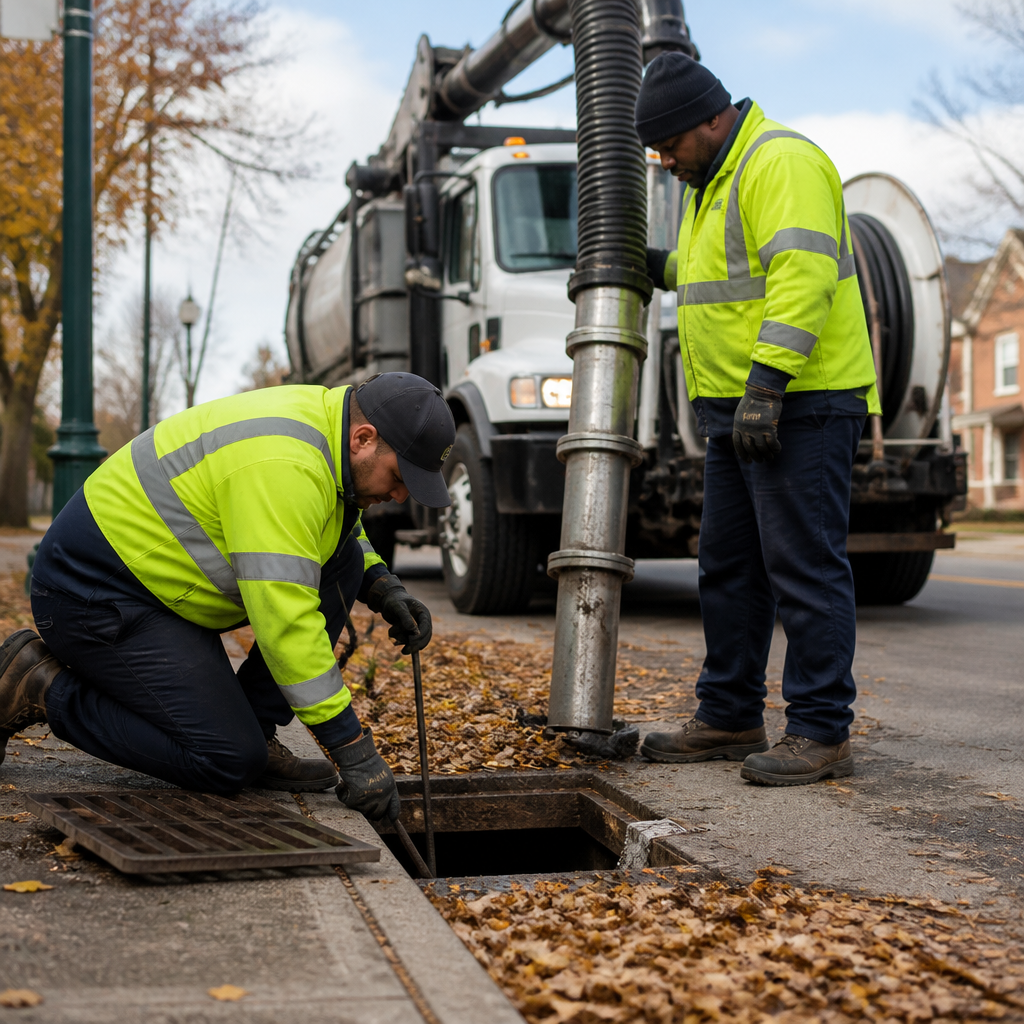

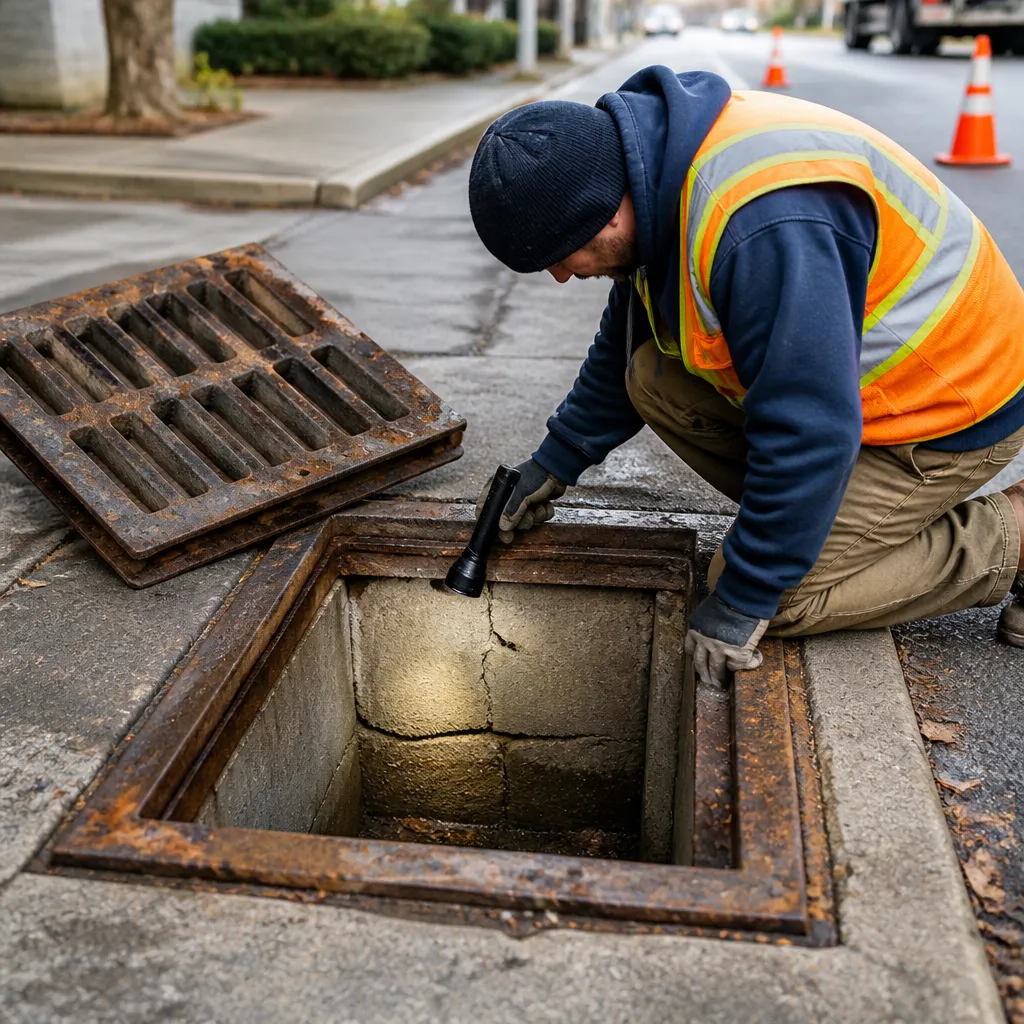
A catch basin with a cracked wall, a rusted frame, or a sagging pipe connection puts a property owner or public works crew in an awkward spot. Patch it and it may fail again within a few seasons. Replace it and you may spend heavily on a structure that was never the real problem. Stormwater structure repair is the right answer far more often than most owners expect, but not always. This article explains how to tell the difference, which inspection findings should drive the decision, and when a full rebuild is the only option that holds up under an O&M plan.
Table of Contents
- Quick Takeaways
- What a Structure Repair Actually Covers
- When Repair Is the Right Call
- When a Full Rebuild Is Justified
- Inspection Data That Settles the Decision
- Comparing Repair and Rebuild Options
- Lifecycle Cost and Deferred Maintenance
- Compliance and Documentation Risk
- Frequently Asked Questions
- References
Quick Takeaways
| Key Insight | Explanation |
|---|---|
| Repair first when the box is sound | If the walls, floor, and benching hold together and only the frame, grate, or a pipe joint is failing, repair is usually faster and cheaper. |
| Rebuild when the structure cannot hold a repair | Widespread cracking, an undermined base, or walls that shift under light pressure mean patches will not last. |
| Decide from condition data, not surface appearance | A sound-looking grate can sit on a failed box. Camera and visual inspection show what the frame hides. |
| Check the pipe connections before anything else | Many so-called structure failures are joint separation or root intrusion at the inlet or outlet, which is a repair problem. |
| Compare repair cost against repeat repair risk | A low-cost patch that has to be redone every few years can exceed the cost of one properly executed rebuild. |
| Document condition before and after the work | Dated photos, measurements, and inspection notes are what protect you during an audit or a violation response. |
| Put the decision into your O&M schedule | Set a re-inspection date so a repair does not quietly turn into a deferred maintenance item. |
What a Structure Repair Actually Covers
Stormwater structure repair means work on the box itself and the connections that tie it into the system. That includes the frame and grate seat, the walls and floor, the benching that guides flow, and the pipe penetrations where lines enter and leave. Most jobs fall into those categories, and each can be addressed without rebuilding the entire footprint.
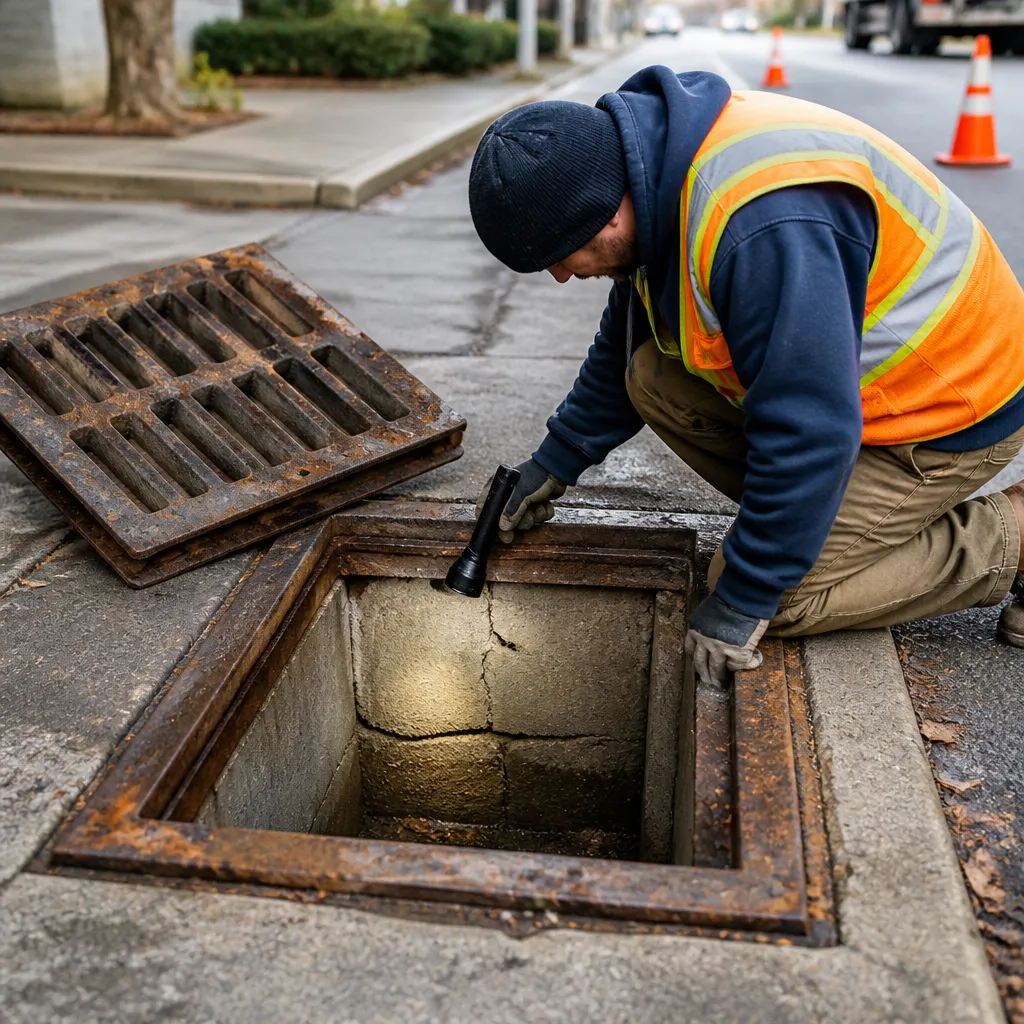
Frame, grate, and lid work
A rocking frame or a grate that has worn past its seat is the most common complaint we see from property managers. It is also the easiest problem to misdiagnose. A frame that moves can mean the bearing surface has broken down, but it can also mean the masonry around it has lost its bond. Resetting the frame on a sound seat is a quick fix. Resetting it on a crumbling collar is a repair that will need to be done again.
Wall, floor, and benching repair
Hairline cracks in concrete or block walls are normal and often stable. What matters is whether the crack is moving, whether the wall is bulging, and whether the floor has settled. Patching and resurfacing can restore a serviceable interior if the wall is still carrying its own load. Benching repair helps flow and reduces sediment buildup, which matters for maintenance cycles and vactor access later.
When Repair Is the Right Call
Repair is the right call when the structure is still doing its job and the defects are local. A healthy box with a failed frame, a few spalled spots, or a leaking joint is a candidate for targeted work. The key question is whether the damage is isolated or part of a pattern. Isolated damage justifies a repair. Pattern damage usually means the structure is aging out, and a repair only buys time.
Sound walls with a failing frame
When the walls ring solid under a hammer, the floor is level, and the pipes are tight, the frame is often the only defect. In that case, reseating or replacing the frame and grate and sealing the seat is usually enough. Crews should verify the bearing surface before ordering a new frame, because a new frame set on a damaged seat will settle and rock within months.
Joint and connection defects in an otherwise stable box
Separated pipe joints, cracked collars around inlets, and root intrusion at penetrations are classic repair work. They are often invisible from the grate and only show up on camera. Targeted sealing or collar repair can restore function without touching the box. Pipe defects are frequently misread as structural failure, which is why camera work belongs at the start of the job, not the end.
Pro tip: Before quoting a repair, have the pipe runs into and out of the structure inspected. If the pipe has lost its joint seal, a box repair alone will not stop the infiltration or sediment problem.
When a Full Rebuild Is Justified
A full rebuild is justified when the structure has lost the ability to carry load or retain its shape. That usually means the walls, base, or both have failed in a way that repair cannot reliably restore. A rebuild is more disruptive, more expensive, and often requires traffic control and sometimes permits. Owners should not choose it by default, but they should not avoid it out of habit either.
Structural failure you can see from the surface
Some failures are visible without any tools. Walls that have bowed inward, a crown that has broken away, or a frame that sits at an angle to the surrounding pavement all point to structural movement. If the structure cannot support a worker safely or cannot hold a frame level, patching is not a serious option. In practice, these conditions are usually the point where the repair estimate and the rebuild estimate start to converge.
Undermined bases and settlement
Settlement is the defect owners underestimate most. A base that has lost support from soil washout will keep moving, and any repair set on that base will crack again. Look for ground voids around the structure, pavement that dips toward the inlet, and pipe joints that have shifted vertically. If the base is undermined, the rebuild must include the foundation, not just the box. A rebuild that ignores the base is a repair with a new name.
Inspection Data That Settles the Decision
The repair-or-rebuild question should be answered by inspection data, not by a quick walk around the site. A reliable assessment combines surface measurements, interior condition, and pipe condition. Our crews document each structure with the same checklist so that a decision made in one season can be compared with a decision made in the next.
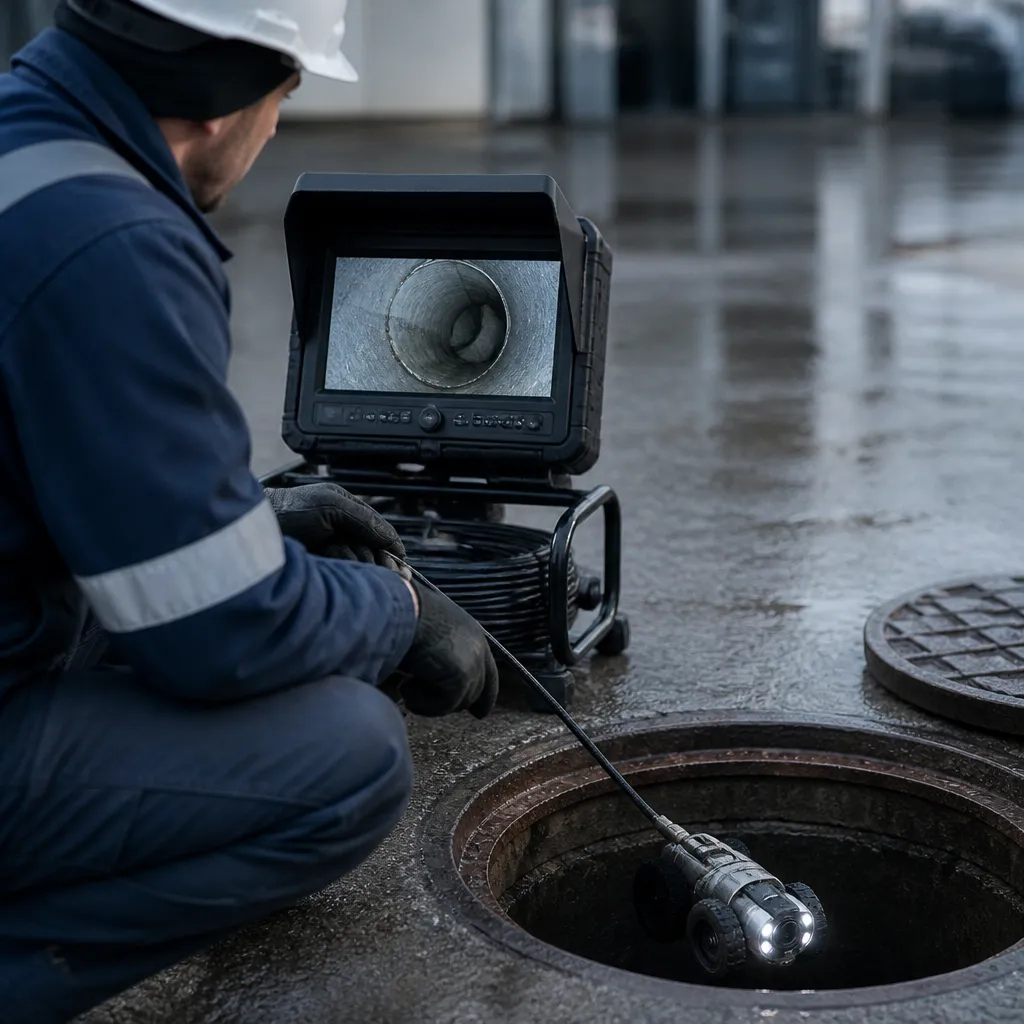
What CCTV and visual inspection show
Camera work reveals what a grate cannot. It shows the pipe entering and leaving the structure, the state of the joints, and whether sediment is building up on the floor. Our CCTV pipe inspections give a clear view of the connections, which often decides whether the job is a box repair, a pipe repair, or both. Visual inspection of the interior adds wall and benching condition that camera work may miss.
Documenting condition for the O&M file
A decision is only as useful as the record behind it. Each inspection should capture dated photos of the frame, walls, floor, and each pipe connection, plus measurements of any movement or settlement. Those notes become the baseline for the next inspection. Our stormwater system inspections are structured to produce that record so the repair decision can be defended later.
Comparing Repair and Rebuild Options
Most structure problems fit one of three approaches. The table below compares them by the conditions where each makes sense and the risk each carries. Use it as a screening tool before you request a quote, and confirm the choice against inspection findings.
| Approach | Best Fit | Main Risk |
|---|---|---|
| Frame, grate, and lid replacement | Rocking or worn frames on a structure with sound walls and a stable base | Leaves wall, floor, or joint defects untouched if they were not inspected |
| Spot repair of walls, floors, and pipe joints | Localized cracks, minor spalling, and loose connections in a stable box | Repeated patching on a deteriorating structure costs more than it appears |
| Full structure rebuild | Collapsed or undermined walls, severe settlement, or a base that cannot be safely entered | Highest cost and disruption, with traffic control and possible permit requirements |
The middle option is where most disagreements happen. Owners often try spot repairs on structures that already need a rebuild. A useful rule is to ask whether the repair restores the structure to a condition that will last through the next maintenance cycle. If the honest answer is no, the repair is only a delay.
Lifecycle Cost and Deferred Maintenance
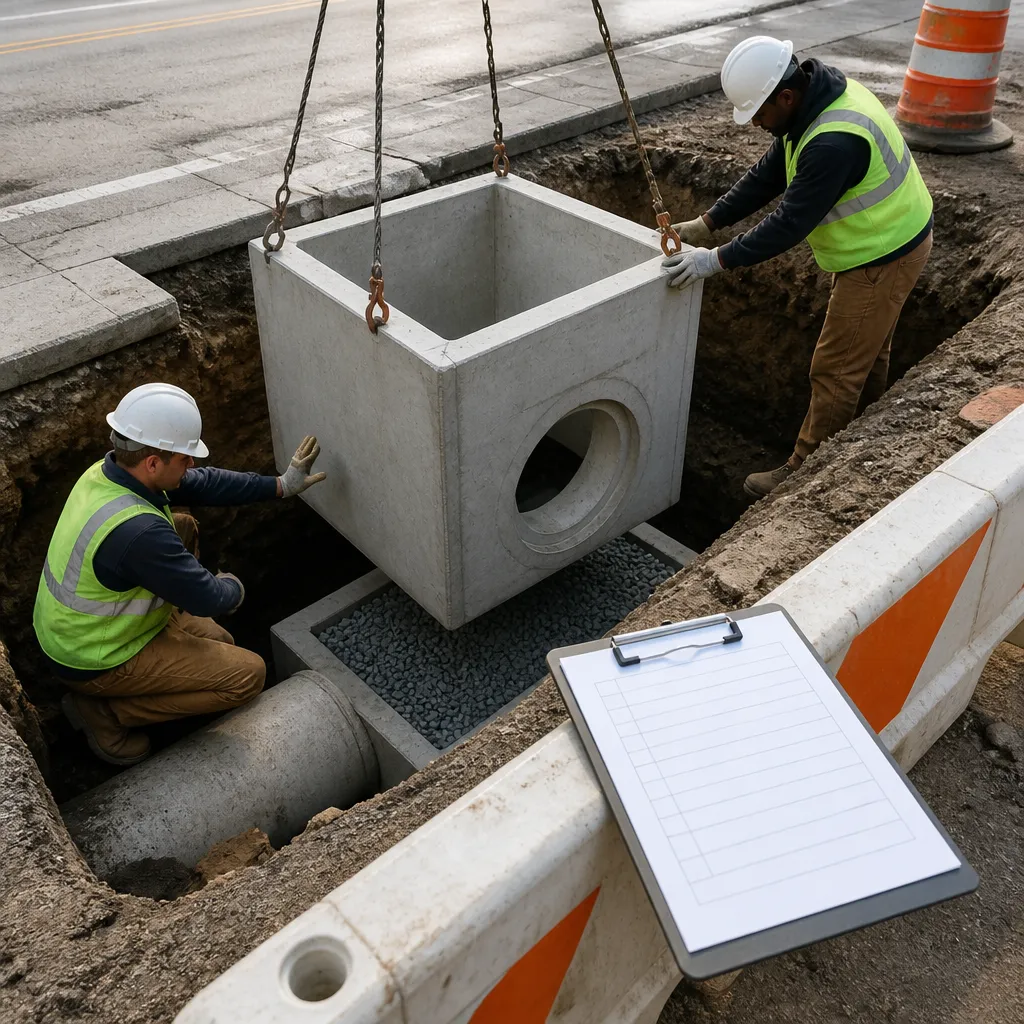
The real cost of a structure is not the price of the first repair. It is the total of repairs, cleanouts, traffic control, and eventual replacement over the life of the asset. Engineering firm Barr notes that the potential costs to fully repair or reconstruct a stormwater system can far exceed routine maintenance, which is why deferred maintenance is so expensive. Owners who wait tend to pay for the rebuild anyway, plus the damage that accumulated while they waited.
Why the cheap patch is often the expensive choice
A patch that restores appearance without restoring structure can look like a bargain on the work order. The problem shows up later, when the same structure is cleaned, inspected, and patched again. Each cycle adds mobilization, traffic control, and sometimes disposal costs. Over several years, the sum can exceed what a single properly scoped rebuild would have cost.
Budgeting for the rebuild you will eventually need
If inspection shows a structure will need replacement within a few years, put it into the capital plan now rather than waiting for a failure. The ASCE stormwater summary reports that the EPA’s 2022 Clean Watershed Needs Survey estimated the 20-year need for large municipal storm sewer systems rose from $23.8 billion in 2012 to $115.3 billion a decade later. That scale of need is one reason agencies that plan ahead tend to fare better than those reacting to failures.
Pro tip: Rank structures by inspection condition and by the consequence of failure, such as flooding a road or a parking lot. A moderately damaged structure on a high-consequence site may deserve a rebuild sooner than a worse one in a low-traffic location.
Compliance and Documentation Risk
Repair and rebuild decisions also carry regulatory weight. When a structure is part of a permitted stormwater system or an O&M plan, the record of what was done and why can matter as much as the work itself. Agencies look for evidence that defects were identified, prioritized, and corrected on a schedule.
Why repair records matter in an enforcement setting
If a regulator questions a failed structure, the first thing they will ask for is the inspection history. A repair with no pre-work photos, no measurements, and no explanation looks like guesswork. A documented decision that shows the condition, the options considered, and the reason for the chosen method is far easier to defend. Georgia’s Environmental Protection Division publishes stormwater guidance that includes inspection and maintenance planning, which shows the kind of records regulators expect to see. If you receive a notice, our stormwater violation response and compliance assistance team can help assemble that record quickly.
Tying repairs to your O&M plan
Every repair or rebuild should update the O&M plan. That means revising the inspection frequency, noting any structure that is now on a watch list, and recording the expected service life of the new work. A structure repaired without a plan update will drift back into the deferred list within a few years, and the file will show that the owner knew about the problem.
Pro tip: For each repaired structure, add a re-inspection date to the O&M schedule before the crew leaves the site. Repairs that are never revisited are the most common source of repeat violations.
Frequently Asked Questions
How do I know if a catch basin can be repaired instead of replaced?
Start with the walls, floor, and base. If they are structurally sound and the damage is limited to the frame, grate seat, or pipe connections, repair is usually the better choice. If the walls move, the base has settled, or the structure cannot be safely entered, plan for a rebuild.
Is a new frame and grate enough to fix a failing catch basin?
Only if the structure below is sound. A new frame set on a damaged seat or a crumbling collar will rock or settle again. Inspect the walls and connections before ordering new hardware.
What inspection should happen before choosing a repair method?
A visual inspection of the interior paired with camera work on the pipes gives the most reliable picture. Surface observation alone often misses joint failures and undermined bases that drive the decision.
Why do repairs on some structures keep failing?
Repeat failures usually mean the root cause was not addressed. Common causes include an undermined base, separated pipe joints, or a structure that has reached the end of its service life. Patching the symptom without correcting the cause leads to repeat work.
How does a repair decision affect compliance?
Regulators and inspectors look for documented condition, a reasoned decision, and an updated maintenance schedule. A well-documented repair supports compliance, while an undocumented one can raise questions during an audit or enforcement review.
Have you faced a repair-or-rebuild decision on a catch basin or stormwater structure, and what tipped the balance for your site? Share your experience in the comments so others can learn from it.