

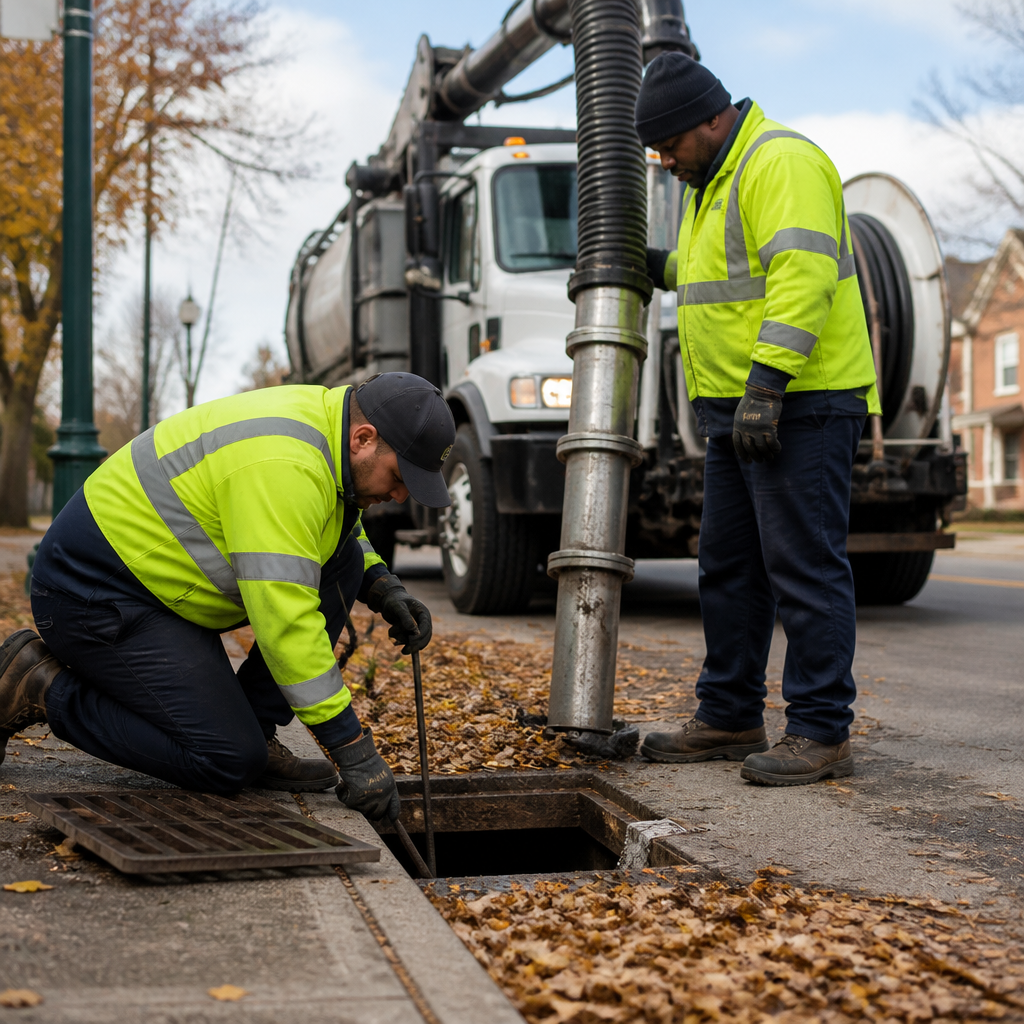
Every fall, municipal stormwater crews face the same bind: the list of drainage problems is always longer than the crew hours left before the first hard freeze. In Richmond and Virginia Beach, that list has to account for two different kinds of risk. A January 2026 winter storm advisory from the Richmond and Henrico Health Districts warned of snow, ice, and extreme cold, while Virginia Beach is working through a long-running flood problem that rain and tides can both trigger. Effective municipal stormwater maintenance before winter comes down to ranking assets by consequence, not by how loudly a complaint arrives. This article explains how those rankings should be made, what usually gets missed, and what to document before the shutdown.
Table of Contents
- Quick Takeaways
- Why Pre-Winter Priorities Differ From Summer Maintenance
- Richmond and Virginia Beach Face Different Winter Risks
- Ranking Assets Before the First Hard Freeze
- Pre-Winter Inspection Before You Clean
- Comparing Three Pre-Winter Maintenance Approaches
- Vegetation, Porous Surfaces, and Bioretention Before Freeze
- Documentation That Protects the Crew and the City
- Frequently Asked Questions
- References
Quick Takeaways
| Key Insight | Explanation |
|---|---|
| Rank inlets on low-lying streets first | These basins collect runoff from everything upslope. When they fill, water reaches the roadway before it reaches the pipe. |
| Clear sand and grit before the first freeze | Winter sanding loads sumps and pipes. Removing that material in the fall keeps the system ready to carry meltwater. |
| Use CCTV on outfalls and trunk lines before storms | Video shows offsets, cracks, root intrusion, and sediment that cannot be seen from the surface. |
| Treat water quality devices as critical assets | A device packed with sediment stops treating runoff and can back water up into upstream inlets during a storm. |
| Build the O&M record while crews are in the field | Dated photos, measured sediment depths, and disposal tickets answer most inspector questions without a second visit. |
| Plan porous and bioretention surfaces for leaf fall | Clogged surfaces lose infiltration capacity at exactly the time freeze and thaw cycles make recovery harder. |
Why Pre-Winter Priorities Differ From Summer Maintenance
Summer maintenance is mostly about keeping water moving through a system that is already working. Pre-winter work is about making sure the system still works when the weather changes character. That means wet snow, sleet, a sudden thaw that sends meltwater into every low point, or a high tide that stalls drainage at the outfall.
The most common mistake we see is how work orders get sorted. Teams sort by the last complaint received, which pushes the loudest neighborhood to the top of the list while a sump holding two feet of sand sits untouched. A better sort asks which asset fails first if it stops draining and how quickly that failure would spread onto a road or into a building.
Consequence Over Complaint Volume
Consequence ranking means scoring each asset on three questions. Does it sit on a route that closes when it floods? Does it discharge to a receiving water that is already under stress? Does it serve a facility that cannot tolerate standing water? Those answers rarely match the complaint log.
“We have all experienced how disruptive winter weather can be to our daily lives,” said Elaine Perry, M.D., Director of the Richmond and Henrico Health Districts. The same logic applies to stormwater crews. The disruption is predictable, so the preparation can be too.
Why Timing Matters More Than Volume
A crew can clean a large number of catch basins in a week, but if that work lands the week after a freeze, the sediment has already moved into the pipes. Sequence matters as much as scope. The first pass should go to the assets that would fail under the first serious storm, not to whatever is easiest to reach.
Richmond and Virginia Beach Face Different Winter Risks
Richmond and Virginia Beach share a state and a winter calendar, but their stormwater problems do not line up neatly. Virginia Beach’s stormwater materials describe facilities that help remove pollutants from rainwater runoff and help prevent erosion and flooding. Richmond’s winter messaging, by contrast, has focused on snow, ice, and cold, which shifts the pre-winter emphasis toward surface drainage and freeze-thaw behavior.
Virginia Beach: Recurring Flooding and Coastal Pressure
The city describes its Flood Protection Program, called The Ripple Effect, as a comprehensive 10-year plan to address recurrent flooding. Climate.gov’s case study on the city notes that increased flooding there results from a combination of rising sea level and increasing annual rainfall. For maintenance crews, that means inlets, pipes, and outfalls will be asked to perform under tidal and rainfall stress, not only routine runoff.
A Fitch Ratings action on the city’s stormwater revenue bonds, published in 2025, says the city expects to expand and innovate its stormwater infrastructure with large floodgates and elevated roadways. New gates and roadways depend on the older pipe network feeding them. A gate cannot protect a street if the drainage upstream of it is full of sediment.
Richmond: Snow, Ice, and Repeated Thaws
The January 2026 advisory from the Richmond and Henrico Health Districts was built around snow, ice, and extremely cold temperatures. For stormwater, the risk in that kind of winter is less about one flood event and more about repeated freeze and thaw cycles. Meltwater runs into inlets, then refreezes across grates and curb openings, and crews need to know whether those inlets are clean enough to take the next surge.
The City of Richmond has also published its own winter season preparedness update, which is worth reading alongside any local plan. In practice, the questions to answer are simple: which inlets collect the most runoff during a thaw, and which of them were last cleaned before the previous season’s sanding.
Ranking Assets Before the First Hard Freeze
Once the consequence questions are answered, the ranking becomes practical. We group assets into three tiers before the first forecast freeze. Tier one covers assets that can flood a road or building within hours. Tier two covers assets that discharge to stressed receiving waters. Tier three covers assets that are simply overdue for service.
Inlets and Catch Basins on Low-Lying Streets
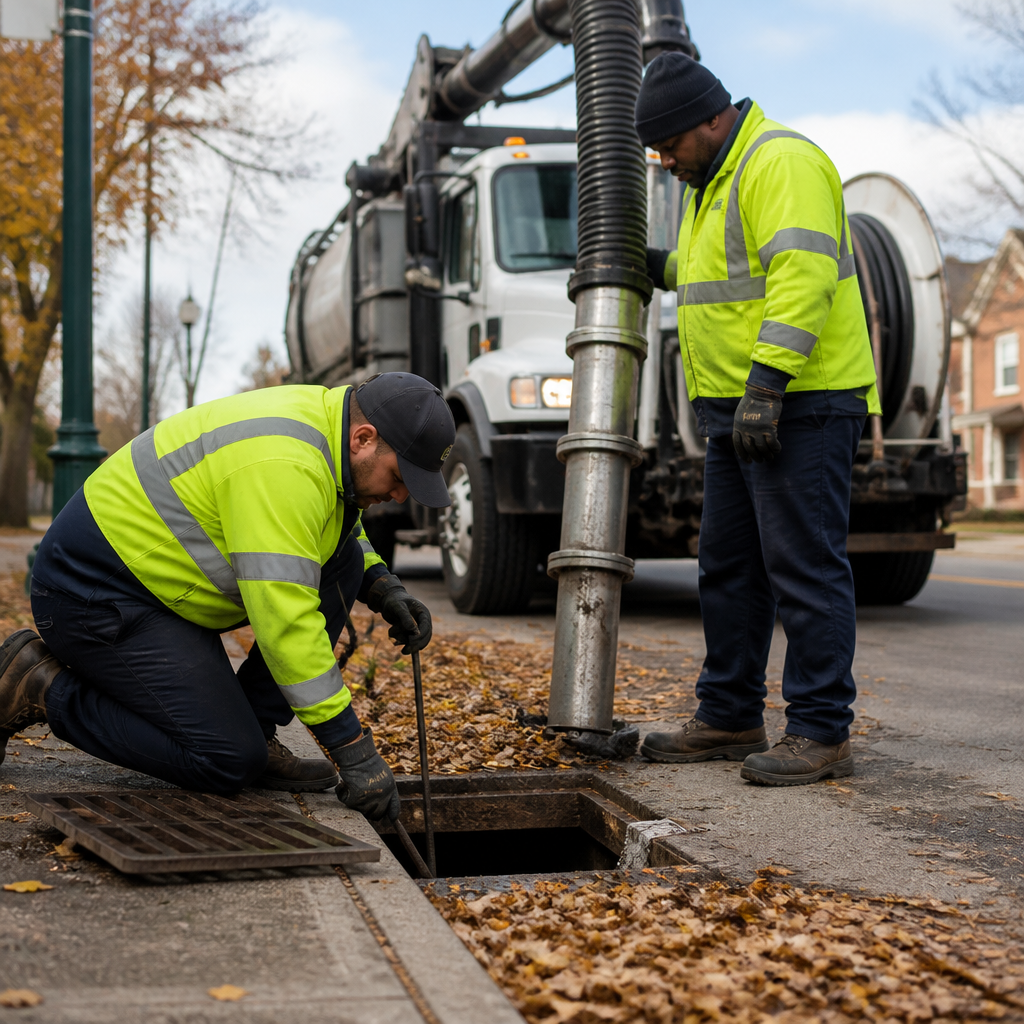
Inlets at the lowest point of a block take runoff from everything upslope. When sand from winter treatment or leaf litter fills the sump, the basin stops capturing water before the gutter overtops. These go first in tier one, and if a basin is clear but upstream runs are still slow, a jetting pass on the connecting pipe is the next step.
Pro tip: Have the crew record sump depth on every basin, in inches. A basin that gains two more inches each season tells you when to add a visit, and that trend is worth more than any fixed interval on the calendar.
Outfalls and Trunk Lines That Carry Tidal Water
In coastal areas, outfalls can be submerged at high tide, which means flap gates and check valves can stick open or closed. A structure that looks fine from the surface may be packed with sediment behind the gate. Before winter, we want camera footage of the outlet and the first run of pipe upstream, not just a visual check from the lid.
Water Quality Devices That Fill Up Quietly
Hydrodynamic separators and other water quality devices are built to hold sediment until someone removes it. Once they fill, they stop treating runoff and can restrict flow during a storm. Cleaning them after the first winter storm is too late for the sand that has already passed through.
Pre-Winter Inspection Before You Clean
Cleaning without inspection wastes crew hours. A catch basin that looks full may only need a quick vacuum, while a pipe with a collapsed section needs repair before anyone cleans it. Inspection tells you which work order to write, and it stops you from sending a jetting truck to a problem that needs a rebuild.
Where CCTV Earns Its Cost
CCTV pipe inspection shows cracks, offset joints, root intrusion, and sediment lines that are invisible from a manhole. Before winter, it answers the question that matters most: will this pipe carry a meltwater surge, or will it fail under load? We schedule camera work on trunk lines and outfalls first, because one failed trunk line can cut off dozens of inlets at once.

Writing Inspection Results So Someone Can Act on Them
A video file alone does not help a crew. The useful record is a short note that includes the structure ID, the defect type, the measured depth or width, and a recommended action with a priority. Vague notes such as “needs attention” tend to get deferred until a storm makes them urgent.
Comparing Three Pre-Winter Maintenance Approaches
Most municipal programs run some mix of three approaches. The table below compares them on the criteria that matter once the first freeze arrives. None of them is wrong on its own, but relying on any one of them alone is where systems tend to fail.
| Approach | Where It Works | Where It Falls Short |
|---|---|---|
| Reactive cleaning after complaints or storms | Responds to real problems on a known route and needs little planning | Problems found after a storm are already causing flooding, crews work under pressure, and there is no trend data |
| Fixed-interval cleaning on a calendar | Simple to schedule and budget, with predictable crew workload | Treats a lightly loaded basin and a sand-choked one the same way, and misses fast-filling assets between visits |
| Condition-based cleaning guided by inspection | Targets the assets that need work, builds trend data, and supports documentation | Requires inspection capacity up front and disciplined recordkeeping |
In our experience, the condition-based approach is the right default for trunk lines, outfalls, and water quality devices. Fixed intervals still make sense for street sweeping on routes that generate heavy leaf or sand loads. A pure calendar schedule is the approach we see fail most often before winter, because it looks organized right up until a storm shows which assets were skipped.
Vegetation, Porous Surfaces, and Bioretention Before Freeze
Leaf fall and winter sanding hit different parts of a stormwater system, and both can reduce infiltration. Porous pavement and bioretention cells are designed to drain, so when they clog, they fail quietly. Once the surface seals over, water sits on top or runs off where the system was never meant to send it.

Porous Pavement Needs Vacuuming, Not Just Sweeping
Porous pavement maintenance works best when the surface is vacuumed to pull fine sediment out of the void space. Standard sweeping can push material into the openings instead of removing it. Before winter, we test infiltration on sample areas and schedule a second pass on sections that receive sand or leaves from adjacent trees.
Bioretention and Rain Gardens: Cutting Back at the Right Time
Vegetation management in bioretention cells is a balancing act. Cutting back too early removes the cover that protects the soil, while waiting too long lets dead plant matter mat over the surface and block inflow. Our rule is to cut back once stems are dormant and remove the cut material before the first heavy rain, so it does not wash into inlets.
Pro tip: Photograph each bioretention inflow point at the start of the season from the same position. Comparing those frames in spring shows whether sediment is building faster than the surface can handle.
Documentation That Protects the Crew and the City
Documentation is where pre-winter work either pays off or disappears. An O&M plan sets the schedule and the standard. The field record shows that the work happened, what was found, and what was done about it. Without both, a city has little to show an inspector.
Building the Record While Crews Are in the Field
The most useful habit is to capture the same data on every asset: a dated photo, a sediment depth reading, and the disposal ticket for removed material. Those three items answer most follow-up questions without another site visit. Crews that collect them consistently rarely have to reconstruct a history from memory.
Responding When an Inspector Finds a Blocked Device
When an inspector finds a blocked device, the response is judged by speed and specificity. A strong written response states the cause, the cleaning date, the disposal record, and the change made to the maintenance interval. Stormwater violation response works best when the work order history already supports the explanation.
Pro tip: Keep the O&M plan and the field log in matching folder structures. Inspectors ask for both, and a mismatch between them creates more questions than an overdue cleaning does.
Frequently Asked Questions
When should municipal stormwater maintenance start before winter?
Start with the high-consequence assets, meaning low-lying inlets, trunk lines, and outfalls, well before the first forecast freeze. Routine sweeping and calendar work can fill the rest of the schedule. The right start date depends on what the local forecast shows and how long the highest-risk assets take to service.
Do coastal systems in Virginia Beach need different pre-winter work than systems in Richmond?
The main difference is tidal backwater. Flood-prone areas in Virginia Beach can see outfalls submerged or restricted at high tide, so gates, check valves, and outlet pipes need closer attention. Richmond’s winter risk is tied more closely to snow, ice, and repeated freeze and thaw cycles, so inlet clearing and surface management take the lead.
How often should water quality devices be cleaned?
There is no universal interval. Set the first cleaning based on measured sediment depth, then adjust after the next two or three visits. A device that is still well below capacity at each visit can have its interval extended, while one that fills quickly needs a shorter cycle.
Is CCTV inspection worth doing before winter if the pipes look fine?
Yes, especially for trunk lines and outfalls. Surface checks miss offsets, cracks, and sediment behind a gate or inside a bend. A pipe that looks clear from the manhole can still hold a blockage that only appears under a meltwater surge.
What should a municipality keep on file to respond to a stormwater violation?
Keep the O&M plan, dated field records with photos and measurements, disposal tickets, and any repair or rebuild reports. Together, these show what was maintained, when, and why. Missing records are much harder to defend than a late cleaning.
Tell us which asset your team ranks first before freeze season and what changed that order for you.
References
- January 2026 winter storm preparedness advisory from the Richmond and Henrico Health Districts
- City of Richmond update on its winter season preparedness efforts
- Virginia Beach public works overview of stormwater management and flood protection
- Virginia Beach progress report on its flood protection program projects
- Fitch Ratings action on Virginia Beach stormwater revenue bonds