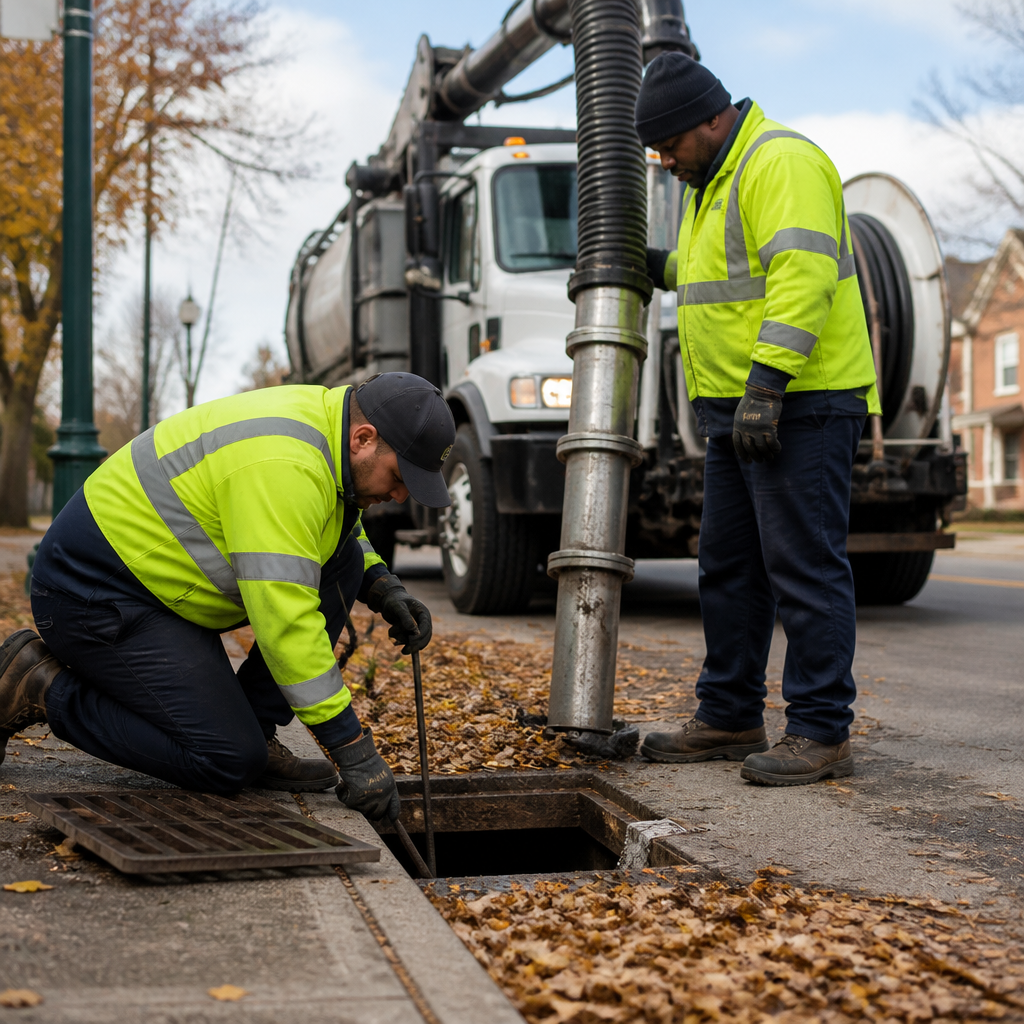

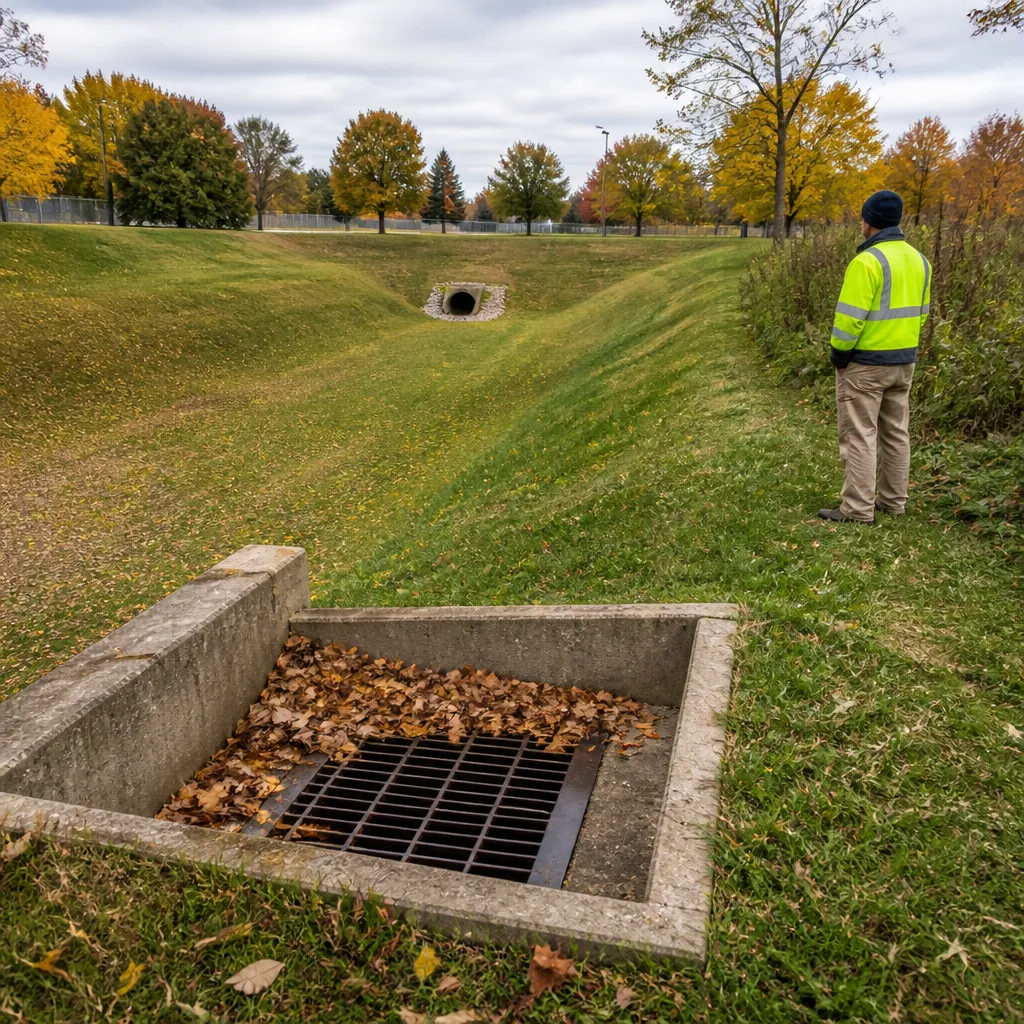
Most stormwater basins look tidy by the end of October, and that is exactly the problem. Crews rush to cut everything down before the first frost, and they often clear the wrong things. Vegetation management stormwater work is not about making a basin look finished. It is about keeping the inlets open, the outlet working, and the embankment stable through winter and into the first big melt. Fall cutting protects function only when you know which growth to remove, which to leave, and where the leaves will end up. This guide explains how we make that call on commercial sites and municipal systems.
Table of Contents
- Quick Takeaways
- Why Fall Is the Decision Point for Basin Vegetation
- Which Maintenance Tasks Actually Protect Function
- Clearing Inlets, Outlets, and Low-Flow Openings Before Winter
- Building a Vegetation Management Plan That Holds Up
- Choosing a Fall Cutback Approach
- Basins With and Without a Permanent Pool
- Documenting Work and Responding to Violations
- Frequently Asked Questions
- References
Quick Takeaways
| Key Insight | Explanation |
|---|---|
| Clear inlets, outlets, and trash racks before leaf drop peaks | Leaves that wash into low-flow openings during the first storms cut function exactly when the basin is needed. |
| Remove woody growth that sits too close to structures | Roots can work into embankments and structure joints. EPA design guidance calls for trees and shrubs at least 25 feet from principal spillways. |
| Cut selectively instead of mowing to bare ground | Full removal of cover leaves soil exposed over winter and removes habitat that may have design value. |
| Match the fall plan to the basin type | Retention basins hold a permanent pool, while detention basins drain between storms. Their vegetation rules differ. |
| Photograph and log every structure you clear | Dated, basin-specific records are the first thing an inspector or regulator asks for when a blockage is reported. |
| Keep a written vegetation management plan | A plan answers which tasks are needed, how often, when, by whom, against what benchmarks, and at what cost. |
Why Fall Is the Decision Point for Basin Vegetation
Fall is when vegetation starts affecting hydraulics. Leaves, dead stems, and annual growth drop into the basin all at once, and the first storms push that material toward the inlet, the trash rack, or the low-flow orifice.
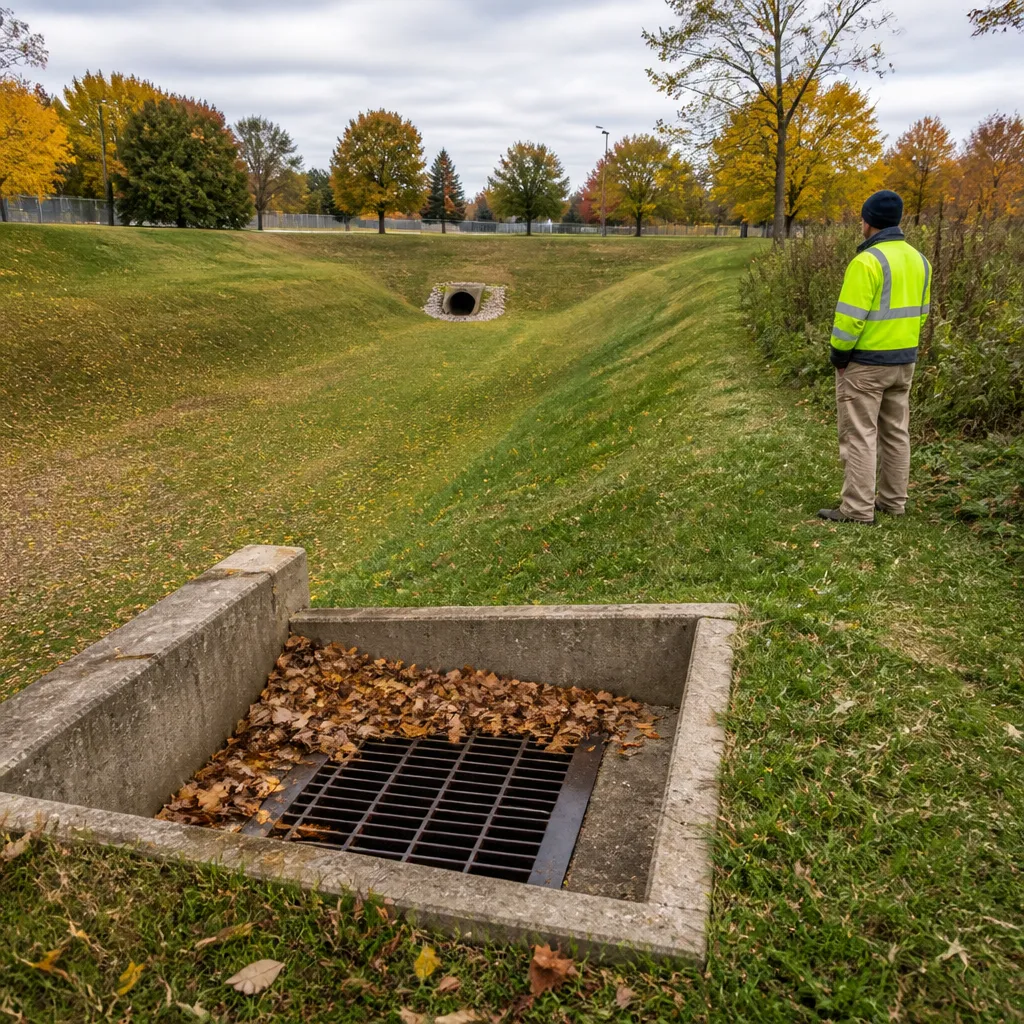
Minnesota’s stormwater guidance treats vegetation maintenance as a planning question before it is a field task. Its list of minimum questions covers which maintenance items are needed, how often each should occur, and what it will cost. Fall work fails most often when it is treated as one cleanup day instead of one step in a yearly schedule.
The mistake we see most is cutting too late and too hard. By the time a crew mobilizes after the first hard freeze, leaves are already packed into the outlet. Cutting earlier, and clearing debris from structures during the same visit, prevents the spring backlog that otherwise lands on your next budget.
A basin that looks finished in November can still be failing in March.
The fall visit is also the best time to assess what the basin needs over the next season. Growth that is thriving, thinning, or spreading into the wrong zone is easiest to read once the leaves are down and the structure is exposed. Treat the visit as an inspection with a mower attached, not the other way around.
Which Maintenance Tasks Actually Protect Function
Typical vegetation tasks include mowing, hand weeding, spot spraying with herbicide, woody plant removal, mulching, and adding or replacing plants. Not all of them belong in a fall visit. The MPCA guidance notes that some maintenance is not necessary for the hydraulic or water quality function of a basin, even when it improves habitat.
Mowing and Hand Weeding
Mowing in fall makes sense on maintained side slopes and access paths, where firm footing matters for the next visit. On the basin floor, we prefer to cut only growth that will lie across the inlet or outlet. Hand weeding around structures is slower, but it avoids pulling soil and mulch into the outlet.
Woody Plant Removal Near Structures
Woody growth is where fall work pays off most. Roots can work into embankments and structure joints over time. EPA’s Stormwater Best Management Practice Design Guide advises planting trees and shrubs at least 25 feet from principal spillway structures, with 15 feet of clearance from a non-clogging, low-flow orifice. Volunteer saplings inside those limits should come out while the crew is already on site.
Removing Aggressive Species Selectively
Aggressive species need a decision, not a reflex. Pulling everything can open bare soil that erodes over winter and gives the next weed flush room to establish. Target the species that threaten the design function, leave the rest, and record what you chose so the next crew does not reverse the decision.
Common mistake: crews often remove a dense native stand because it looks messy, then spend two seasons fighting the weeds that move into the bare ground.
Clearing Inlets, Outlets, and Low-Flow Openings Before Winter
Before the first freeze, the work that protects function is the least glamorous. Inlets, outlets, trash racks, and low-flow openings need to be open, and leaves packed into them stop flow long before the basin fills.
Leaf Litter and Trash Racks
Leaf litter collects on trash racks and at the mouth of outlet pipes first. We clear it by hand, then check whether wind has pushed leaves back onto the basin floor. In practice, one visit that clears the structures does more for function than a full day of mowing the slopes.
Work from the structure outward. Start at the outlet, clear the rack and the pipe mouth, and then move to the inlets. Working in the other direction pushes debris back toward the outlet you just cleaned.
Sediment and Debris Checks Before Winter
Before the ground freezes, check the forebay for sediment and look for debris that snow will bury. Snow piles near inlets can push material back into the system when they melt. Note sediment depth and the location of sticks, trash, or fallen limbs, because those notes make the spring visit faster and more accurate.
Pro tip: Photograph each inlet and outlet before and after clearing, from the same spot every time. Those paired photos are the fastest proof of work if an inspector asks later.
Building a Vegetation Management Plan That Holds Up
A vegetation management plan turns a fall visit into a repeatable task. Without one, every crew decides on its own how far to cut, and the next crew does something different. The plan is what makes the work defensible.
The Six Questions Every Plan Should Answer
The MPCA guidance lists six questions as a minimum for any BMP with vegetation. A plan that cannot answer all six is not finished.
- Which maintenance items are needed?
- How often should each maintenance item occur?
- What is the schedule and timing of inspection and maintenance, and what communication and reporting is required?
- What personnel are required, and do they have the qualifications and equipment for the work?
- What methods and benchmarks will evaluate success?
- What are the costs?
Answer these per basin, not per site. A campus with three basins often has three different answers, and a single set of notes will hide that.
Who Should Do the Work
The MPCA guidance asks whether crews have the necessary qualifications and equipment. For basin vegetation, that means people who can tell a stem to leave from an embankment species to remove. A landscape architect, restoration specialist, or other trained professional can help set the task list by vegetation type before the first crew goes out.
Choosing a Fall Cutback Approach
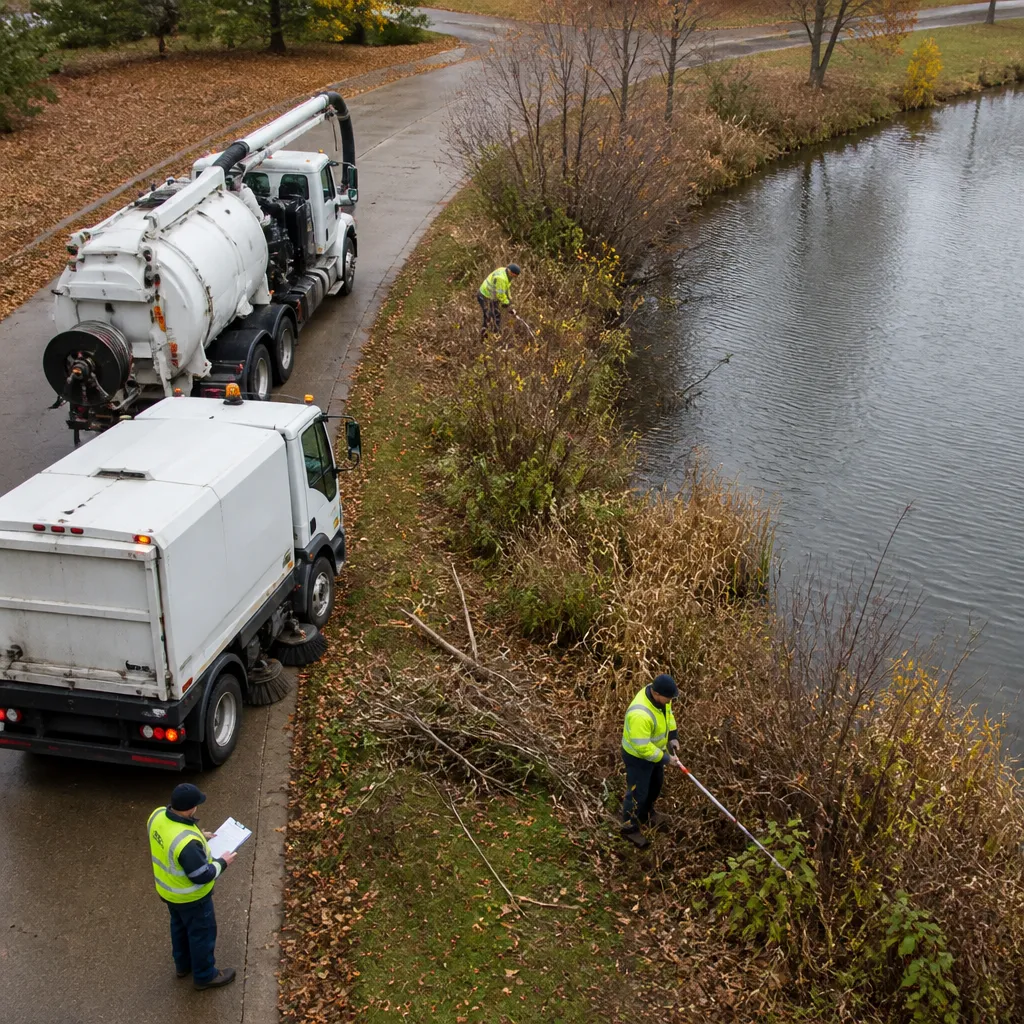
Three approaches come up on most fall visits. The right one depends on the basin’s function, its access, and how often you expect spring maintenance to happen.
| Approach | Where It Works | Main Risk |
|---|---|---|
| Full cutback to near grade | Turf-dominated basins and maintained side slopes that get frequent mowing | Leaves bare soil exposed over winter and removes wildlife cover |
| Selective cut with debris clearing | Mixed-vegetation basins where cover has design or habitat value | Needs a trained eye and clear notes, so it fails when crews are not briefed |
| Leave standing growth until spring | Basins where stems add cover and leaf drop is light | Standing growth can hold leaves against structures and gets heavy under snow |
When Full Cutback Makes Sense
Full cutback is reasonable on turf-dominated basins that are mowed through the growing season anyway. If the basin is already a managed lawn, cutting it short in fall adds little risk. The check you still need is the structure clearing, because a short lawn does not stop leaves from blocking an outlet.
Why We Default to Selective Cuts
We default to selective cutting for mixed-vegetation basins. The cover stays in place, the soil stays protected, and the crew still clears what threatens the outlet and embankment. Maryland’s vegetation guidance addresses minimum ground cover and mulch, which matters for exactly this reason: once cover is gone, the soil needs protection quickly.
Selective cutting does require discipline. Brief the crew on what stays, what goes, and why, and check the result before they leave the site.
Basins With and Without a Permanent Pool
The biggest variable in fall vegetation work is whether the basin holds water all the time. Wessler Engineering’s overview of stormwater basins describes the main difference between detention and retention basins as the presence or absence of a permanent pool of water.
Retention Ponds With a Permanent Pool
A retention pond with a permanent pool needs vegetation that tolerates wet feet and saturated edges. Work from the bank where you can, and keep equipment out of the pool. Aquatic growth inside the pool is a separate decision from the upland shrubs and grasses on the berm, and it should be handled in its own plan entry.
Detention Basins That Drain Between Storms
Detention basins drain between storms, so their floor vegetation handles both dry and wet periods. Fall cutting on the floor is usually about keeping the outlet structure clear, while side slopes can keep more of their cover. Check the low-flow channel for sediment, because it often looks like the rest of the floor until a storm reveals it.
In both basin types, the question is the same: what growth threatens the design function, and what growth is only in the way? The answer changes with the pool, but the method of clearing structures first does not.
Documenting Work and Responding to Violations
Documentation is where many fall visits fail. The work may be done properly, but if it is not written down, you cannot show it. In a violation response, records often matter as much as the cut itself. Municipal stormwater programs generally include procedures for inspections and enforcement, as outlined in EPA’s national menu of stormwater best management practices.
Records That Hold Up in an Inspection
Record the date, crew, areas cut, areas left standing, debris removed from structures, and before-and-after photos. Tie every entry to the basin ID on your site map. A log that says “basin cleaned” will not help you explain a blocked outlet six months later.
Pro tip: Add one line to every visit log that says what you did not cut and why. That line protects you when someone later asks why a basin looks different from the last visit.
Responding to a Violation Notice
When a notice arrives, start with the facts. Pull the fall visit records, the vegetation plan, and the photos, then identify what was done and what was missed. If work needs to be redone, schedule it, complete it, and document the completion with the same care as the original visit.
Stormwater violation response goes faster when the records already exist. When they do not, the first weeks are spent reconstructing work that a single clipboard would have captured.
Frequently Asked Questions
When is the best time to cut back basin vegetation in fall?
Cut before leaf drop peaks and before the first hard freeze, and clear the structures during the same visit. Waiting until after the first snow usually means cutting frozen growth and pulling debris out from under snow.
Should I cut all vegetation down in a stormwater basin in the fall?
Usually no. Selective cutting keeps cover in place, protects the soil, and lets you target only the growth that threatens inlets, outlets, and embankments. Full cutback fits best on basins that are already managed as turf.
How far should trees and shrubs be from a basin outlet?
EPA’s Stormwater Best Management Practice Design Guide advises planting trees and shrubs at least 25 feet from principal spillway structures, with 15 feet of clearance from a non-clogging, low-flow orifice. Existing growth inside those limits is a candidate for removal.
What records should I keep for basin vegetation work?
Keep the date, crew, areas treated, areas left standing, debris removed, and before-and-after photos, all tied to a basin ID. Those records support your maintenance schedule and any violation response.
Does vegetation management differ between retention ponds and detention basins?
Yes. A retention pond holds a permanent pool, so the plan has to account for wet conditions and keep equipment out of the water. A detention basin drains between storms, so the focus shifts to outlet clearance and sediment checks on the floor.
Tell us in the comments what has worked, or failed, in your fall basin cleanup.
References
- Minnesota guidance on operation and maintenance for vegetation in stormwater practices
- EPA national menu of stormwater best management practices for construction
- Maryland guidance on vegetation in stormwater best management practices
- EPA stormwater best management practice design guide
- Overview of detention and retention stormwater basins