
For developers in Philadelphia and Trenton, stormwater compliance has quietly become the last hard checkpoint before a project closes. A missing inspection record, an undocumented maintenance duty, or a system that was never tested can hold up sign-off for weeks. This guide explains why closeout has become the place where stormwater rules get checked line by line, what reviewers actually look for, and how to keep a project from stalling at the final inspection. It is written from the field side of the work, where most closeout problems start.
Table of Contents
- Quick Takeaways
- Why Closeout Has Become the Enforcement Checkpoint
- What Philadelphia’s Stormwater Regulations Ask of Developers
- Trenton Projects and Inspection Expectations
- The Closeout Documentation Package
- Comparing Closeout Approaches
- Post-Closeout Maintenance Obligations
- Common Mistakes That Delay Closeout
- Frequently Asked Questions
- References
Quick Takeaways
| Key Insight | Explanation |
|---|---|
| Start closeout documentation during design and construction | Records rebuilt after the final walk are usually incomplete, and reconstructing as-built details costs far more than recording them as the work happens. |
| Confirm who owns post-closeout maintenance in writing | Unclear responsibility is the most common reason an operation and maintenance plan sits in a binder instead of being followed. |
| Verify performance before turnover, not just installation | Philadelphia’s updated regulations require stormwater control measures to capture and permanently remove the first inch of runoff from qualifying storms, so the built system has to be checked against that goal. |
| Keep inspection photos and logs tied to each practice | Reviewers want evidence that each practice was installed and functioning as designed, not a summary letter that says the site is compliant. |
| Check exemption eligibility before filing, not after | New exemptions took effect July 1, 2026, and the basis for any exemption should be documented in the project file that goes to closeout. |
| Schedule cleaning and sweeping before the sign-off walk | Sediment left in catch basins and pipes can make a new system look like it was never cleaned, which invites questions about maintenance readiness. |
| Treat a failed closeout inspection as a schedule risk | Every re-inspection pushes back certificates of occupancy, lender draws, and unit turnover, so the cost of a missed item is measured in weeks. |
Why Closeout Has Become the Enforcement Checkpoint
Stormwater rules used to live mostly in the design phase. An engineer showed the basin or bioretention cell on the plan, the reviewer approved it, and the project moved on. That model has changed. Municipal reviewers now treat the finished site as the proof that a design was built correctly and will keep working, and closeout is where that proof gets checked.
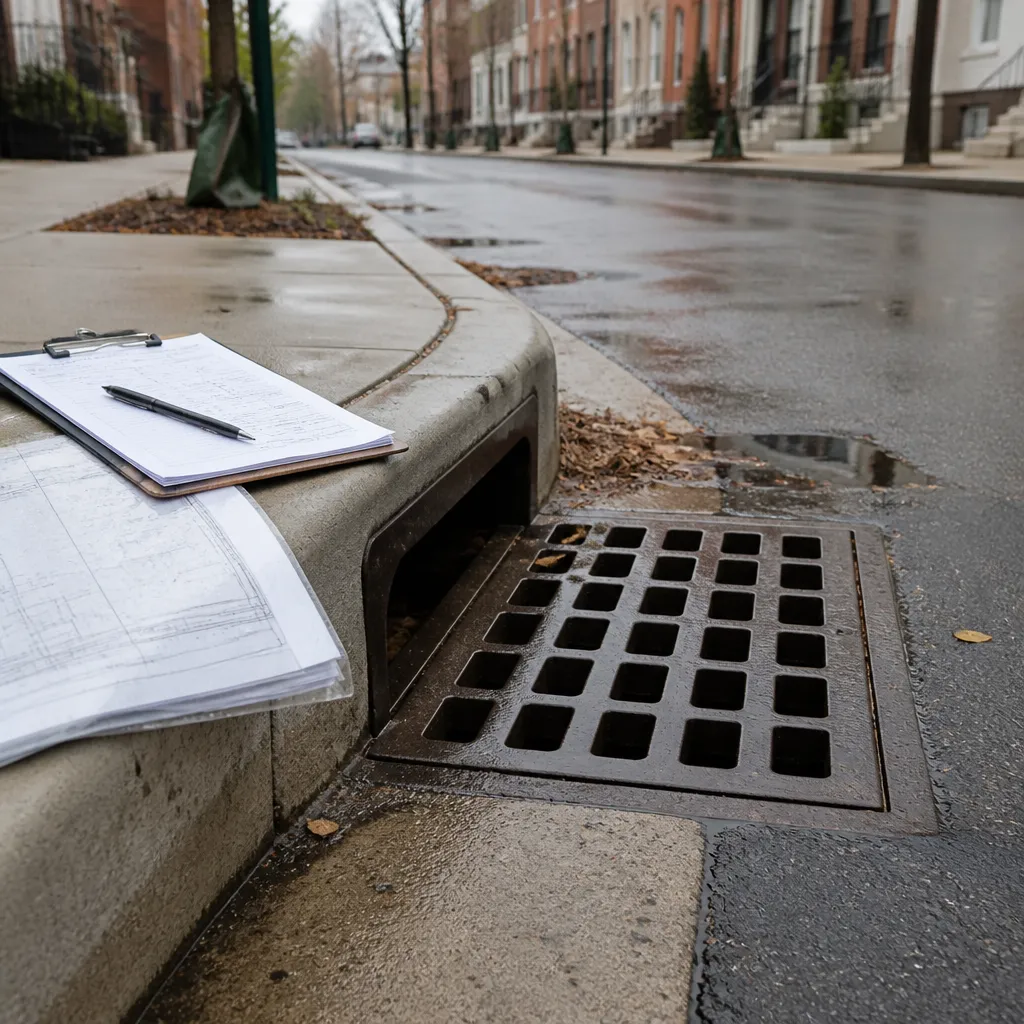
The Philadelphia Water Department’s Stormwater Plan Review unit is responsible for reviewing development projects to confirm compliance with the Stormwater Regulations. The department describes these rules as requiring projects to manage stormwater on site, with goals that include water quality, flooding, and stream bank protection. The unit reviews approximately 74 development projects per year, so files that arrive at closeout are not being skimmed.
In practice, the gap between approval and closeout is where projects get caught. A design can be approved on paper and then changed during construction when a grading adjustment moves a swale or a contractor substitutes an outlet structure. If those changes are not captured in as-built documentation, the closeout reviewer has no reliable way to confirm that the system matches what was approved.
A stormwater system is only compliant once someone can show it was built, tested, and maintained as designed. Paperwork written after the fact rarely proves that.
Storm Water Compliance sees this pattern often. Owners call us after a final inspection fails over a missing cleaning record or an unlabeled structure, and the system itself is usually working fine. The fix is typically a documentation problem that could have been prevented during construction, when the crew was still on site and the evidence was still fresh.
What Philadelphia’s Stormwater Regulations Ask of Developers
Philadelphia’s regulations are the reason many developers now plan closeout around stormwater from the first concept sketch. The city’s guidance organizes the work into planning, review and permitting, construction, and maintenance. That structure tells you something important: the city expects obligations to continue well after the ribbon cutting, and the maintenance phase is treated as part of the project rather than an afterthought.
The First-Inch Capture Standard
A recent update to the city’s rules, which the Philadelphia Business Journal describes as in effect since July 2026, requires stormwater control measures to be able to capture and permanently remove the first inch of runoff from qualifying storms. That is a performance expectation, not just a line on a drawing. At closeout, the real question is whether the built practice can still hold that first inch.
A basin with a partially blocked outlet, a bioretention cell with a compacted surface, or a porous pavement section that has been sealed by fine sediment can each fail that test without anyone noticing until the next heavy rain. We recommend a simple functional check before turnover, such as a controlled water test or a visual confirmation of inflow and drawdown, documented with a date and the person who ran it.
How Review Volume Shapes Expectations
A reviewing unit that handles roughly 74 projects a year relies on files that can be checked quickly. In our experience, drawings that match the field, a clear list of practices with their locations, and inspection records organized by practice move through review faster. Files that force a reviewer to hunt for information tend to come back with requests, and each round trip adds weeks to the schedule.
Recent Exemption Changes
Not every project carries the same obligations. Klehr’s summary of the updated rules, published under the title New Stormwater Exemptions Effective July 1, 2026, describes exemptions that benefit developers, contractors, and residential property owners. Exemptions are useful, but they become a liability when they are assumed rather than documented. Confirm eligibility during planning, keep the basis for the determination in the project file, and make sure the closeout package reflects the same determination the city received at permitting.
Trenton Projects and Inspection Expectations
Trenton operates under a different regulatory setting than Philadelphia, with its own review process, local requirements, and inspection contacts. Developers who work in both markets often make the same mistake: they carry one city’s checklist into the other and assume the closeout file will be accepted without changes. It usually is not, and the difference tends to surface during the final inspection.
Where Trenton Closeouts Stall
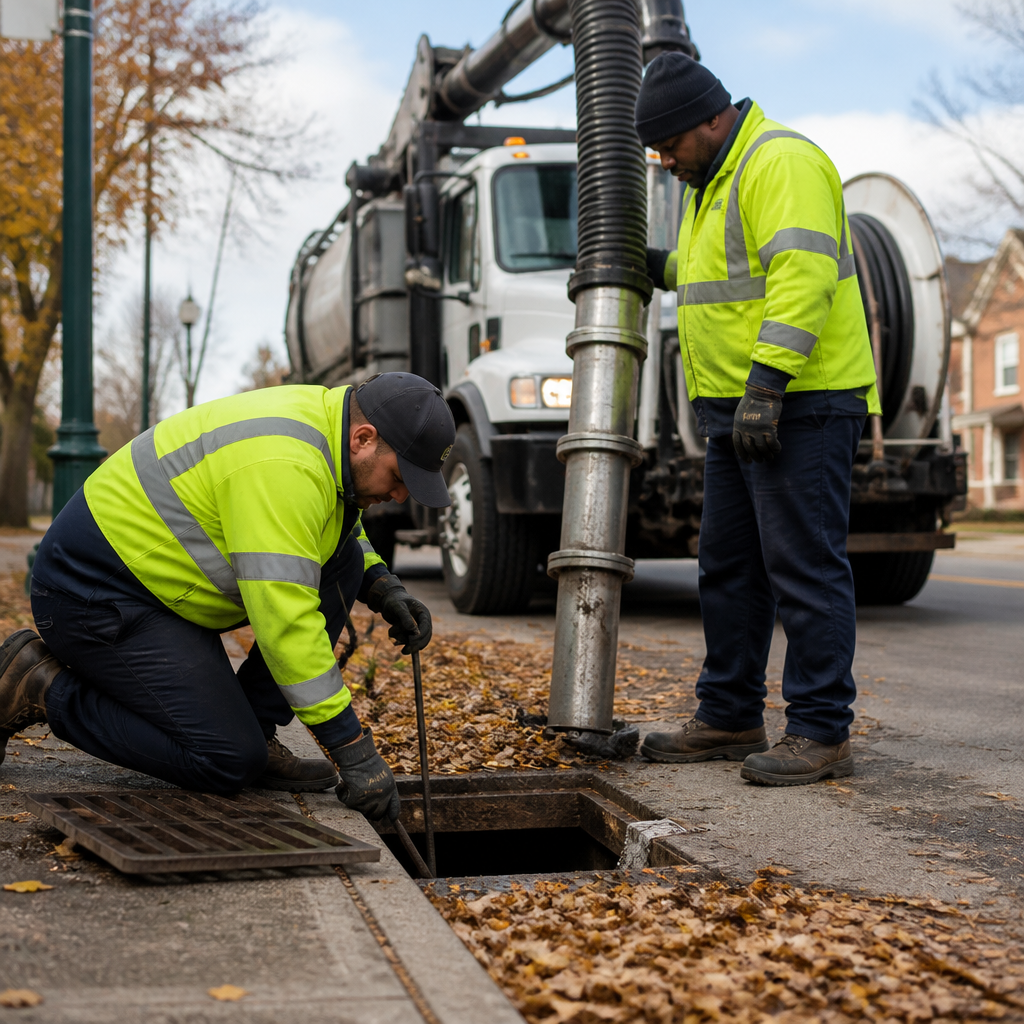
From the field side, closeout problems on Trenton projects tend to cluster around three issues. The first is systems that were installed but never functionally tested. The second is catch basins and pipes that still hold construction debris because the contractor demobilized before a cleaning pass. The third is an owner who did not realize a maintenance agreement had been signed, or who assumed the general contractor was still responsible.
A stormwater inspection before the final walk catches all three while the contractor is still mobilized. Where underground pipes are involved, CCTV inspection gives the reviewer and the owner the same visual record, which removes a lot of argument about what is actually inside the pipe. A few hours of inspection before closeout is far cheaper than a second mobilization after a failed review.
Matching Local Requirements to the Project File
Build the closeout file around the reviewing authority’s checklist, not your internal template. Ask early what the agency expects for as-built submittals, inspection certifications, and maintenance records, and confirm the format in writing. Engineers often deliver drawings in one format while the municipality wants signed forms in another, and a gap of even two weeks can push a certificate of occupancy past a lender’s deadline.
The Closeout Documentation Package
A closeout package is the set of records that proves a stormwater system exists, works, and has a named owner. Reviewers look for the same core items on nearly every project, so the most effective approach is to assemble them as the work progresses rather than in the final week before inspection. Waiting until the end turns a manageable filing task into a search for missing information.
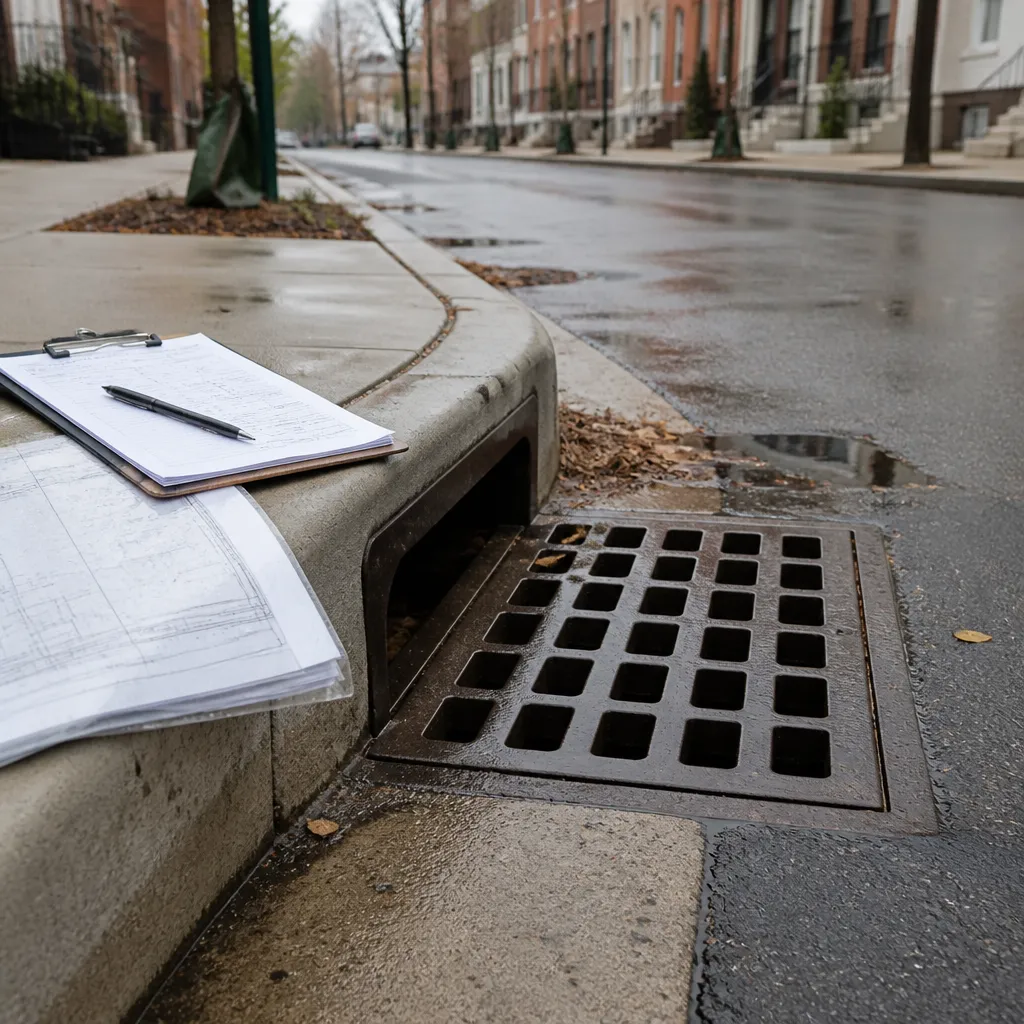
The package usually includes as-built drawings, inspection logs, photographic records, test results, and an operation and maintenance plan. Each item should cross-reference the others. A photo should match a log entry, and a log entry should match a practice shown on the as-built drawing. When those connections are missing, reviewers assume the worst.

As-Built Drawings That Match the Ground
As-built drawings are where most files fail. A survey taken after grading should show actual invert elevations, outlet structures, and the location of each practice. If the contractor shifted a bioretention cell a few feet to avoid a utility, the drawing has to show the new position. Redlines on a set of construction drawings are acceptable only when they are complete, dated, and signed by the responsible professional.
Inspection Logs and Photo Evidence
Inspection logs should name the practice, the date, the condition found, and the corrective action taken. A log entry that says only “inspected, okay” gives a reviewer nothing to verify. Photos are most useful when they show a practice from a fixed reference point with a visible date. Taken together, a well-kept log and a consistent photo set let a reviewer reconstruct the construction story without a phone call.
Pro tip: Photograph every underground stormwater structure, outlet, and pipe connection before backfill, with a tape measure or survey rod visible in the frame. Those pre-backfill images are the only evidence most owners will ever have of what sits below grade.
The Operation and Maintenance Plan
An operation and maintenance plan turns the design into a schedule. It should list each practice, its inspection frequency, the cleaning method, and the responsible party by name or role. Our crews regularly find plans on file that specify a frequency nobody follows, which makes the document itself evidence against the owner. Write frequencies you will actually keep, and tie them to the equipment you will use, such as vactor cleaning for catch basins and hydrodynamic separators or vacuum sweeping for paved drainage areas.
Comparing Closeout Approaches
Developers usually handle closeout in one of three ways. Each can work, and each has a predictable failure point. The table below summarizes where each approach holds up and where it tends to break.
| Approach | Where It Works | Where It Breaks Down |
|---|---|---|
| In-house closeout by the developer’s project team | Works when the team has completed several projects in the same jurisdiction and records stormwater work daily | Breaks down when the superintendent changes mid-project and nobody owns the file from that point forward |
| Engineer-led closeout with a separate maintenance contractor | Works well on complex sites with many practices and specific permit conditions that need technical interpretation | Breaks down when the engineer’s scope ends at certification and maintenance responsibility is never assigned to anyone |
| Bundled closeout with inspection, cleaning, and documentation under one accountable provider | Works when the same party inspects, cleans, records, and checks the result against the O&M plan | Breaks down when the contract covers only one task, such as cleaning, and nobody compares the outcome to the plan requirements |
Our view is that the bundled model gives developers the most control, because one party is accountable for both the field condition and the paperwork. That accountability matters most when a reviewer asks a question nine months after closeout and the answer has to come from a file, not from memory. Whichever model you choose, write down who is responsible for each step before the first inspection is scheduled.
Post-Closeout Maintenance Obligations
Closeout is not the end of stormwater obligations. It is the start of a maintenance record that a municipality, lender, or future buyer may review for years. The practices that cause the most trouble after turnover are usually the ones that look simple on the plan.
Catch Basins, Pipes, and Hydrodynamic Separators
Catch basins and hydrodynamic separators collect sediment quickly during the first year, especially on sites where construction has just finished and landscaping is still bare. Vactor cleaning should be scheduled from measured sediment depth, not a calendar date alone. A CCTV pass through the pipe network after the first few storms can reveal settled sediment, root intrusion, or a misaligned joint before it turns into a backup.
Bioretention and Porous Pavement After Turnover
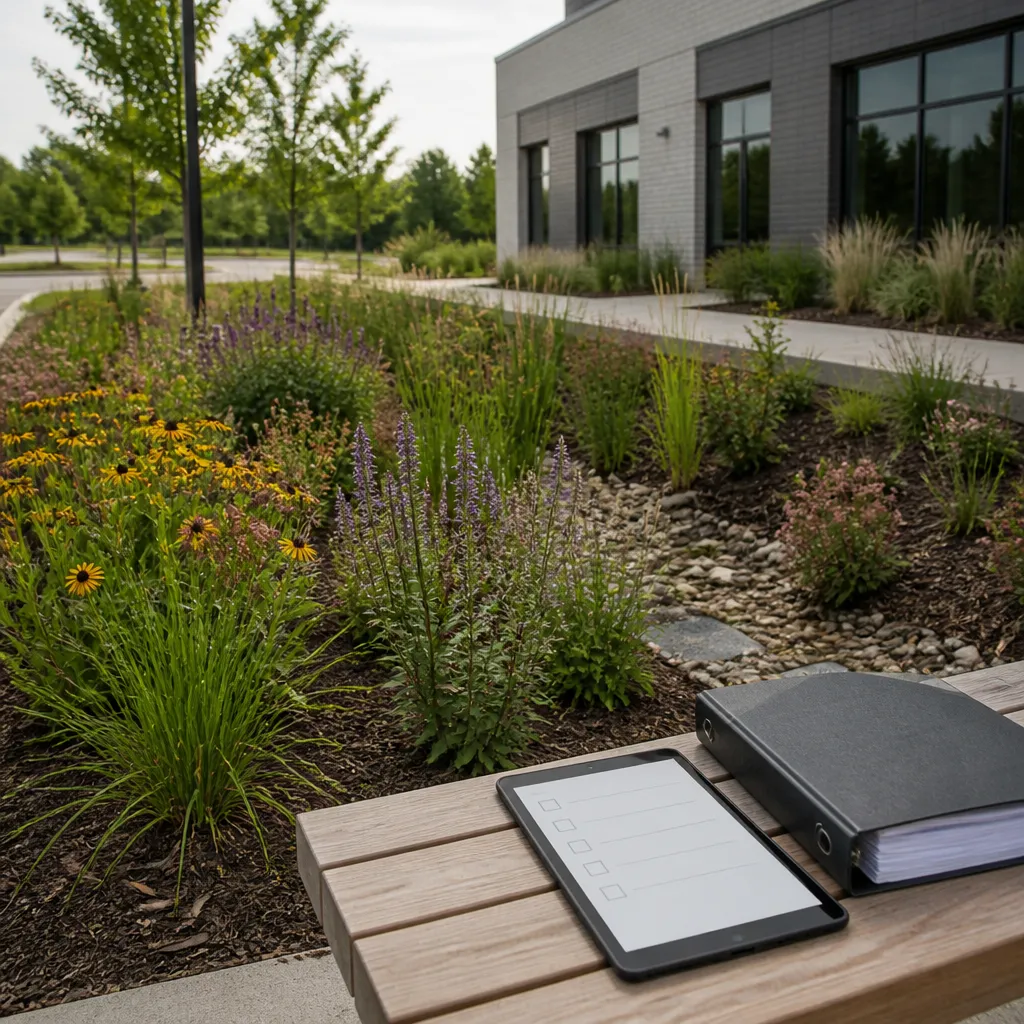
Bioretention cells and rain gardens need vegetation management and periodic removal of sediment from the surface. Porous pavement fails when fine sediment clogs the voids, and the usual cause is a sweeping schedule that never started. Rehabilitation costs far less when the owner catches clogging early, so build a surface inspection into the first-year plan and assign it to a named person.
Sweeping and Vegetation Schedules
Vacuum sweeping of paved drainage areas and vegetation management around basins and swales are the tasks owners skip most often, because they are visible but not urgent. Put them on a seasonal schedule inside the O&M plan. In our experience, leaf fall and spring runoff drive most of the sediment loading we remove, so schedule extra sweeping around those periods rather than waiting for a complaint.
Common Mistakes That Delay Closeout
The first mistake is treating the stormwater inspection as the final walk. By the time the inspector arrives, the crew has moved on, the trenches are backfilled, and any defect requires excavation. Ask for a pre-closeout inspection while the site is still open, and schedule it before the final landscaping and paving contracts are signed off.
The second mistake is letting the contractor demobilize before a functional test. A basin that holds water in the test case may still drain poorly once the surrounding grades settle. Build a test window into the contract, and make the final payment conditional on the test record being delivered. The third mistake is assuming the owner will read the operation and maintenance plan. Owners who receive a binder at closing rarely open it, so provide a one-page schedule with the responsible party, the next due date, and the contact for questions.
The fourth mistake is submitting a summary letter in place of records. A letter that says the site is compliant is an opinion. Reviewers want the logs, photos, test results, and drawings that support the opinion. A useful test before submitting is to ask whether a stranger could confirm each claim from the file alone.
Pro tip: Keep stormwater records in the same shared folder as the project schedule, and make a signed stormwater checklist a condition for approving the final site work pay application. Money tied to the paperwork tends to get done before the crew leaves the site.
Frequently Asked Questions
What does stormwater compliance mean for a developer at project closeout?
At closeout, stormwater compliance means showing that the built system matches the approved design, works as intended, and has a documented maintenance plan with a named owner. The reviewer will expect drawings, inspection records, test results, and proof of ongoing responsibility, not just a statement that the work is finished.
Do Trenton projects need the same closeout documentation as Philadelphia projects?
Not necessarily. The two cities operate under different regulatory settings and reviewing agencies, so the required forms, certifications, and submittal formats can differ. Ask the reviewing authority for its closeout checklist early, and do not assume one city’s file will be accepted in the other without changes.
What is the difference between an operation and maintenance plan and a closeout package?
A closeout package is the collection of records that proves the system was built and tested as designed, including drawings, logs, photos, and test results. An operation and maintenance plan is the forward-looking schedule that explains how the system will be inspected, cleaned, and repaired over time. Most reviewers want both, and they should cross-reference each other.
When should a developer schedule a stormwater inspection before closeout?
Schedule the inspection while the site is still open, before backfill covers underground structures and before final paving or landscaping is signed off. A pre-closeout inspection gives the contractor time to correct defects at a lower cost than a second mobilization after the final walk.
Who is responsible for stormwater maintenance after a project is sold or turned over?
Responsibility depends on the agreements and permit conditions in place at turnover, which is why it needs to be written down. The owner, the property management company, or a homeowner association may be assigned the duty. Unclear language in the purchase or maintenance documents is one of the most common reasons systems fall into disrepair.
Can a stormwater issue delay a certificate of occupancy?
Yes. A missing inspection record, an uncleaned structure, or a system that fails a functional check can hold up final approval. Because each re-inspection adds time, treating stormwater documentation as part of the critical path of the project is the most reliable way to protect the occupancy schedule.
If you have managed a stormwater closeout in Philadelphia, Trenton, or anywhere else, tell us which document or inspection caused the most delay on your project, because those experiences shape how we prepare every file we handle.
We would love your feedback and any insights you would share with others. What perspective would you add?