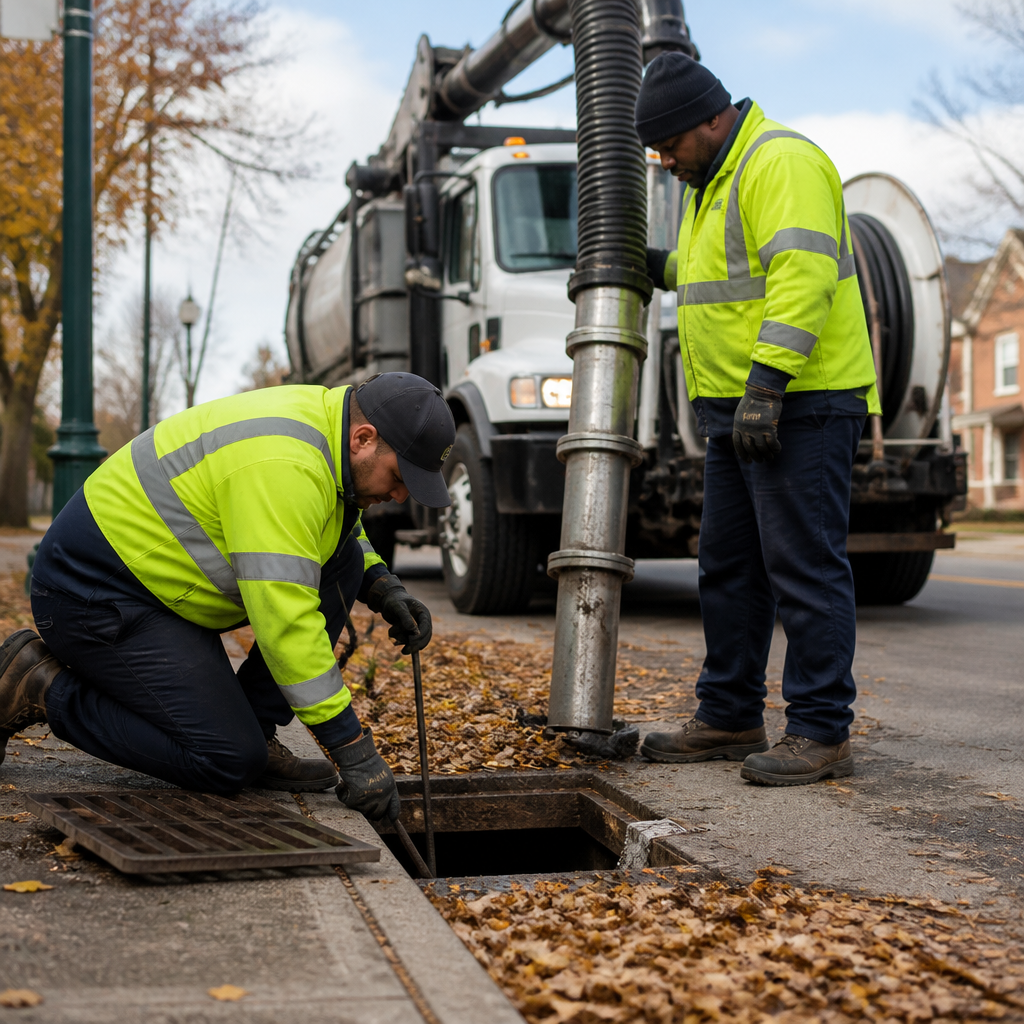

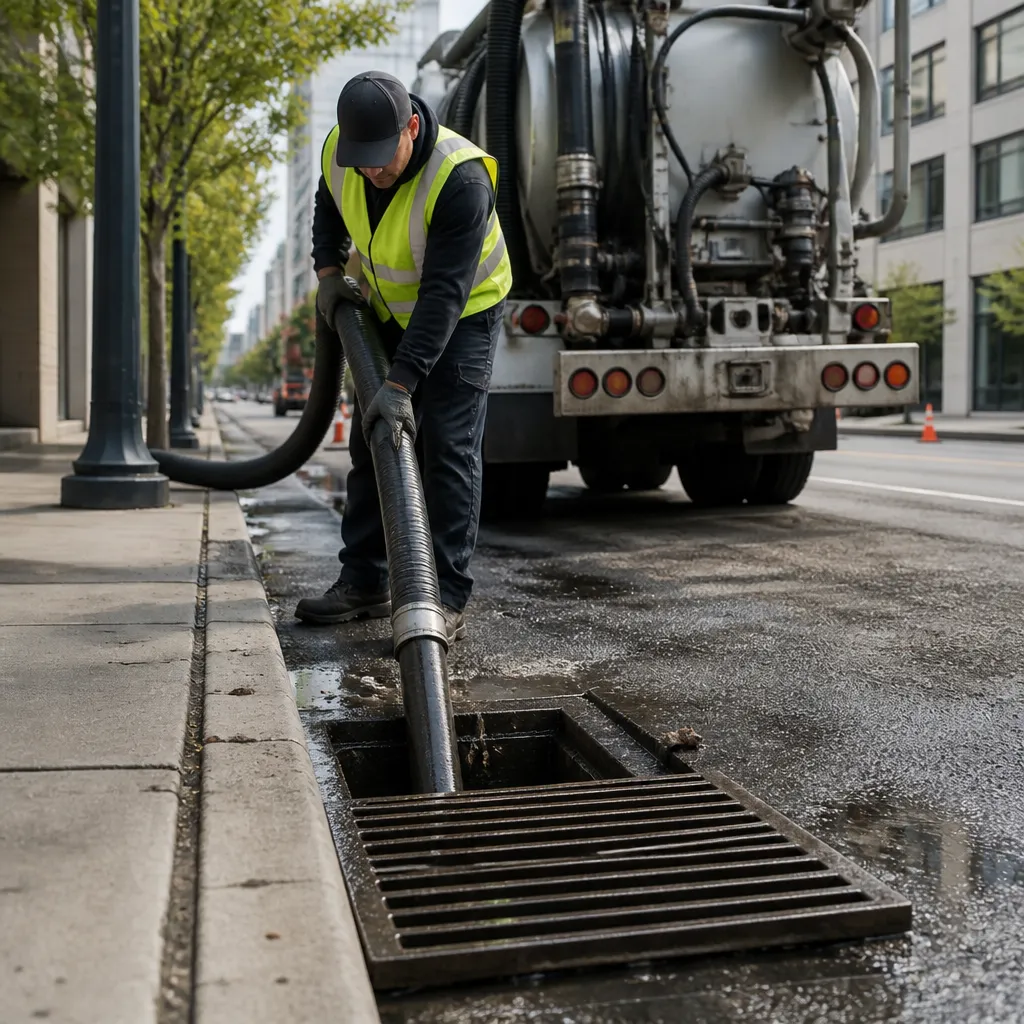
A catch basin full of sediment is a cheap fix on the day someone notices it. Left alone through two budget cycles, that same basin can clog a downstream pipe, pond water in a parking lot, and turn a routine cleaning into excavation and a violation notice. That gap between the small bill and the large one is the real cost of deferred stormwater maintenance, and most owners and agencies only see it after the money is already spent. This article explains how the cost builds, why budget cycles hide it, and how a documented Operation & Maintenance plan changes the math.
Table of Contents
- Quick Takeaways
- What Deferred Stormwater Maintenance Actually Means
- How a Cleaning Becomes a Rebuild
- The Budget Cycle Trap
- Enforcement and Violation Exposure
- Maintenance Models Compared
- Building an O&M Plan That Survives Budget Review
- Documentation as Budget Evidence
- Who Carries the Cost: Owners and Municipalities
- Frequently Asked Questions
- References
Quick Takeaways
| Key Insight | Explanation |
|---|---|
| Deferred work grows in scope | A cleaning one crew could finish in a single visit can become excavation, CCTV work, and structural repair once sediment reaches outlets and pipes. |
| Budget cycles move the bill, not the need | Routine cleaning sits in operating budgets while rebuilds sit in capital budgets, so deferral shifts cost onto a line that looks like a surprise. |
| Missing records become a compliance problem | Where a permit or local code requires an O&M plan, a gap in cleaning or inspection logs can read as noncompliance. |
| Rank assets by failure consequence | Basins at low points, outlets feeding sensitive receiving waters, and structures under heavy traffic should be scheduled before low-risk swales. |
| Show the failure cost next to the schedule | Decision makers approve annual maintenance faster when the replacement scenario sits beside it in the same table. |
| Start with a baseline inspection | If history is missing, a documented site walk costs less than reconstructing records later and gives the next budget cycle a defensible starting point. |
What Deferred Stormwater Maintenance Actually Means
Deferred stormwater maintenance is required upkeep that gets pushed to a later date, usually because a budget line ran out or another problem looked louder. The drainage system does not wait for the calendar. Sediment keeps building in sumps, grit keeps moving through pipes, and roots keep working into joints whether or not the work order has been approved.
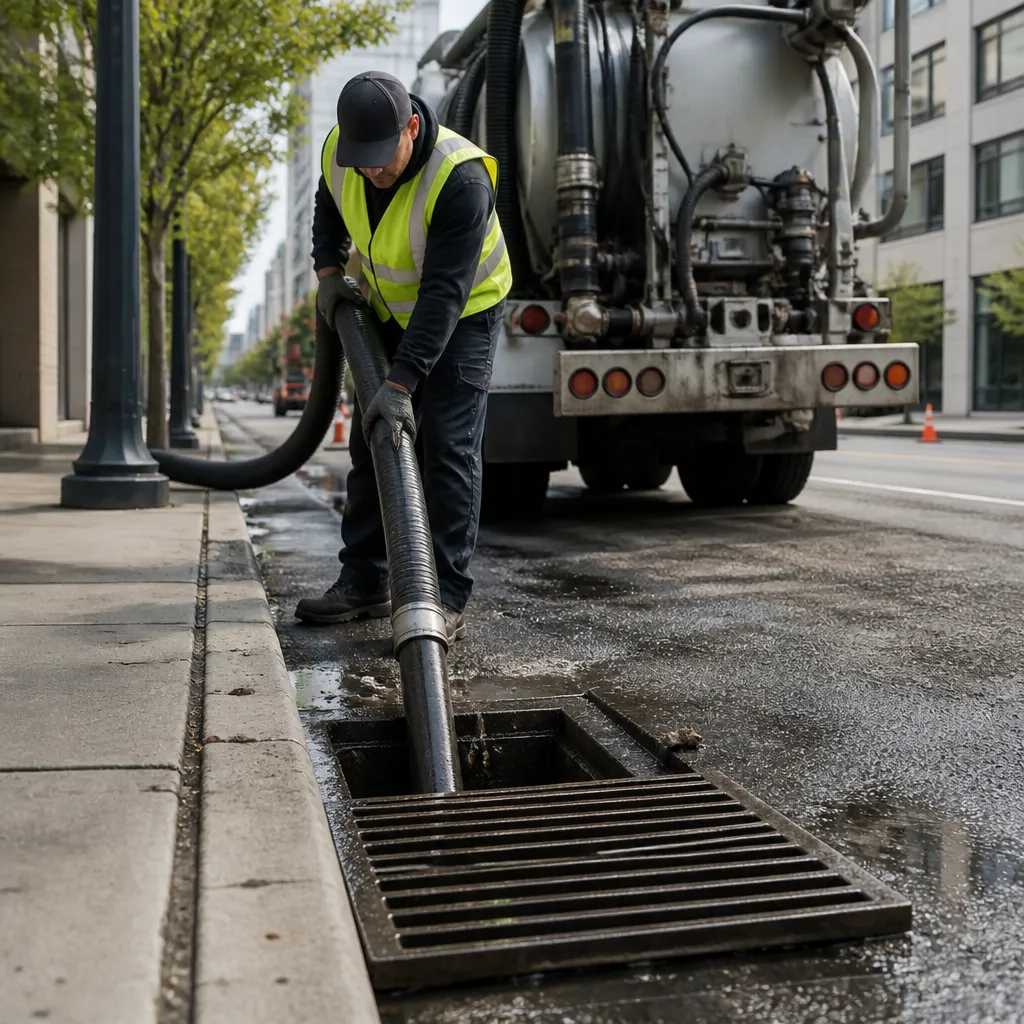
Engineers who write about municipal assets draw the same line. One WithersRavenel analysis describes deferred maintenance as more than a backlog, calling it a timing problem, because an asset allowed to age can move past the point where cheaper treatments still work. Stormwater hits that point sooner than most people expect, since the failure usually shows up downstream, away from the asset that caused it. Our porous pavement maintenance and bioretention work show the same pattern: surfaces that clog slowly, then stop infiltrating altogether.
Postponing Versus Ignoring
There is a difference between a planned delay and neglect, and the budget conversation depends on which one you are describing. A planned delay has a date, a condition rating, a reason, and a plan to return. Neglect has none of those. Most stormwater backlogs start as planned delays and drift into neglect when nobody revisits the list.
Consider a catch basin scheduled for cleaning in the spring but pushed to fall because the vactor truck went to a higher-priority job. That is a reasonable call. If the basin is still full a year later, with no inspection record and no revised date, the delay has become neglect, and the bill will reflect it.
Which Stormwater Assets Slip First
Some assets get forgotten because they do not look broken. Subsurface detention, hydrodynamic separators, and underground infiltration systems give no visual warning until they stop draining. Surface assets such as bioretention cells often fail slowly, and ponding becomes a routine complaint long before anyone schedules work.
How a Cleaning Becomes a Rebuild
The cost curve for stormwater maintenance is steep at the end. A basin cleaning that takes a crew a few hours can become a full structure replacement once sediment has packed the outlet, the frame has settled, and the connected pipe has started to separate. The visit that cost a modest amount in a planned cycle can cost several times more after a flooding complaint and emergency mobilization.
Our crews see this pattern constantly. A property manager calls about a parking lot that drains slowly, and the cause turns out to be a basin silted to its outlet over several seasons. What started as a cleaning becomes a combined job of vacuum removal, CCTV inspection, and structural repair. The Infrastructure Report Card’s stormwater material makes the broader point that deferred maintenance raises the likelihood of urban flooding, which is the outcome owners are trying to avoid.
Sediment, Debris, and Downstream Damage
Sediment that stays in a structure does not stay put. Once it reaches the outlet pipe, it moves downstream during the next storm and can settle in lines never designed to carry grit. A line that flowed clean can become partially blocked, and the blockage gets harder to clear the longer it sits. Pollutants that settle in a dry sump are the same materials flushed toward receiving waters in the next rain, which is why a cleaning schedule is also a water quality decision. Our CCTV pipe inspections show exactly where that material has traveled.
Structure Failure and Repair Scope
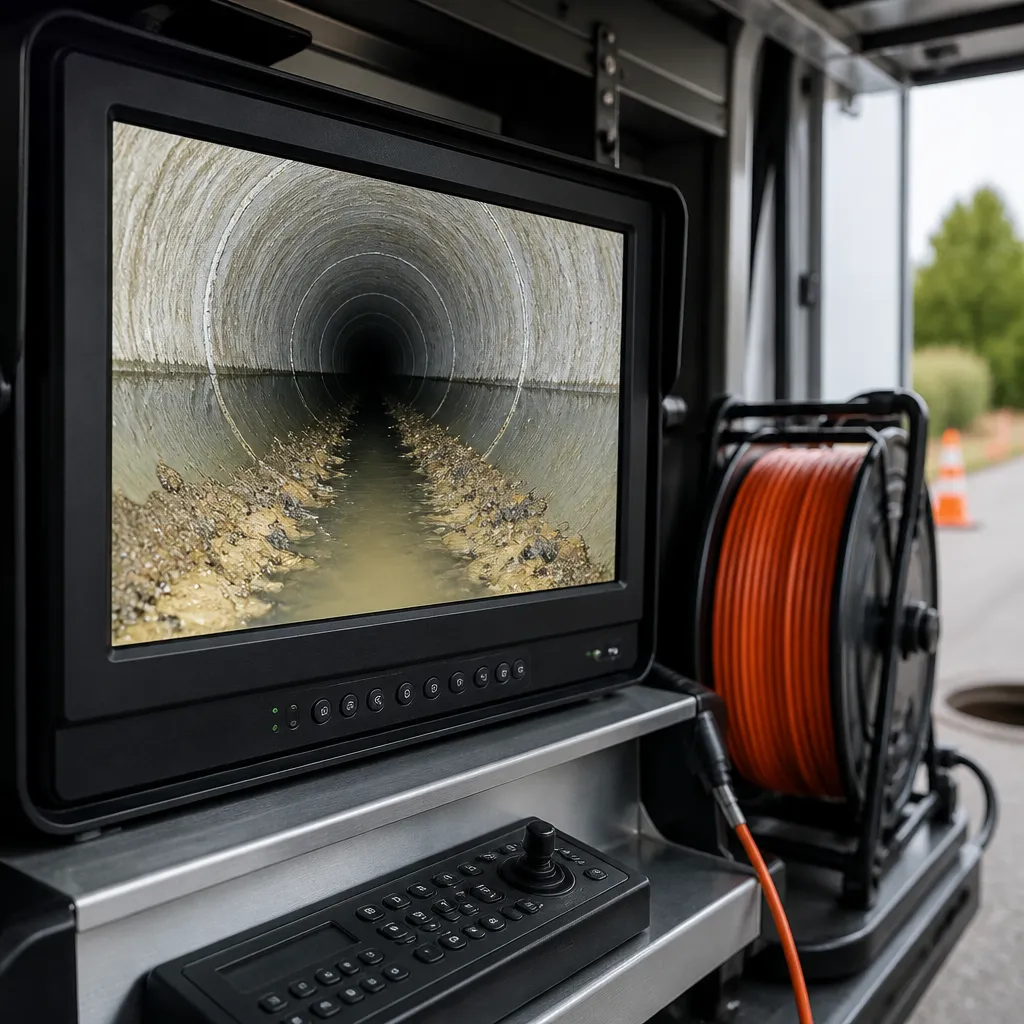
Once a structure fails, the repair scope expands in ways that surprise budget owners. A cracked frame may need full replacement once inspection shows the barrel or chimney is compromised. Pipe inspections often reveal root intrusion, offset joints, or collapsed sections that were invisible from the surface. Our structure repair and rebuild work usually starts with that inspection record, because a repair decided without it tends to become a second repair bill.
Pro tip: Run a CCTV inspection before you approve a basin cleaning in any line you suspect is compromised. Jetting clears a blockage, but it does not tell you whether the pipe is still sound.
The Budget Cycle Trap
Most municipal and commercial budgets run on annual or multi-year cycles that reward visible spending and punish anything that looks optional. Stormwater maintenance is hard to defend under that structure because a successful year looks like nothing happened. No flood, no complaint, no line item that grabs a council member’s attention. The cut looks safe until the year it is not.
The EPA’s guidance on municipal stormwater funding covers the procedural, legal, and financial considerations behind viable funding approaches. It is a useful starting point for moving stormwater from an unfunded afterthought to a line item with a dedicated source.
Operating Budgets Versus Capital Budgets
Routine cleaning and inspection usually sit in the operating budget, which must balance every year. Pipe replacement and structure rebuilds sit in the capital budget, which is planned further out and often financed differently. Deferral moves cost from one column to the other, and the capital side is almost always the more expensive one. A deferred cleaning that becomes a capital rebuild does not look like an overrun. It looks like a capital need that appeared out of nowhere.
Why Stormwater Gets Cut First
When budgets tighten, stormwater maintenance is often cut before roads, policing, or water service because its failures are delayed and dispersed. A flooded parking lot feels like a private problem until it becomes a claim. A clogged outlet rarely makes the evening news. Without a plan that ties each asset to a condition rating and a consequence of failure, the cut looks like a savings decision when it is really a risk transfer to whoever inherits the failure.
Enforcement and Violation Exposure
Deferred maintenance used to be mainly a financial problem. Where a permit, site plan, or local code requires a documented Operation & Maintenance plan for private systems, it is also a compliance problem. A missed cleaning or an overdue inspection can be treated as a violation, and the response cost lands on the owner, the facility manager, or the agency, depending on who holds the obligation.
When Missed Maintenance Becomes Evidence
Records cut both ways. If an inspector finds a basin full of sediment and your logs show no cleaning since the plan was approved, that gap is evidence of noncompliance. The records you kept, or failed to keep, shape how the matter gets resolved. In practice, an owner who can show a schedule, a documented delay, and a revised date usually gets a faster and cheaper outcome than one who has nothing to show.
The Cost of Responding Late
A violation response is a different job from routine maintenance. It involves reviewing the required plan, documenting current conditions, scheduling corrective work against a deadline, and communicating with the reviewing agency. Our violation response and compliance assistance work often starts with one question: was the original plan followed? If it was not, the fastest path forward is an honest condition assessment and a corrected schedule, not a rushed repair before the next inspection.
Maintenance Models Compared
Three approaches show up in most stormwater programs. Each can look reasonable on its own budget line, which is exactly why they persist. The table compares how they play out over the life of an asset, not within a single fiscal year.
| Approach | What It Looks Like in Practice | Typical Budget Outcome |
|---|---|---|
| Reactive repair after a complaint | Crews respond to flooding, ponding, or a failed inspection, often with emergency mobilization | Highest cost per event, with overtime, rush materials, and possible enforcement costs on top |
| Scheduled preventive maintenance under an O&M plan | Cleaning, inspection, and minor repair happen on documented frequencies tied to condition ratings | Predictable annual spend, fewer capital surprises, and a clear record for auditors and regulators |
| Deferral until a capital project | Work is pushed into a future capital cycle, sometimes repeatedly, without updated condition data | Looks cheapest in the current year, then produces large replacement costs that are harder to schedule and fund |
Reactive repair is not wrong for every asset. A low-consequence swale on a large parcel may not justify scheduled attention. The mistake is applying reactive logic to assets whose failure floods a road or a neighboring property. Deferral is the most common default, and it is the option that looks cheapest on paper for exactly one budget year.
Engineering cost studies treat benefit-cost analysis as part of asset management, a process for identifying and prioritizing current and future costs. Preventive maintenance costs more in the short run than deferral and less over the life of the asset. That is simple to say and hard to sell, which is why the plan has to show the replacement scenario alongside the annual cost.
Building an O&M Plan That Survives Budget Review
A stormwater Operation & Maintenance plan is the document that turns deferred work into scheduled work. It names each asset, states how it is inspected and cleaned, sets frequencies, and records who is responsible. The plan should be short enough to use and specific enough to defend in a budget hearing or an inspection. Our stormwater consulting work starts with that test.
Most plans succeed or fail at the funding stage. We see plans that list every catch basin but give no reason for the frequency, and plans that promise quarterly cleaning inside a budget that only funds annual visits. A plan that cannot be funded is a plan that will be deferred.
Asset Inventory and Condition Ratings
Start with an inventory that includes location, material, size, outlet connection, and last inspection date. Add a simple condition rating for each asset, and be honest about the ones nobody has looked at in years. A condition rating does not need to be complicated. It needs to be consistent enough that two inspectors looking at the same asset arrive at the same rating.
Frequencies You Can Defend
Frequencies should follow sediment loading, land use, and the consequence of failure. A basin that drains a loading dock needs a different schedule than one in a residential cul-de-sac. Write the reason next to each frequency. When someone asks why a structure is cleaned twice a year, the answer should come from the site, not from a generic template.
Pro tip: Tie each frequency to a trigger, such as a sediment depth threshold or a specific inspection finding. Triggers give you a documented reason to add work and an equally documented reason to reduce it.
Documentation as Budget Evidence
Documentation is what turns a maintenance need into a funding request. Dated photos, cleaning volumes, CCTV findings, and condition ratings give a decision maker something concrete to approve. Without them, the request is an opinion, and opinions are easy to postpone.

Records that show what was found, what was done, and what was deferred and why are often worth more in a budget meeting than any engineering estimate.
What Inspection Records Should Show
A useful inspection record shows the asset ID, date, technician, observed condition, sediment or debris depth where applicable, work performed, and any follow-up needed. It should also show what was not done and why. A deferred item with a documented reason is a planning tool. A deferred item with no record is a liability waiting to be discovered.
Using Records in Budget Requests
Bring three things to a budget meeting: the list of deferred items with condition ratings, the cost to complete each one on schedule, and the estimated cost if it fails. Keep the comparison plain. Decision makers rarely need a perfect model. They need to see that the scheduled cost is smaller than the failure scenario and that the difference rests on inspection data rather than guesswork.
Who Carries the Cost: Owners and Municipalities
The cost of deferral lands differently depending on who owns the system. A municipality absorbs it in public works budgets and, eventually, in rate and tax decisions. A private property owner absorbs it in emergency repairs, tenant complaints, and possible enforcement. Both get the same bill with different accounting labels.
The Carroll Engineering analysis of deferred infrastructure makes a point that applies well beyond roads: postponing necessary work does not eliminate the expense, and in many cases it increases it. That holds for a catch basin on a private campus as much as for a municipal pipe under a main street.
Private Owners and Commercial Facility Managers
Commercial owners often inherit stormwater systems with no maintenance history. The first step is a records review, followed by a site inspection that establishes a baseline. A facility manager with a clear list of assets, last service dates, and open items can negotiate with ownership far more effectively than one holding only a complaint log.
Municipal Public Works and Shared Responsibility
Municipalities often carry the most visible stormwater assets but share responsibility with developers and owners for private systems that drain into public networks. A deferred private basin can overload a public line, so the municipal cost of a private deferral is real. Agreements that define who maintains what, and how inspections are documented, reduce that overlap. Our stormwater system inspections give both sides a shared record to work from.
Pro tip: Require recent inspection records at permit review for any private system that connects to a public network. Missing records are an early warning that deferral has already started.
Frequently Asked Questions
How much does deferred stormwater maintenance add to the final cost?
There is no universal multiplier, because the increase depends on the asset, the failure mode, and how long the delay runs. In the field, a routine cleaning often becomes a larger job once sediment reaches outlets or pipes, and a repair that could have been simple can turn into a structure rebuild. The practical test is to compare the scheduled cost against the failure scenario for the same asset.
Is a stormwater O&M plan always required?
It depends on where the property or project is located and which permit or local code applies. Many jurisdictions require an O&M plan as a condition of approval for private systems, while others ask for one only after a problem appears. Check the permit conditions and your local stormwater office for the rule that applies to your site.
How often should catch basins be inspected?
Inspection frequency should come from the plan, based on sediment loading, land use, and the consequence of failure. A basin at a loading dock or a low point in a parking lot usually needs more attention than one in a low-traffic area. Set an initial frequency, record what you find, and adjust after the first full year of data.
What is the difference between deferred maintenance and a capital project?
Deferred maintenance is necessary upkeep that has been postponed, such as cleaning or minor repair. A capital project is a larger investment, such as replacing a pipe or rebuilding a structure, usually funded through a separate budget process. The risk is that deferral turns routine work into capital work, and that is where budgets tend to get surprised.
Can a stormwater maintenance request get approved in a tight budget year?
Yes, when the request shows the scheduled cost, the failure scenario, and the inspection evidence behind both. Decision makers are more likely to fund a small, documented annual line than a large emergency request that arrives after a flood. Pair the request with a clear priority list so that the first cuts are visible and easy to defend.
Where should a property owner start if the maintenance records are missing?
Start with a site walk and a baseline inspection of every stormwater asset you can find, including outlets, sumps, and underground systems. Record condition, date, and any immediate risks, then build the schedule from what you find. A baseline inspection is usually cheaper than reconstructing missing history, and it gives you a defensible starting point for the next budget cycle.
What has your experience been with deferred stormwater work, and what finally got your maintenance funded?
References
- Stormwater report on how deferred maintenance raises urban flooding risk
- Study on estimating benefits and costs of stormwater management within asset management
- EPA guidance on procedural, legal, and financial approaches to municipal stormwater funding
- Article on why deferred maintenance costs more than communities expect
- Overview of the real cost of deferring infrastructure maintenance for municipalities