
Street dirt is not just an eyesore. Every rain pushes fine sediment, metals, nutrients, and leaf litter from curbs and parking lots into catch basins, and from there into the streams and ponds your stormwater program is supposed to protect. Many municipalities assume that a sweeper running the main roads once a month covers the obligation. In practice, the type of sweeper, the timing, and the paperwork decide whether vacuum sweeping stormwater programs actually reduce pollutant loads or just move dust from one curb to the next. This article explains how sweeping supports municipal quality goals, where it falls short, and how to run a program you can defend.
Table of Contents
- Quick Takeaways
- What Vacuum Sweeping Removes From Streets
- Linking Sweeping to Stormwater Quality Goals
- Why Vacuum Sweepers Outperform Broom Systems
- Setting Sweeping Frequency and Timing
- Catch Basins and Where Sweeping Ends
- Building a Municipal Sweeping Program
- Comparing Sweeping Approaches
- Mistakes That Waste Sweeping Budgets
- Frequently Asked Questions
- References
Quick Takeaways
| Key Insight | Explanation |
|---|---|
| Vacuum sweepers catch the fine fraction | An ASCE study reported vacuum sweepers removing 1.5 to 5 times more particles in the 2 to 250 micrometer range than a mechanical broom sweeper. Those smaller particles carry much of the pollutant load. |
| Sweeping is a sediment and nutrient tool | Cosmetic cleaning of large litter does little for water quality. Target the material that washes off, including fine solids, metals, and phosphorus. |
| Frequency depends on local conditions | The FHWA fact sheet points to weekly to bimonthly sweeping, using the most capable equipment, with the schedule set by local conditions. |
| Fall leaf drop needs its own plan | Organic matter from street trees can add significant phosphorus to runoff in autumn. Add passes before and during leaf drop instead of waiting for the usual route to catch up. |
| Sweeping works best ahead of rain | Material left on the surface is what washes off. Timing relative to runoff events changes how much a pass actually removes. |
| Sweeping and catch basin cleaning are a pair | Sweeping keeps material off the street. Catch basin and inlet cleaning handles what still gets through, so budget for both. |
| Records turn sweeping into evidence | Route maps, pass dates, and material volumes are what let you show an inspector or permit reviewer that the program is working. |
What Vacuum Sweeping Removes From Streets
Street sweeping was once a cosmetic service. Crews cleared large debris so roads looked clean, and nobody asked where the rest went. The focus changed in the 1970s, when water quality concerns pushed agencies to look at the fine material that sweepers were leaving behind. The Minnesota Stormwater Manual describes that shift clearly: the goal moved toward removing coarse sand and smaller particles that contribute to sediment and nutrient pollution in waterways.
Roadways collect more than litter. They accumulate sediment, vehicle residue, industrial particle deposition, and organic matter, and those materials carry metals, organics, nutrients, and particulates into storm drains. The EPA’s parking lot and street sweeping guidance makes the same basic point: streets, roads, highways, and parking lots accumulate pollutants that, combined with stormwater, can degrade water quality. A sweeper that only lifts paper and cans is not addressing that load.
The fine fraction does most of the damage
Coarse material is easy to see and easy to remove. Fine particles are the problem. They stay suspended in runoff, settle in channels and ponds, and carry attached phosphorus and metals. A sweeper that leaves the fine fraction on the pavement has done little for the receiving water, even if the curb looks spotless.
Why cosmetic cleaning is not enough
In practice, many programs still measure success by miles driven or hours on the clock. Those numbers tell you about effort, not results. A useful program asks what material was removed, from which land uses, and whether that material would otherwise have washed into the storm system during the next rain.
Pro tip: Ask your sweeping contractor to log the approximate amount of material collected per route, not just miles completed. Route-level volume data shows you where material accumulates fastest and where your frequency is too low.
Linking Sweeping to Stormwater Quality Goals
Most municipal stormwater goals are written in pollutant terms, such as reducing total suspended solids, phosphorus, or metals in runoff. Sweeping can contribute to those goals, but only if the program is designed to target them. A general commitment to “clean streets” will not satisfy a reviewer who wants to see how the work connects to a load reduction.
The FHWA fact sheet on street sweepers cites studies finding that sweeping programs using newer equipment can significantly reduce pollutant washoff from urban streets, with potential reductions of up to 80 percent in annual total suspended solids and associated pollutants. That figure is often quoted without its conditions. The “up to” matters, and so does the equipment, the frequency, and the surface being swept.
Set a goal you can measure
Start with the pollutant your permit or local plan names. If the goal is sediment, track material collected by route and by season. If the goal is phosphorus, pay attention to the fall months when leaf litter dominates. A measurable target gives your sweeping schedule a purpose and gives you something to report.
What the 80 percent figure does and does not mean
The 80 percent number describes potential reduction under study conditions, not a guarantee for every street in your jurisdiction. Your results will depend on how much material your streets produce, how well your sweepers work, and how quickly the material is removed after it builds up. Use the figure to justify investment in better equipment and a real schedule, not to promise a specific outcome to council.
Why Vacuum Sweepers Outperform Broom Systems
The equipment question is where many programs go wrong. Mechanical broom sweepers are cheaper to operate and familiar to crews, so they remain common. They are also weak on the particles that matter most for water quality. A broom throws fine dust into the air or leaves it in the gutter, where the next rain takes it.
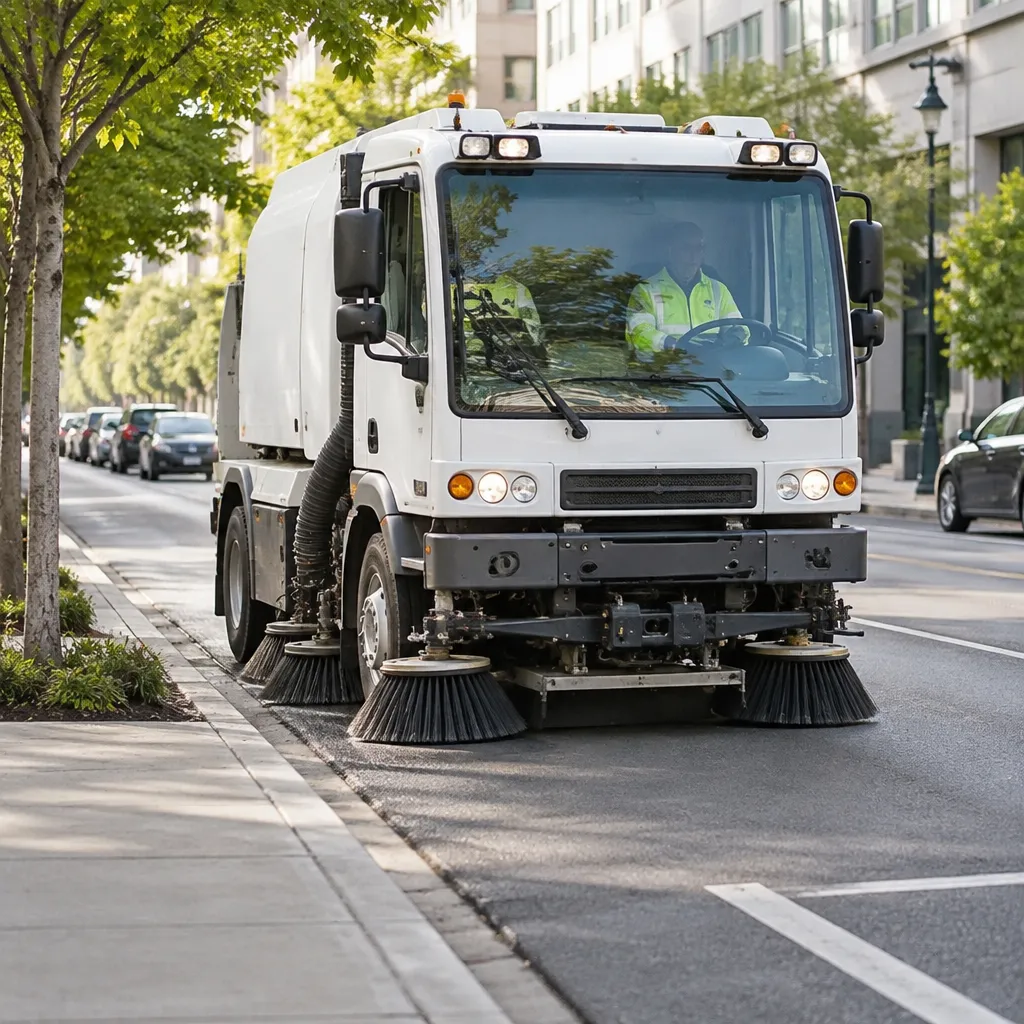
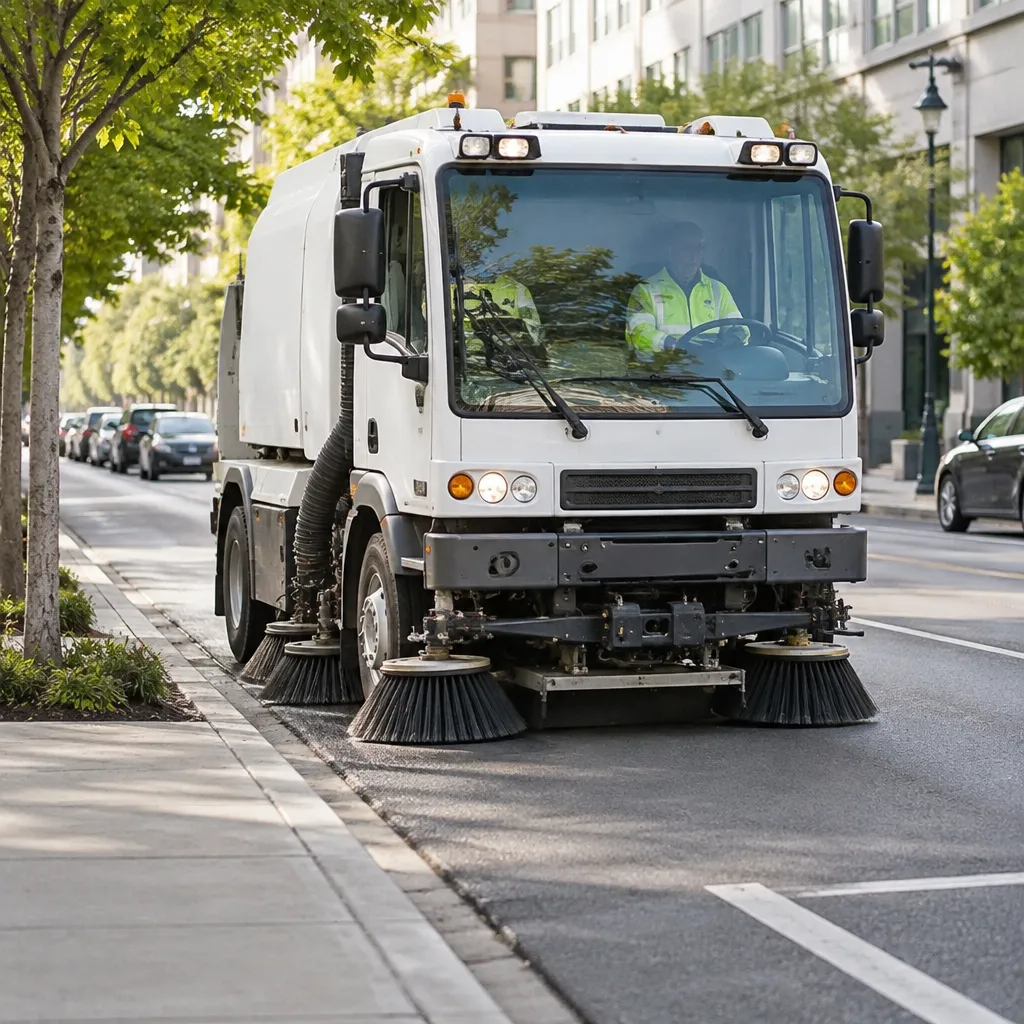
An ASCE study on storm-water management using street sweeping reported that a vacuum sweeper removed 1.5 to 5 times more material than a mechanical broom sweeper for smaller particles, in the range of 2 to 250 micrometers. That size range is where a large share of sediment-bound pollutants sits, so the difference is not a minor detail.
Sweeping miles are a measure of effort. The material left in the gutter after the sweeper passes is the measure that counts for the stream.
What the 1.5 to 5 times figure means in practice
The range is wide because conditions vary. Surface type, moisture, sweeper speed, and parked cars all change what a sweeper can pick up. The practical lesson is that you should evaluate sweepers on the particle sizes your receiving waters care about, not on how clean the street looks at the end of the pass.
Where broom sweepers still make sense
Broom systems are not useless. They can handle some large debris and may be acceptable on low-traffic surfaces where fine solids are not the main concern. The mistake is using them as the only tool on streets that drain directly to sensitive water bodies, where fine sediment is the pollutant you are trying to reduce.
Setting Sweeping Frequency and Timing
Frequency is the most common question from municipal crews, and the honest answer is that it depends on land use, traffic, tree cover, and how close the street sits to a receiving water. The FHWA fact sheet suggests that the most sophisticated sweepers are most useful at a weekly to bimonthly frequency, with a careful assessment of local conditions. It also recommends streetsweeping in commercial business districts, industrial sites, and intensely developed areas close to receiving waters.
Use that guidance as a starting point, then adjust. A commercial corridor with heavy parking turnover may need more frequent passes than a residential street with low traffic. A street bordered by mature trees may need a seasonal schedule layered on top of the regular route.
Matching frequency to land use
Divide your network into tiers. High-priority streets, such as those that drain to impaired waters or sit in industrial areas, get the most frequent passes. Lower-priority streets get a lighter schedule. Reviewing the tiers once a year lets you move streets up or down as land use changes.
Leaf drop and the fall schedule
The Minnesota Stormwater Manual notes that organic matter from street trees, including leaves, seeds, and flowers, can contribute significant phosphorus to runoff, especially during fall leaf drop. A common mistake is keeping the summer schedule through October and November. Add passes before the heaviest drop and keep them going until the trees are bare and the litter has stopped accumulating.
Pro tip: Time your extra passes to fall weather. Sweeping right before a forecast rain removes material that would otherwise wash into the drains within hours.
Catch Basins and Where Sweeping Ends
Sweeping cannot do the whole job. Some material will always get past the curb, especially during wet weather, and some will enter inlets directly from driveways, landscaping, and construction sites. Catch basins and inlets are where that material collects, and if they are neglected, the sweeping program loses much of its value.
Think of sweeping as upstream source control and catch basin cleaning as the downstream safeguard. Each one lowers the load the other has to handle. A municipality that funds sweeping but lets sumps fill with sediment is paying to move material into a storage area it will not manage.
Sweeping and catch basin cleaning work as a pair
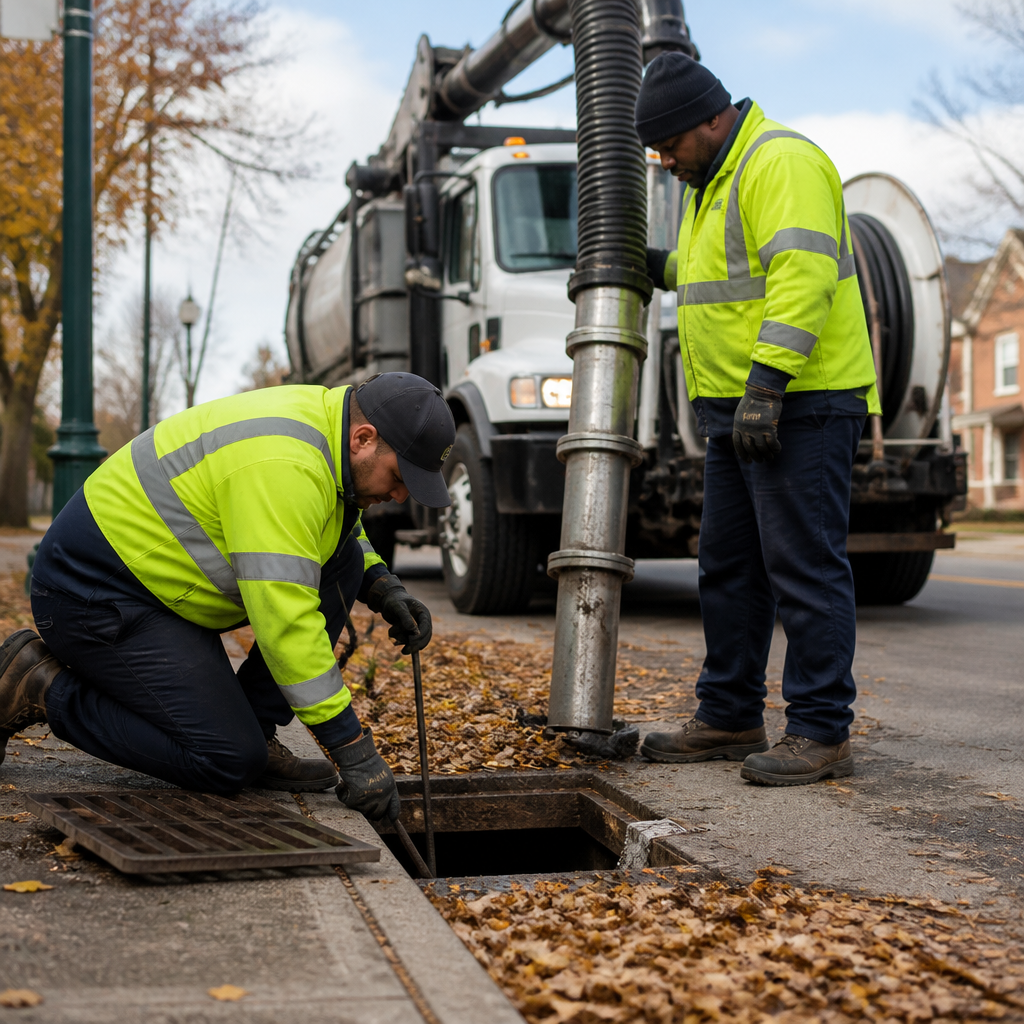
Schedule catch basin cleaning based on sump depth and sediment accumulation, not only on the calendar. Vactor cleaning removes the material that sweeping leaves behind at the inlet, and it also serves hydrodynamic separators and other water quality devices. Our catch basin cleaning and pipe jetting service and our water quality device cleaning work are built around that handoff.
Signs the sweeping program is failing downstream
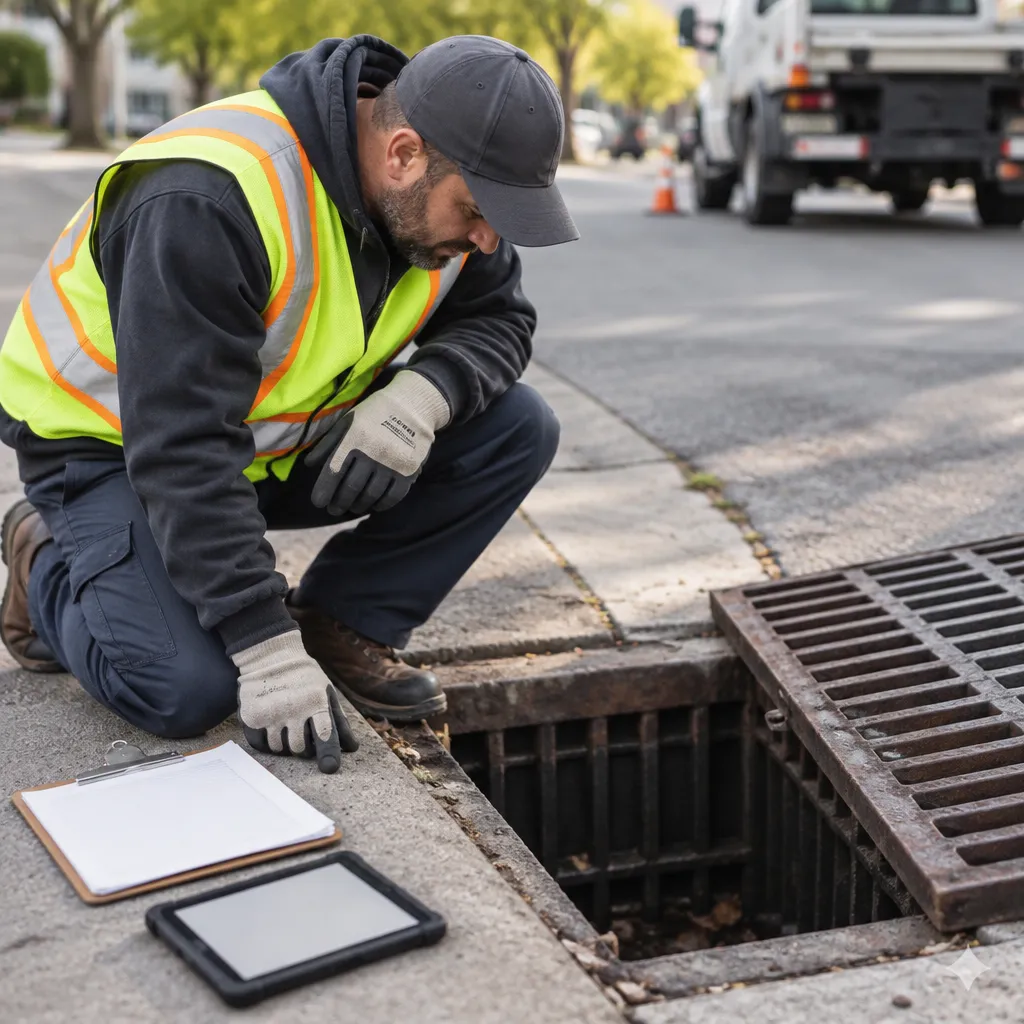
Watch for sumps that refill faster than the schedule expects, sediment visible in outlet pipes, and sediment piles along curbs that persist between passes. Any of these suggests the upstream route is too infrequent or the sweeper is not picking up fine solids. Inspection data from a stormwater system inspection can show which basins are filling fastest, so you can match cleaning and sweeping to the places that need it.
Building a Municipal Sweeping Program
A sweeping program that holds up under review has three parts: a route map, a schedule tied to priorities, and records that prove the work happened. Many municipalities have the first two and skip the third, which leaves them unable to show results when a permit inspector or council member asks for them.
Start with a map that marks every street segment, its drainage path, and its priority tier. Add the outfalls or receiving waters that each segment reaches. This map is what makes the program defensible, because it shows why certain streets get more passes than others.
Route mapping and priority zones
Route maps should show pass frequency, the date of the last pass, and any seasonal changes. When a route is skipped or cut short, the map should show why. Gaps in the record are the first thing a reviewer will question.
Contract specifications that protect water quality
If you contract out sweeping, write the specification around results you can check. Require vacuum-type equipment where fine solids matter, define the minimum frequency by priority tier, and require route logs with dates and approximate material volumes. Ask for disposal records as well, since material that is collected but then dumped improperly creates a separate problem. Our vacuum sweeping services are scoped this way for municipal clients.
Pro tip: Put a photo or GPS-stamped log entry at the start and end of each priority route for the first season. It costs little and gives you a baseline for comparing future performance and disputes about missed streets.
Comparing Sweeping Approaches
Municipalities usually choose among a few setups, and each has a different role. The table below compares three common approaches in terms of where they work and what they fail to do. The right choice depends on your receiving waters, your budget, and how much of your network drains to sensitive areas.
| Approach | Where It Works Best | Main Limitation |
|---|---|---|
| Mechanical broom sweeping on a fixed route | Low-risk streets and removal of large debris where fine solids are not the main concern | Leaves much of the fine sediment behind, which is the fraction most tied to water quality impacts |
| Vacuum sweeping on a tiered weekly to bimonthly schedule | Commercial districts, industrial areas, and streets close to receiving waters | Costs more per pass and still needs catch basin cleaning downstream |
| Vacuum sweeping paired with catch basin and water quality device cleaning | Watersheds with defined sediment or phosphorus targets and a need to show measurable results | Requires coordinated scheduling and records across two service lines |
For most municipalities with defined water quality goals, the third option is the one that produces results you can document. The first option is still useful for specific street types, but it should not be the default for streets that drain to sensitive waters.
Mistakes That Waste Sweeping Budgets
The most expensive sweeping programs are rarely the most effective. They usually repeat the same errors: sweeping the same streets at the same time every week, ignoring seasonal changes, and measuring the wrong things. Fixing these errors often produces better results without a larger budget.
Sweeping on the wrong day
A pass that runs on a fixed weekday regardless of weather, leaf drop, or construction can miss the window that matters. If a storm is forecast, a pass the day before is worth far more than a pass a week later. Flexible scheduling is the simplest improvement most programs can make.
Counting miles instead of material
Miles swept, hours logged, and curb lines covered are easy to report and easy to inflate. They do not show whether the program is reducing pollutant loads. Pair effort metrics with material volumes and, where possible, inspection data from the downstream inlets to see whether the work is changing conditions.
Frequently Asked Questions
Does vacuum sweeping actually reduce stormwater pollution, or is it mostly cosmetic?
It can reduce pollution when it targets the right material. Vacuum sweepers remove more of the fine particles that carry metals and phosphorus, and the FHWA fact sheet cites studies showing potential reductions of up to 80 percent in annual total suspended solids under the right conditions. Results depend on frequency, equipment, and timing, so measure the outcome rather than assuming it.
How often should a municipality vacuum sweep its streets?
There is no single answer, but the FHWA fact sheet points to a range of weekly to bimonthly for the most capable equipment, adjusted to local conditions. Commercial and industrial areas and streets near sensitive waters usually need the higher end. Residential streets with low traffic can often run on a lighter schedule, with seasonal passes added during leaf drop.
Is vacuum sweeping better than mechanical broom sweeping?
For fine sediment and sediment-bound pollutants, yes. An ASCE study reported vacuum sweepers removing 1.5 to 5 times more material than mechanical broom sweepers in the 2 to 250 micrometer range. Broom sweepers can still serve low-risk streets and large debris, but they should not be the only tool on streets that drain directly to sensitive waters.
Should sweeping happen before or after storms?
Before, whenever your schedule allows it. Material left on the surface is what washes into the storm system during rain, so a pass ahead of a forecast event removes material that would otherwise be lost. Sweeping after a storm still collects debris, but it cannot prevent the load that has already moved into the drains.
What records does a municipality need to show that sweeping is working?
Keep route maps, pass dates, approximate material volumes by route, and disposal records. Pair these with inspection data from catch basins and inlets so you can see whether the downstream system is responding. Gaps in the record are usually the first thing a reviewer questions, so keep the log complete even when conditions cause a route to be skipped.
How does street sweeping relate to catch basin cleaning?
Street sweeping reduces the material that reaches the inlet, and catch basin cleaning removes the material that still gets in. Each service lowers the load on the other. A program that funds one without the other usually fills sumps faster than expected and loses much of the benefit of the upstream work.
Have you run a vacuum sweeping program in your municipality, or seen one change what your inlets collect? Share what worked, what did not, and which measurements convinced your council or permit reviewer.
References
- Federal Highway Administration fact sheet on street sweepers and ultra-urban stormwater practices
- Minnesota Stormwater Manual overview of street sweeping water quality benefits
- ASCE study comparing vacuum and mechanical broom sweepers for storm-water management
- EPA guidance on parking lot and street sweeping as a stormwater practice