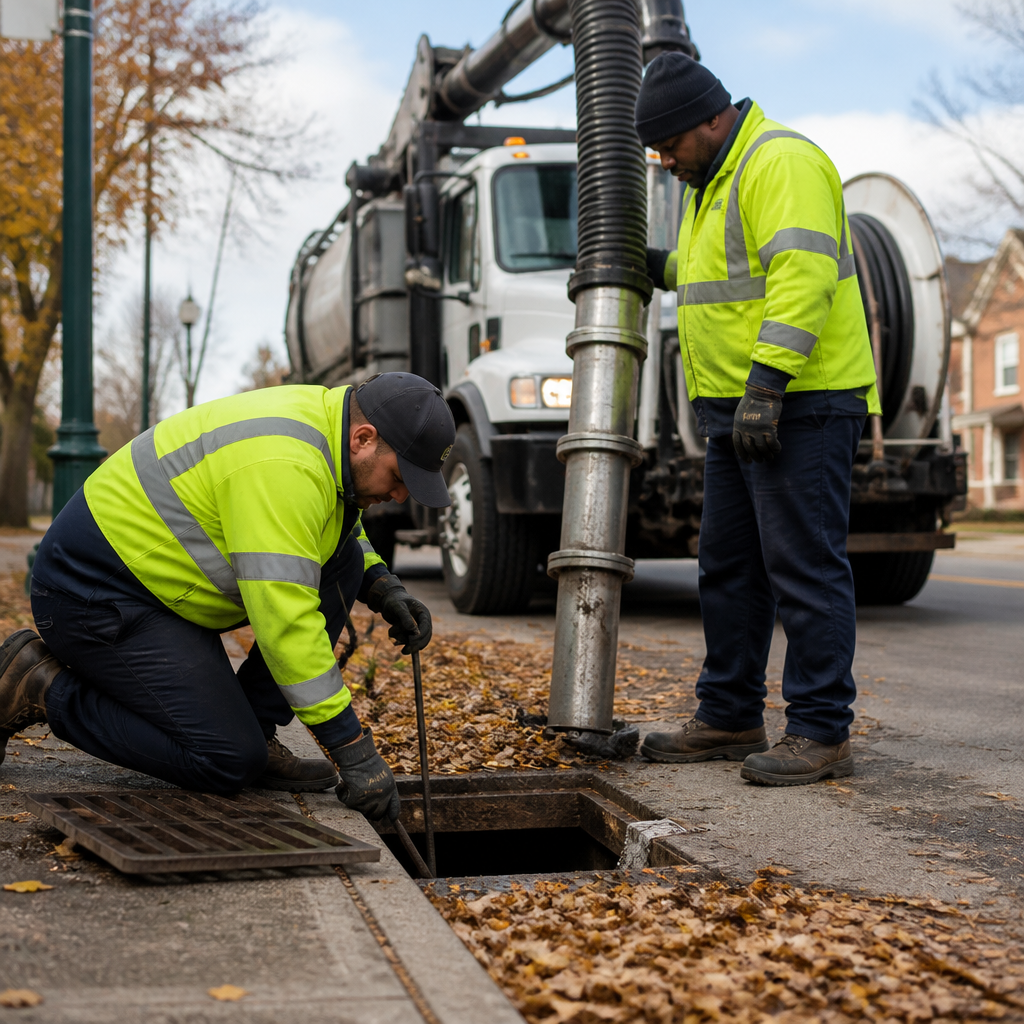

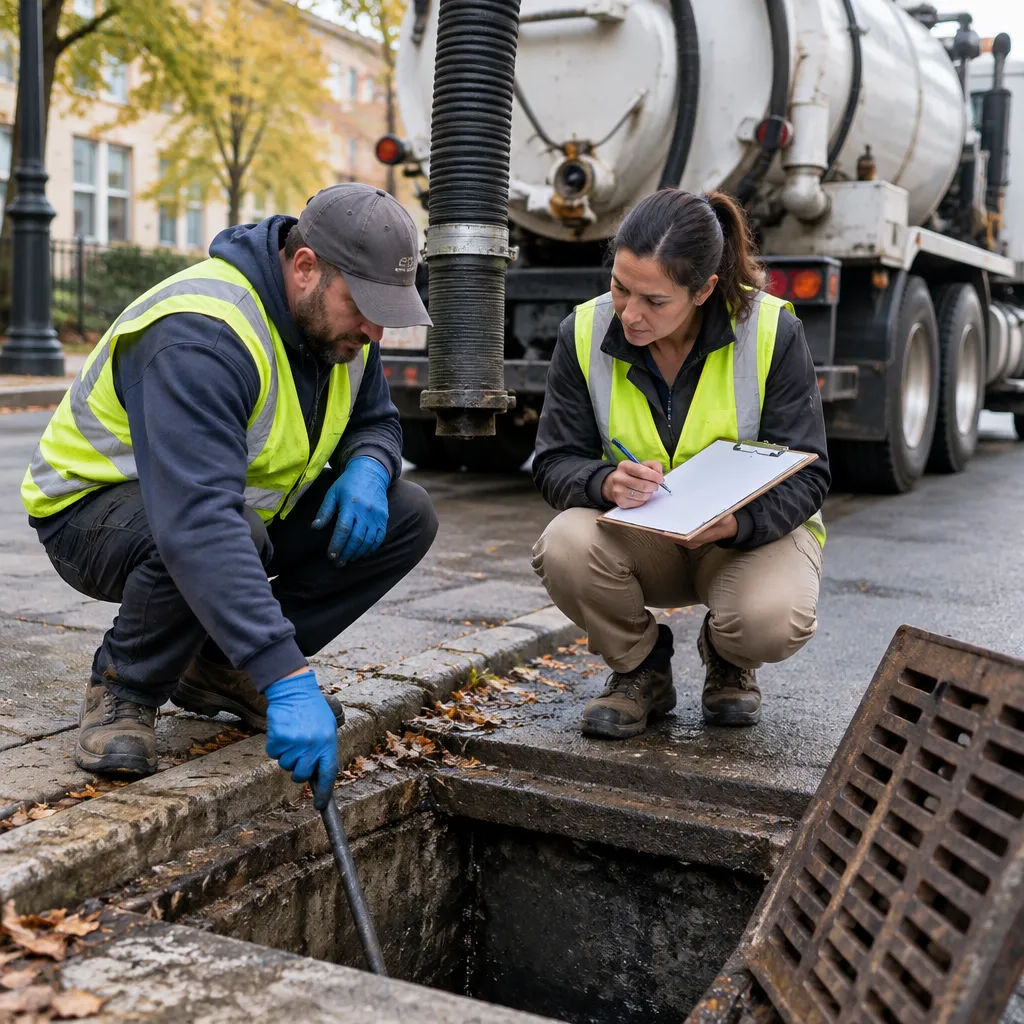
Most municipal stormwater failures are quiet. A catch basin fills up for two years, nobody logs the cleaning, and when a permit inspector asks for records, the city has nothing to show. Any serious stormwater consulting municipality effort has to connect the paperwork, the inspections, the cleaning, and the repairs, because a gap in any one of them shows up later as a violation. This article explains what a full-lifecycle partner should actually deliver, where the responsibility sits in practice, and how to tell a real partner from a vendor that only sends invoices.
Table of Contents
- Quick Takeaways
- What a Municipal Stormwater Partner Actually Does
- Consulting That Starts With the O&M Plan
- Inspections That Produce Evidence, Not Just Photos
- Maintenance Scheduled Around What Inspections Find
- Documentation That Holds Up in an Audit
- Structure Repair, Vegetation, and Bioretention Upkeep
- Violation Response and Compliance Assistance
- Comparing Ways to Buy Stormwater Services
- Frequently Asked Questions
- References
Quick Takeaways
| Key Insight | Explanation |
|---|---|
| Ask for the O&M plan and asset inventory first | A consultant who starts with cleaning or cameras before mapping the system is spending your budget on guesses. Require the structure inventory and the maintenance triggers before any field work is scoped. |
| Treat inspection output as a record, not a file dump | A pipe camera video with no defect codes, locations, or dates is not a deliverable. Require structured reports your staff can load into an asset system. |
| Tie cleaning frequency to what inspections find | A fixed calendar is a starting point only. Adjust catch basin and separator cleaning intervals after each inspection cycle so the schedule reflects actual sediment loads. |
| Keep one owner for the maintenance log | When three contractors each keep their own records, the city cannot answer a simple audit question from one file. One partner should hold the master log for the whole system. |
| Start violation response within the first week | Delay is what turns a notice into a penalty. Verify the cited condition in the field, pull the asset history, and draft a corrective action schedule before the deadline. |
| Scope porous pavement and bioretention as their own assets | These assets need different maintenance than pipes. Surface vacuuming, infiltration testing, and plant management should appear as separate line items in the contract. |
| Judge a partner by the records they hand over | The strongest test is whether your staff can answer a regulator’s question from the files without calling the consultant first. |
What a Municipal Stormwater Partner Actually Does
Most municipalities do not buy stormwater services as a lifecycle. They buy a sweeping contract from one vendor, a camera survey from another, a structure repair from a paving crew, and then a consultant writes a permit report from whatever data is left. Each invoice looks reasonable on its own, but together they rarely produce a program that can answer a regulator.
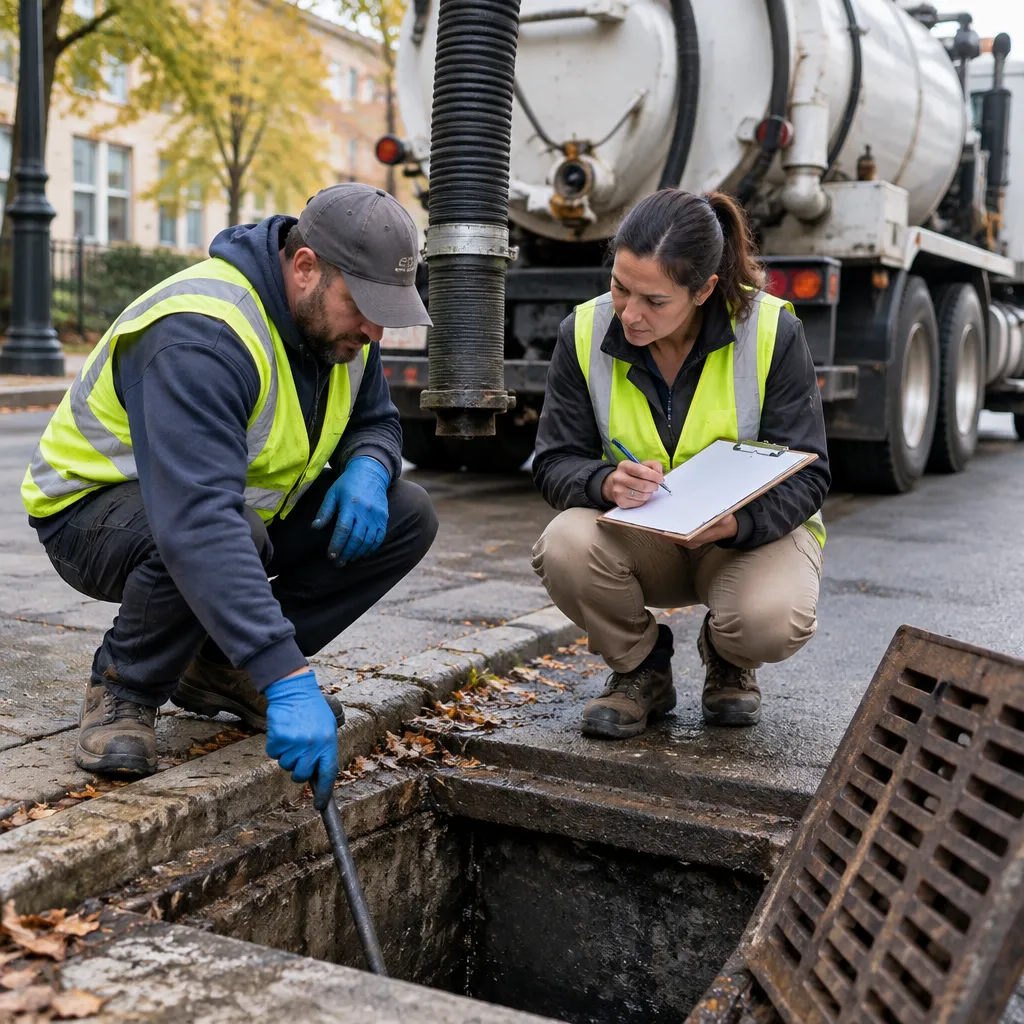
A full-lifecycle partner covers four jobs in one chain: consult on what the system needs, inspect what is actually in the ground, maintain it on a schedule tied to those findings, and document every step so the record is usable later. Storm Water Compliance has worked in this model since 2006, and the stormwater consulting side of that work is built around the same chain. The chain matters more than any single task, because a cleaning crew that does not know a basin was flagged for sediment will clean the wrong basin on the wrong day.
A stormwater program is only as strong as its weakest record. If inspections, cleaning, and paperwork live in three different places, the city does not have a program. It has three separate jobs.
Why one partner beats four invoices
Single-task vendors are not bad at what they do. The problem is that each one closes out its own job and moves on, so no one checks whether the inspection finding reached the crew, or whether the crew’s work reached the file. A partner that owns the sequence is the only party positioned to ask those questions before the next storm does.
Scope is part of the decision too. Municipal budgets are often split across public works, engineering, and utilities, and each department tends to buy what it can see. A lifecycle partner takes responsibility for the sequence across those lines rather than for the task in front of it.
Where the lifecycle actually breaks
In practice the break happens at handoffs. The consultant writes an O&M plan that calls for regular inspections, the inspection vendor delivers photos without location tags, and the maintenance crew cleans on a calendar set years earlier. Nobody is wrong, but nobody owns the sequence.
Pro tip: Before you sign any stormwater contract, write down who receives the inspection data and who decides what gets cleaned next. If the answer is “the vendor” for both, you have a gap that will cost you during the next audit.
Consulting That Starts With the O&M Plan
A Stormwater Operation and Maintenance plan is only as good as its inventory. Before anyone sets a frequency, the consultant needs to know which catch basins, pipes, separators, and infiltration features exist, where they drain, and who is responsible for each one. Many municipalities find gaps in their asset records only once field work begins, often around structures that came in informally through private development.
Mapping the system before writing the plan
Start with existing drawings, GIS layers, and complaint history, then verify in the field. A plan built only from desk records assumes the system works as drawn, and that assumption rarely survives a decade of sediment, root intrusion, and undocumented modifications.
The consulting scope should also include a review of the local ordinances the plan has to satisfy. A national watershed nonprofit’s consulting services catalog lists local development code and ordinance review, MS4 program support, and illicit discharge surveys among its core offerings. Those same items belong in a municipal lifecycle engagement, because the O&M plan has to match the rules it is meant to enforce.
Setting inspection frequencies and maintenance triggers
A good O&M plan sets two things: how often each asset is inspected, and what condition triggers cleaning or repair. Frequency alone is not enough. A catch basin in a leaf-heavy district and one behind a parking lot in a dry area need different schedules, even if they sit on the same pipe.
Triggers should be measurable. Examples include a sediment depth threshold in a catch basin, or a separator debris level that reaches the service point in the manufacturer’s guidance. Write these rules into the plan so the inspector and the crew work from the same standard.
Pro tip: Ask the consultant to attach the asset inventory to the O&M plan as a controlled file with a revision date. An O&M plan without a dated asset list is very hard to defend in a permit review.
Inspections That Produce Evidence, Not Just Photos
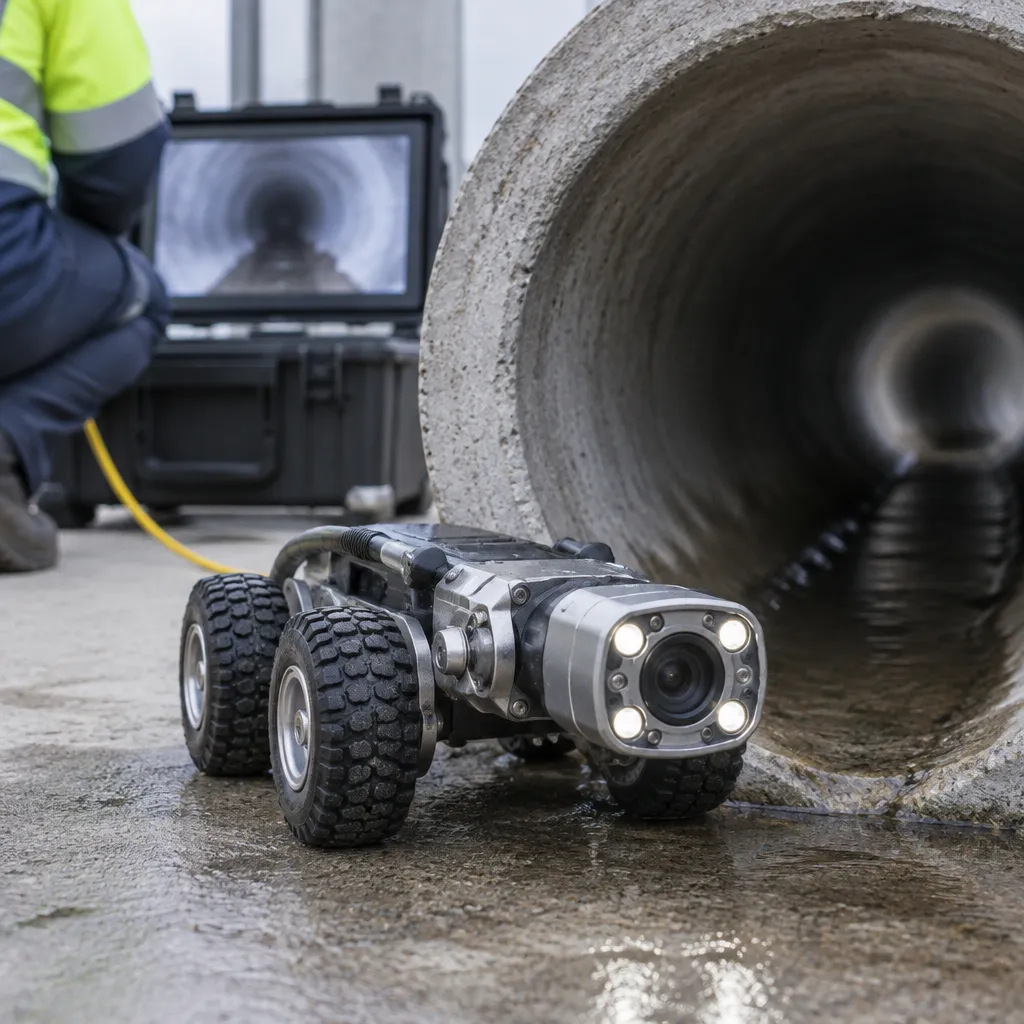
An inspection is only useful if it produces a finding someone can act on. A pipe camera run that ends with a folder of unlabeled video does not tell the city where the root intrusion sits, how far a crack extends, or whether the condition has worsened since the last run. Our stormwater system inspections are built around that problem.
CCTV pipe inspections and what they catch
Good CCTV work logs each defect with a location, a standard defect code, and a footage timestamp. That structure lets the next inspection compare conditions rather than start from scratch. It also lets engineering choose between cleaning, lining, and replacement based on evidence.
CCTV is not always the right first tool. In a shallow storm sewer with a clear outfall, a surface inspection can find sediment, debris, and standing water faster and at lower cost. Use the camera where the defect cannot be seen from above.
Visual inspections of catch basins and water quality devices
Visual inspection of catch basins and water quality devices is where many programs quietly fail. Inspectors confirm that a structure exists and mark it as inspected, but they rarely record sediment depth, floatables, or outlet condition. That leaves nothing to compare against the next season.
The fix is a short, fixed field form. Record sediment depth, presence of oil or floatables, outlet condition, and whether the device was accessible. A few sentences of field notes per structure, with a photo tagged to the asset ID, will do more for the program than a polished report that cannot be matched to a structure.
Pro tip: Have the inspector put the asset ID in the first photo of every structure visit. It sounds minor, but it is the only reliable way to match photos to the right catch basin months later.
Maintenance Scheduled Around What Inspections Find
Maintenance is the part of the lifecycle people see, so it gets the most attention and the least analysis. A crew that vacuums the same basins every spring because that is what the contract says is not managing the system. It is filling a calendar.
A lifecycle partner should use inspection data to build the cleaning list. A basin that is half full in March may need cleaning before summer, while a basin in a dry cul-de-sac may go two years without attention. Setting those priorities is the value of having one party that sees both the inspection record and the maintenance record.
Catch basin cleaning and pipe jetting
Catch basin cleaning removes sediment, debris, and standing water, and pipe jetting clears the lines that feed the basins. The two should be done in sequence. Cleaning a basin while the downstream pipe is still blocked only moves the problem, and the resulting record makes it look like the work was complete.
Hydrodynamic separators and subsurface systems
Hydrodynamic separators and other water quality devices hold captured sediment and floatables that can be resuspended during a heavy storm if they are not cleaned on time. Subsurface stormwater systems need the same discipline. A cleaning record should show the volume removed, the condition of the device afterward, and any structural issues observed.
Vacuum sweeping and porous pavement
Vacuum sweeping keeps curb lines and parking areas from feeding sediment into inlets, but only if the route follows the actual loading pattern. Porous pavement is different. A sweeper run too aggressively on a surface clogged with fines can damage the wearing course, so the sweeping plan should be reviewed alongside the rehabilitation plan.
Pro tip: Schedule a check within a few weeks after any major storm. Post-storm visits often catch debris loads that would otherwise wait for the next full cycle.
Documentation That Holds Up in an Audit
Documentation is the deliverable that matters most when a regulator, a court, or a new public works director asks what happened. A log entry that says “cleaned catch basins, Oak Street” cannot answer that question. A usable entry names the asset ID, the date, the condition before and after, the material removed, and the crew lead responsible.
What a maintenance log actually needs
Good logs also show the inspection that triggered the work. A reviewer should be able to start with a finding, follow it to a work order, and end at a closed record. If one link is missing, the record is weak, even if the work was done well.
Format matters as much as content. A spreadsheet with consistent fields outlasts a folder of handwritten forms. Pick a format your GIS or asset team can import, and agree on field names before the first season of work begins.
Keeping one record across contractors and staff turnover
Staff turnover is the quiet risk. The public works director who built the program moves on, the contractor changes, and the files end up on a laptop nobody can open. A full-lifecycle partner should hold the master record, deliver a copy to the city on a regular schedule, and keep historical files in a format that survives a change of staff.
Ask for records in the city’s name from day one. Some contracts leave the data with the vendor, and a city that switches providers then starts over. This is a contract term, not a technical detail.
Pro tip: Write a closeout requirement into every stormwater contract that calls for native data files, not only PDFs, delivered to the city within a set number of days after work ends.
Structure Repair, Vegetation, and Bioretention Upkeep
Some problems cannot be cleaned out. A cracked catch basin wall, a collapsed pipe joint, or a failed outlet structure needs repair or rebuilding, and the lifecycle partner should be the party that recognizes when that point has arrived. Repeated cleaning of a structure that is leaking soil into the pipe wastes money and hides the real problem. Our structure repair and rebuild work starts from that diagnosis.
When a repair is cheaper than another cleaning
A practical rule is that if the same structure needs cleaning three cycles in a row and the sediment keeps coming back from the same direction, stop cleaning and inspect the structure. The cause is often a broken joint or a missing sump that a camera would show in minutes. Cleaning it again only creates another invoice and another line in the log.
Bioretention and rain gardens need active vegetation management
Bioretention cells and rain gardens are the assets municipalities most often mistake for landscaping. They need plant management that keeps the infiltration bed open, removes invasive growth, and replaces failed plants before dead material clogs the surface. That work is a separate scope from routine mowing, and the contract should say so. Our vegetation management for stormwater systems service is written around that distinction.
Porous pavement follows a similar logic. Its maintenance is about keeping void spaces open, so the vacuuming schedule and the rehabilitation plan should be reviewed together rather than handed to two different vendors.
Pro tip: Ask whether the bioretention scope includes plant replacement and soil checks. Those items are the first to disappear from low-bid contracts, and they decide whether the cell still infiltrates three years later.
Violation Response and Compliance Assistance
A stormwater violation notice is a deadline, not a verdict. The first two weeks decide whether the city looks like it has a working program or like it is reacting for the first time. Read the notice closely, identify the asset or practice it cites, and pull the records for that asset before anyone responds to the regulator.

Our violation response and compliance assistance work follows the same sequence: verify, document, then act. If your city has a notice on the calendar, contact our team before the first draft of the response goes out.
The first two weeks after a notice
Start by checking whether the cited condition still exists. A notice may describe conditions from an earlier inspection, and the fix may already be partly done. Document the current state with dated photos and measurements, then compare it with the last maintenance record.
Next, draft a corrective action schedule with named tasks, dates, and responsible parties. A specific schedule the city is already working on reads far better than a general promise to fix things.
Where municipalities lose ground
The most common mistake is treating a notice as a public works problem alone. Legal, engineering, and budget staff need to see the same file. When the budget office learns about a required repair after the deadline has passed, the repair is late and the penalty conversation starts.
The second mistake is cleaning up in a rush without documenting what was done. A crew that clears a flagged structure without a before-and-after record has fixed the symptom but not the paper trail, and the next inspector will report the same finding.
Pro tip: Keep a standing list of open violations and corrective actions, reviewed at every council or board meeting. Surprises are what turn a compliance problem into an enforcement problem.
Comparing Ways to Buy Stormwater Services
Municipalities usually choose among three models. Each can work for a small system, but the gaps tend to appear as the asset count and the permit load grow. The table below compares them on the points that decide whether a program holds together over several years.
How the three models compare
| Approach | Where it works | Where it breaks down |
|---|---|---|
| In-house crew with spot contractors | Small systems where staff know every structure and the budget covers equipment | Records depend on a few people, and specialized work such as CCTV or separator cleaning is bought piecemeal |
| Separate vendors for each task | Short-term projects with one clear scope, such as a single pipe repair | Each vendor keeps its own data, so no one can see the whole system or answer an audit from one file |
| Full-lifecycle partner under one contract | Growing systems with permit obligations that span inspection, cleaning, and reporting | Requires a clear scope and strong data terms, or the city becomes dependent on one provider’s files |
Choosing the right model for your system
The third model is not automatically better. It is better when the city insists on owning its data and on clear handoffs between inspection, maintenance, and reporting. Without those terms, it simply concentrates the risk in one vendor.
A practical test is to ask who could answer a regulator’s question if the contract ended tomorrow. If the answer requires the outgoing vendor, the model is failing regardless of its price.
What to write into the contract
Specify the deliverables by name: asset inventory, inspection forms, cleaning records, repair logs, and quarterly summaries. Require that all of them are delivered in the city’s name and in native formats. Tie payment to delivered records as well as completed work, because a cleaning job without a record is not finished.
Frequently Asked Questions
What does a stormwater consulting municipality engagement usually include?
A complete engagement typically covers an asset inventory, an O&M plan, inspection programs, maintenance scheduling, record keeping, and support for permit reporting or violation response. The exact scope depends on the size of the system and the permits the city holds.
How often should catch basins be inspected?
There is no single interval that fits every municipality. Many programs start with an annual inspection of all structures and add visits in problem areas, then adjust the schedule using the inspection history. The right answer comes from your own records, not a generic table.
What is a stormwater O&M plan?
A stormwater Operation and Maintenance plan describes which assets the city owns or maintains, how each one is inspected, what condition triggers cleaning or repair, and who is responsible for each task. It is the document that ties the rest of the lifecycle together.
Should a city use one firm for consulting, inspection, and maintenance?
One firm can work well if the contract requires the city to own the data and the records are delivered in usable formats. Without those terms, a single firm simply concentrates risk. Put the data requirements in the contract before comparing prices.
What should a CCTV pipe inspection deliverable include?
A usable deliverable includes defect codes, locations, timestamps tied to the footage, and a summary of conditions compared with the previous run. Raw video alone does not support maintenance or capital planning decisions.
How quickly should a city respond to a stormwater violation notice?
Start within the first week. Verify the cited condition in the field, pull the asset history, and draft a corrective action schedule before the deadline. Waiting until the last few days usually turns a manageable issue into a penalty discussion.
Does a full-lifecycle partner replace the city engineer?
No. A partner supports the city’s engineering staff with inspection data, maintenance records, and compliance work. The city keeps final decisions on design, repair priorities, and regulatory positions.
Tell us where your municipality’s stormwater records have broken down under multiple vendors, or what has worked for your team.
We would love your feedback and any insights you would share with others. What perspective would you add?