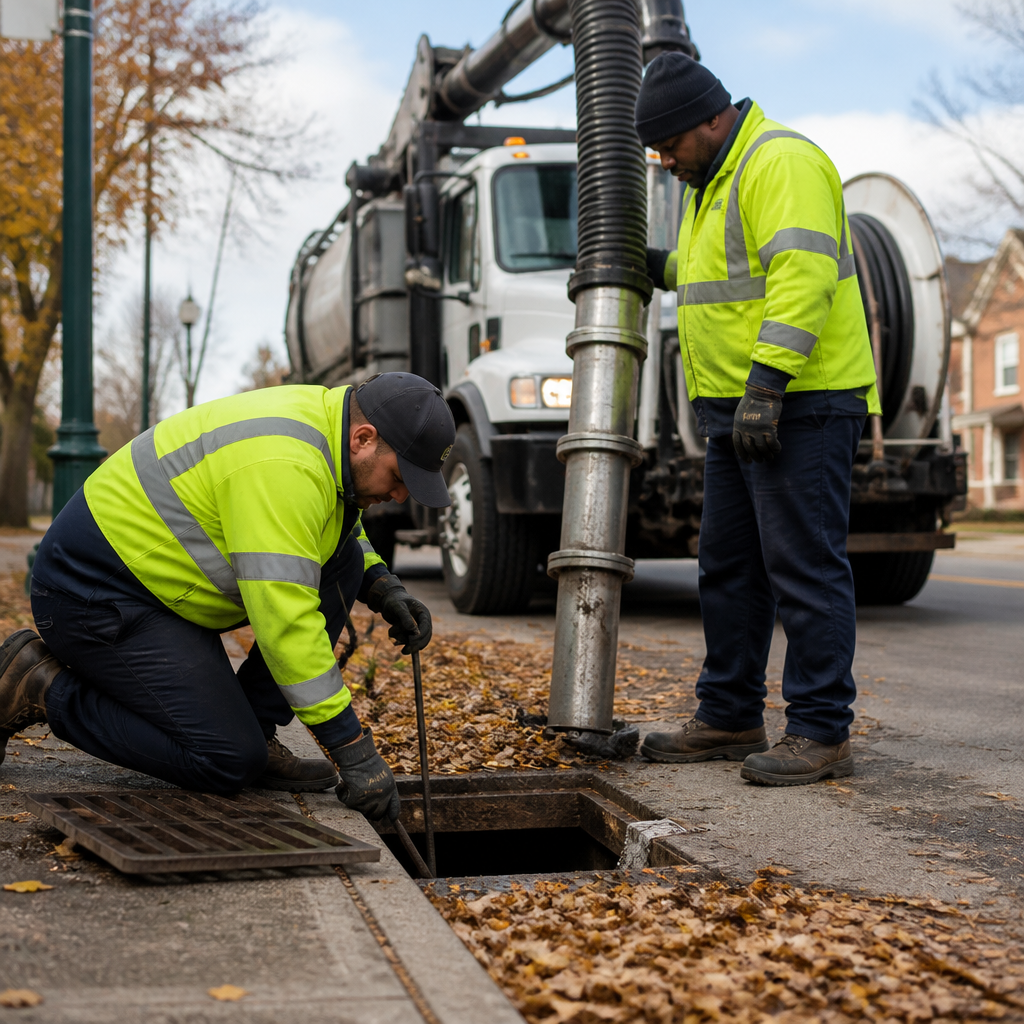

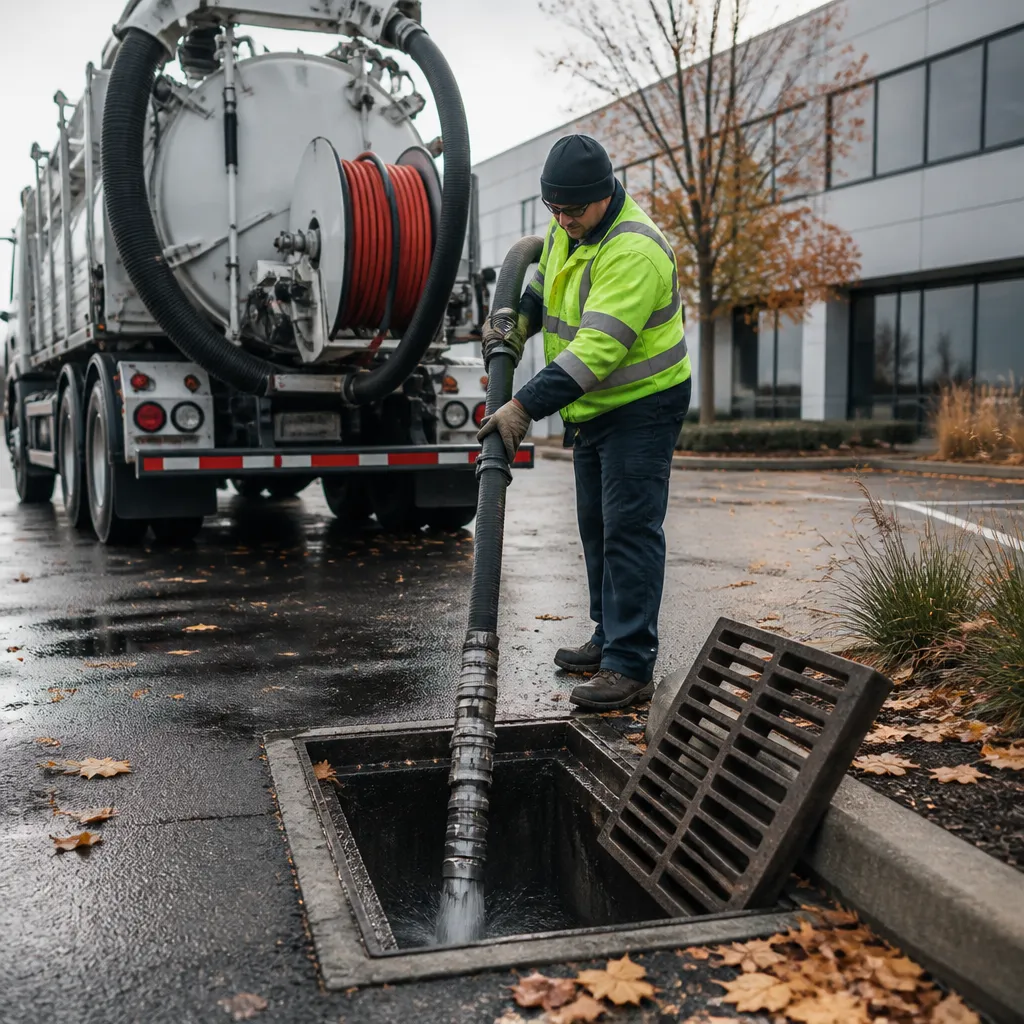
Most property owners think about catch basins only when water starts pooling in the parking lot. By then, the problem has usually been building for months. Catch basin jetting before freeze-up is the service that decides whether drainage keeps moving through winter or whether meltwater sits, freezes, and turns a maintenance issue into an ice hazard or a flooded lot. In practice, the basins that cause the worst January calls are rarely the ones nobody looked at. They are the ones that were swept or assumed clean in a rush during a dry spell. This article explains what happens inside a basin and its outlet pipe as temperatures drop, why jetting matters more than a surface scoop, and how to time the work so it lands before the ground freezes.
Table of Contents
- Quick Takeaways
- Why Freeze-Up Changes the Math
- How Sediment Turns Into a Winter Blockage
- Choosing the Right Cleaning Method Before Winter
- Timing Your Service Window
- Sand, Salt, and What Winter Adds to Your System
- Mistakes That Cost Property Owners the Most
- Documentation and Violation Protection
- Frequently Asked Questions
- References
Quick Takeaways
| Key Insight | Explanation |
|---|---|
| Freeze-up turns a drain into storage | Once the sump or outlet ices over, meltwater pools at the grate instead of leaving the site. |
| Sediment is the real capacity problem | Sand and silt in the sump reduce the room available for thaw events before the first cold night arrives. |
| Vacuum-only service is not enough for slow basins | If water drains slowly, pair vacuum recovery with jetting to clear compacted silt and the first run of outlet pipe. |
| Book before the first ponding call | Plan around the first extended freeze in your area and schedule work several weeks earlier to leave room for re-service. |
| Sweep before you jet | Clearing loose sand and leaves first keeps the sump from filling twice in the same season. |
| Keep a before and after record | Sump depth, outlet flow, and photos protect you if an inspector or engineer asks what was done. |
Why Freeze-Up Changes the Math
Freeze-up changes what a catch basin does. In warm weather, water entering the grate moves through the sump and out the outlet pipe, and the basin does its job without anyone thinking about it. Once the sump surface, the outlet, or the connecting pipe starts to ice over, the basin stops draining and starts holding water at the surface, where it can do the most damage.
Meltwater is the real driver. A thaw can push large volumes of water across driveways, loading docks, and parking lots within hours, and the ground underneath is often frozen so nothing soaks in. A basin that already holds a season of sand has less capacity exactly when the load peaks. Capacity is the whole point of the basin, and sediment quietly eats it.
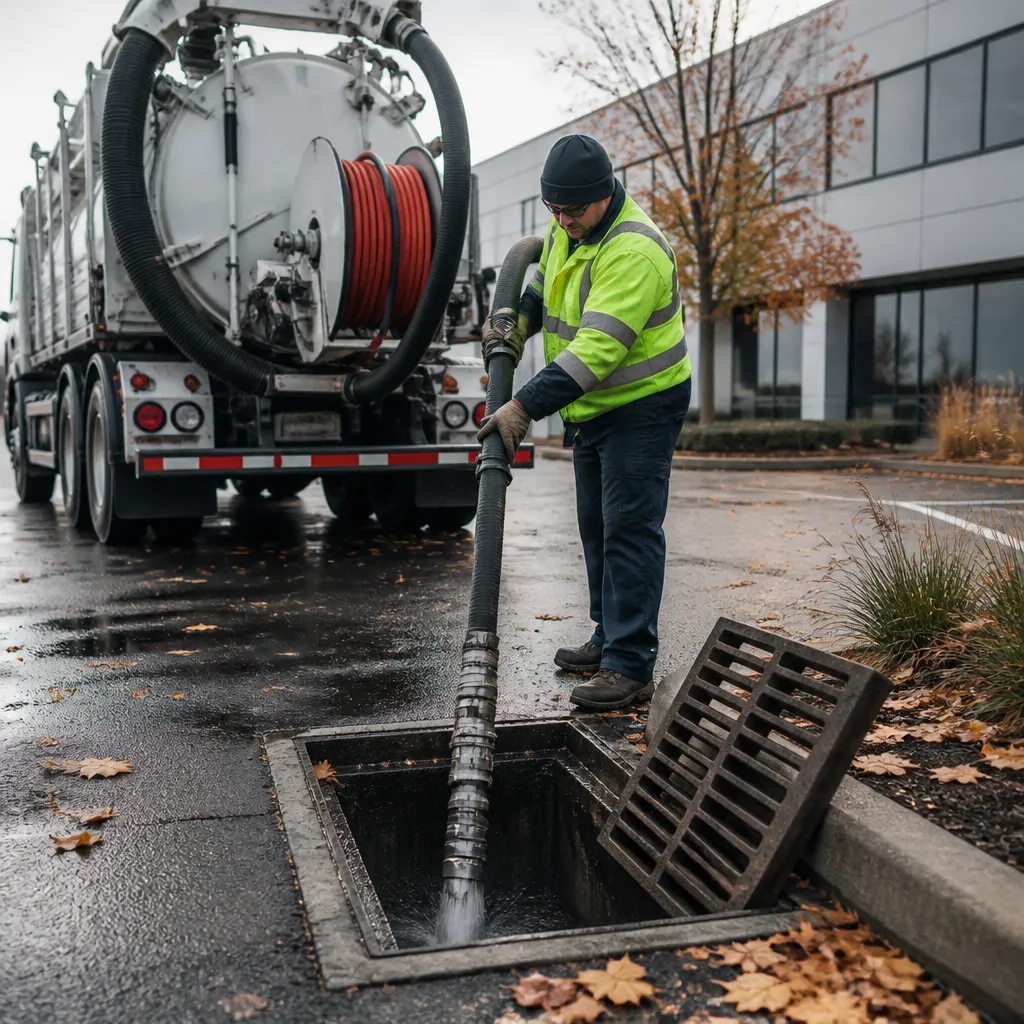
The sequence that follows is predictable. Standing water freezes into a slab over the grate, the slab blocks the next melt, and water finds the lowest route, which is often a walkway, a garage apron, or a building entrance. Crews working in Boston, Providence, and Hartford see this same chain repeatedly, and the fix almost always sits upstream of the freeze, in what was or was not removed in the fall.
A catch basin that is clean in October is a drainage asset. The same basin packed with grit in January is a hazard someone has to dig out by hand.
That difference explains why jetting before freeze-up matters more than most owners expect. A surface scoop removes what you can see. Jetting, paired with vacuum recovery, reaches the compacted layer on the sump floor and the first run of outlet pipe, where the material that blocks flow tends to sit.
How Sediment Turns Into a Winter Blockage
A catch basin works because its sump traps heavy material before water reaches the outlet. Sand, gravel, leaf grit, and road fines settle to the floor, and the outlet sits above that layer. That design protects the downstream line, but it also means the sump is a collection point that fills slowly and quietly over a season.
The Sump Is Where Winter Starts
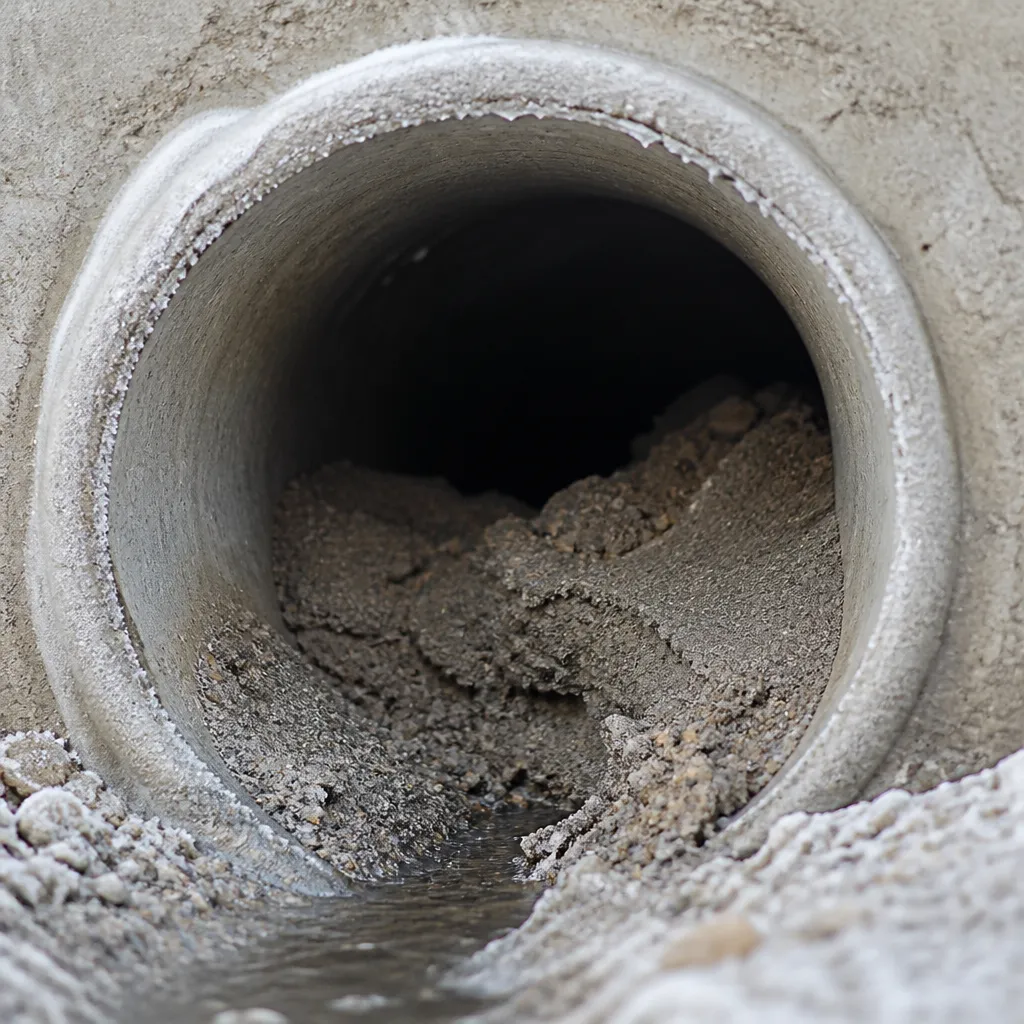
In practice, the sump is where most of the trouble begins. Fine silt does not stay loose. It mixes with oil, organic matter, and moisture, then compacts into a layer that a vacuum hose alone will skim around instead of removing. By the time an owner notices standing water, the sump may have lost a large share of its depth, and whatever water sits above the sediment has nowhere to go but up.
The thing to check is not just how deep the sediment sits, but whether the outlet still carries clear water. If the outlet is partly buried, the basin is already working at reduced capacity, and freeze-up will finish the job.
Why Standing Water Freezes Faster Than You Expect
Standing water in a shallow sump or a low corner of a lot freezes from the top down. A thin ice cap forms first, then thickens overnight, and the surface is often hidden under a dusting of snow. That cap can seal the grate and the sump, so the next melt has nowhere to enter. Owners often read a clear morning after a freeze as proof the problem has passed, when the water is simply under ice.
The fix is not complicated, but it has to happen before the cap forms. Once water is frozen into a basin, crews usually need to chip or melt the ice, which adds time, labor, and risk to the sidewalk or lot surface around it.
Outlet Pipes and Frozen Lines
The outlet pipe carries the load out of the basin, and it is the part owners rarely see. Sediment and organic debris can coat the inside of the pipe in a film that narrows the flow path. In cold weather, that film holds water longer, which gives ice more time to form at joints and low spots along the run. A pipe that looks open from the grate in October can be effectively closed by January.
This is where pipe jetting earns its place. A high-pressure water stream scours the film off the pipe walls and pushes loosened material back toward the basin, where vacuum recovery removes it. Without that step, owners end up cleaning the top of the system and leaving the part that fails in winter untouched.
Pro tip: Before the first hard cold snap, walk the lot after a rain and note which basins drain slowly. Schedule those first, because slow drainage in October usually becomes ice in January.
Choosing the Right Cleaning Method Before Winter
Not every basin needs the same treatment, and not every method addresses the same problem. Owners and facility managers often ask whether a vacuum truck alone is enough. For a basin with light, loose debris, it may be. For a basin with a compacted sump or a slow outlet, it usually is not.
Jetting Versus Vacuum-Only Cleaning
Vacuum-only service is fast and effective at lifting loose material from the top of the pile. What it does poorly is break up packed silt or clean the first run of outlet pipe. When a crew skips jetting on a basin that drains slowly, the owner gets a clean-looking grate and an unchanged freeze risk.
Jetting with vacuum recovery is the better choice when water is slow to clear, when the sump has a hard crust, or when the outlet shows a film you can see from the grate. The water pressure loosens what suction alone cannot pull, and the recovery side keeps that material from washing downstream.
| Approach | Best Use | Main Limitation |
|---|---|---|
| Catch basin jetting with vacuum recovery | Breaking up compacted grit in the sump and clearing the first run of outlet pipe | Requires water access and proper handling and disposal of recovered material |
| Vacuum-only cleaning | Lifting loose leaves, litter, and sand from a basin with a healthy sump | Leaves fine silt caked on the sump floor and does little for the outlet line |
| CCTV inspection followed by targeted cleaning | Finding offsets, cracks, and root intrusion before winter | Adds a step and cost, but avoids cleaning a line that needs repair |
When CCTV Should Come First
Some lines fail for reasons cleaning cannot fix. Cracks, offsets, and root intrusion can trap sediment in a pattern that returns after every service. A CCTV pipe inspection before winter shows whether the problem is debris, structure, or both. That single step saves money, because cleaning a line that needs repair only buys a few weeks.
In practice, the best sequence is inspect, clean, then document. The camera shows what is there, jetting addresses the buildup, and a photo and inspection record confirms that the outlet is flowing. That record matters later if a neighbor, an engineer, or an inspector asks what was done.
Timing Your Service Window
There is no universal calendar for catch basin jetting. Your deadline is set by how exposed your site is to weather, how much sand and leaf debris your lot collects, and any maintenance schedule written into your stormwater documents. Some municipal and state programs set required inspection or cleaning frequencies, and those requirements, not a generic rule of thumb, should drive your schedule.
What we recommend is simple: finish the main jetting work after the last heavy leaf drop and before the ground freezes, with enough margin to re-service any basin that backs up in the first cold week. Waiting for the first ponding call puts the crew in the worst possible position, working in rain or cold while the lot is already flooding.
Working Backward From the First Hard Freeze
Start with the forecast patterns you see locally, not the calendar. Note the first stretch of days that stays below freezing, then schedule jetting several weeks earlier so the work is finished before the ground hardens. Crews also need dry days to haul and dispose of recovered material, and those become harder to find as temperatures fall.
Basins in low corners, under downspouts, and along the edges of sanded areas should go first. These basins take the largest loads, and a slow outlet causes the most damage there.
Sequencing With Sweeping and Leaf Removal
Jetting works best after the heavy debris is already gone. If a lot is swept or leaves are removed the week after the basins are jetted, the same material washes back in. A sensible order is sweep, then jet, then check the outlet. Vacuum sweeping before basin work keeps grit from filling the sump twice.
Coordinating these tasks also reduces site disruption. A single mobilization that covers sweeping, basin cleaning, and outlet checks usually costs less than separate visits, and it gives the owner one record to file.
Sand, Salt, and What Winter Adds to Your System
The material that causes the worst freeze-up problems often arrives after the leaves are gone. Sand spread for traction, deicer runoff, and the fine silt that washes off paved surfaces during thaws all flow into the same basins. Together, they form a dense layer that is harder to remove than the loose debris from autumn.
Sanding Adds Load Fast
Sand is heavy and abrasive, and it settles quickly. A single winter event on a busy lot can deposit more material in the sump than several weeks of fall leaves. The problem is not just volume. Sand that stays wet mixes with fines and sets up like a cemented layer on the basin floor, which is why a light fall cleaning often cannot keep pace with a hard winter.
If your lot is sanded, spring cleaning is not optional. But fall service still matters, because starting winter with a partly full sump leaves no buffer for the first heavy sanding event.
Deicer Residue and Slow Outlets
Deicer residue can mix with silt, which makes the material stickier and more likely to cling to pipe walls. Owners sometimes assume salt keeps everything flowing, when it can contribute to crusting and slow outlets. Dealing with those outlets before freeze-up is far cheaper than clearing a frozen line in the middle of a cold week.
Mistakes That Cost Property Owners the Most
Most of the expensive failures are not dramatic. They are small decisions that compound over a season, and most of them can be avoided with a short checklist and a schedule that respects the weather.
Cleaning Only the Grate
The most common mistake is cleaning what is visible. Leaves and litter come off the top of the grate, the basin looks finished, and the sump and outlet go untouched. The owner pays for a visit and still gets a basin that cannot pass meltwater in January. Ask the crew to show you the sump depth and the outlet flow before they leave.
Waiting for the First Ponding Call
Owners often wait until water is pooling in the lot before they call. At that point, the basin may be full, the ground may be frozen around it, and the crew has to work around standing water or ice. Scheduling before the first hard freeze costs less and gives the crew room to fix problems properly.
Hiring by Price Alone
A low quote for basin cleaning often means vacuum-only service with no jetting, no outlet check, and no written record. Ask what the scope includes, whether the outlet is verified, and what documentation you will receive. A cheaper visit that leaves the outlet slow is not a bargain.
Pro tip: Ask for a before and after note on every basin serviced, including sump depth and whether the outlet is flowing. That short record is the difference between a clean job and a job you can prove.
Documentation and Violation Protection
Stormwater programs increasingly depend on records, not just on whether a drain looks clean. The federal stormwater framework runs on permits, notices, and enforcement, and many state and municipal programs follow a similar pattern. If your property is covered by a stormwater Operation & Maintenance plan, your service log is part of compliance.

Records That Hold Up
A useful service record lists the date, the basins and lines serviced, the condition found before and after, and any repairs or follow-up items. Photos taken at the grate and at the outlet add weight, because they show the state of the system without relying on memory. Keep these records with your maintenance plan, not in a crew truck.
Responding to a Violation Notice
If you receive a stormwater violation notice, the first week matters. Gather your service history, inspection records, and repair invoices, then identify what was done and what remains open. Violation response is much easier when the records already exist, and much harder when an owner has to rebuild a year of maintenance from memory. This is the kind of work our team handles through Storm Water Compliance violation response and compliance assistance.
Frequently Asked Questions
How late is too late for catch basin jetting before freeze-up?
There is no single date that works everywhere. Plan around the first extended freeze in your area and schedule jetting several weeks earlier. If a basin already shows ponding or ice, service it immediately rather than waiting for the next scheduled visit.
Is vacuum cleaning enough before winter?
For loose debris in a basin with a healthy sump, sometimes. If water drains slowly or the sump has a hard layer, jetting with vacuum recovery is needed to clear compacted silt and the first run of outlet pipe.
How often should catch basins be jetted?
Frequency depends on sand loads, leaf exposure, and any permit or Operation & Maintenance plan requirements. Many sites benefit from a fall service and a spring service, with extra visits after heavy sanding seasons.
Does pipe jetting need to happen every year?
Not necessarily for every line. Jetting should be repeated when outlets stay slow after cleaning, after a known structural event, or on the schedule set in your documented maintenance plan.
What should I ask a contractor before booking catch basin jetting?
Ask whether the scope includes jetting or only vacuum cleaning, whether the outlet is checked for flow, how recovered material is handled and disposed of, and what written record you will receive at the end of the visit.
Can jetting damage older pipes?
Pressure must be matched to the pipe material and its condition. A CCTV inspection before service helps identify fragile lines, so the crew can adjust pressure or avoid sections that are already cracked.
Tell us about a basin that surprised you this season, whether it backed up after a thaw or held more sediment than you expected.