


A stormwater violation notice often looks like routine paperwork: a letter with a case number, a list of deficiencies, and a response date. Property owners who treat it that way usually lose ground. The first two weeks after a notice arrives decide whether the matter closes with a simple corrective action letter or escalates into daily penalties, stop work orders, and an enforcement file that follows the property for years. Effective stormwater violation response starts with a clear sequence of actions, and this guide lays out the steps we recommend in the order they should happen.
Table of Contents
- Quick Takeaways
- What a Stormwater Violation Notice Actually Says
- The First 48 Hours: Immediate Actions
- Documenting Conditions Before You Respond
- Building a Corrective Action Plan
- Choosing How to Respond
- Communicating With the Regulator
- Escalation, Repeat Notices, and Penalties
- Preventing the Next Notice
- Frequently Asked Questions
- References
Quick Takeaways
| Key Insight | Explanation |
|---|---|
| Read the cited requirement before the photos | The citation tells you which obligation you are accused of missing, such as catch basin cleaning, structure condition, or maintenance records. |
| Calendar the response deadline the day the notice arrives | A missed deadline turns a fixable maintenance issue into a formal enforcement matter. |
| Preserve records before anyone cleans or repairs | Photos, sediment readings, and vendor tickets are your evidence of what existed on the date cited. |
| Stop any active discharge, then document the fix | Reviewers weigh how quickly you acted and whether the problem was contained. |
| Respond in writing with a dated corrective action plan | A phone call without a written follow-up leaves the file open and invites a second notice. |
| Request extensions in writing before the deadline | Extension requests made after the deadline are rarely granted, and the file reads as non-responsive. |
| Treat the response as the start of a maintenance record | Repeat notices are often counted over a rolling window, so the next inspection depends on what you do now. |
What a Stormwater Violation Notice Actually Says
Notices come in several forms: a notice of violation, a warning letter, an inspection report with required corrections, or an administrative order. The label matters less than what the document asks you to do. In our experience, owners who sort the notice into “what they found,” “what rule applies,” and “what they want by when” respond faster and more accurately than owners who react to the first alarming sentence.

Read the Cited Requirement Line by Line
The cited section ties the notice to a specific obligation, such as a catch basin that was not cleaned on schedule, a damaged structure, a clogged water quality device, or a missing maintenance record. Owners often look at the photo, feel the problem is obvious, and skip the code citation. That is the wrong order. The citation tells you what the reviewer will check when they return, and your response should answer that exact requirement.
If the notice cites several items, split them into a table with three columns: the requirement, the finding, and the evidence you can produce. Items you cannot document are the ones that need a corrective action plan. Items you can document with a dated photo or service ticket often close with a short confirmation.
Separating the Response Deadline From the Correction Deadline
Many notices set two dates. The response deadline is when you must reply in writing. The correction deadline is when the physical work must be finished. These are rarely the same. A written response might be due in 14 days while a structure repair runs 60 days or more. Confirm which date applies to which obligation, and put both on the calendar.
Penalties in environmental programs are generally assessed per violation and can accrue for each day a condition continues. One compliance summary of federal stormwater enforcement notes that civil penalty maximums are adjusted for inflation each year under 40 CFR Part 19, and that actual penalties depend on severity, compliance history, and good faith efforts to fix the problem. The practical lesson is that a slow response costs more than a fast one, even when the underlying defect is minor.
The First 48 Hours: Immediate Actions
The first two days shape how the file reads. Nobody expects a property manager to resolve a stormwater defect in 48 hours, but everyone can take four actions: assign an owner, stop visible discharges, preserve evidence, and notify the people who need to know. Each of these takes hours, not weeks.
Assign One Accountable Person
The notice is addressed to the owner, but the response often falls to a property manager, a facility engineer, or an outside contractor. Name one person who owns the file. When several people answer the agency with different facts, credibility drops quickly, and the reviewer starts checking everything twice.
Stop Visible Discharges and Secure the Source
If sediment, oil, or debris is leaving the site, address the source first. Install inlet protection, pump out a standing sump into an approved outlet, or close off a bypass that is sending runoff where it should not go. Keep these temporary measures modest, and photograph them the same day. A control in place on day one reads far better than a permanent fix promised for month three.
Notify Your Insurer and Counsel Early
Environmental enforcement can carry legal exposure beyond the stormwater program. Check whether your insurance policy requires prompt notice of a claim or proceeding, and involve counsel before you make admissions in writing. Your technical response still has to go out on time, so ask counsel for a fast review rather than a delay.
Documenting Conditions Before You Respond
Documentation is where most owners are weakest. A repair made without photos, a catch basin cleaned without a ticket, or a pipe jetted without a log leaves you arguing from memory. Agencies rarely accept memory as evidence, and they should not have to.
The record you can produce on the day of the inspection is the only record that counts, and it is far easier to build before the cleaning crew arrives than after.
Field Documentation Checklist
Photograph each affected structure from the same angle, with the date visible in the image or the file metadata. Measure sediment depth in the sump, note standing water, and record the location against a site plan or GPS coordinates. Keep the original files unedited. A reviewer who sees cropped or re-saved photos will ask what else was changed.
Pro tip: Take a “before” set of photos and sediment readings even if you plan to clean the same day. Those numbers are what show the reviewer that the condition existed, and they help set a cleaning frequency later.
Pulling Maintenance and Vendor Records
Gather the last three years of maintenance logs, cleaning tickets, CCTV reports, and inspection checklists. Gaps are the first thing a reviewer looks for. If a service was missed, say so in your response and explain what changed. An honest gap with a credible fix plan is more persuasive than a set of records that looks assembled after the fact.
Building a Corrective Action Plan
A corrective action plan turns a notice into a schedule. It should name each deficiency, the action to correct it, the party responsible, and a completion date. Vague language such as “we will address this soon” is one of the most common reasons a manageable file turns into an escalation.
Finding the Root Cause of Recurring Structure Problems
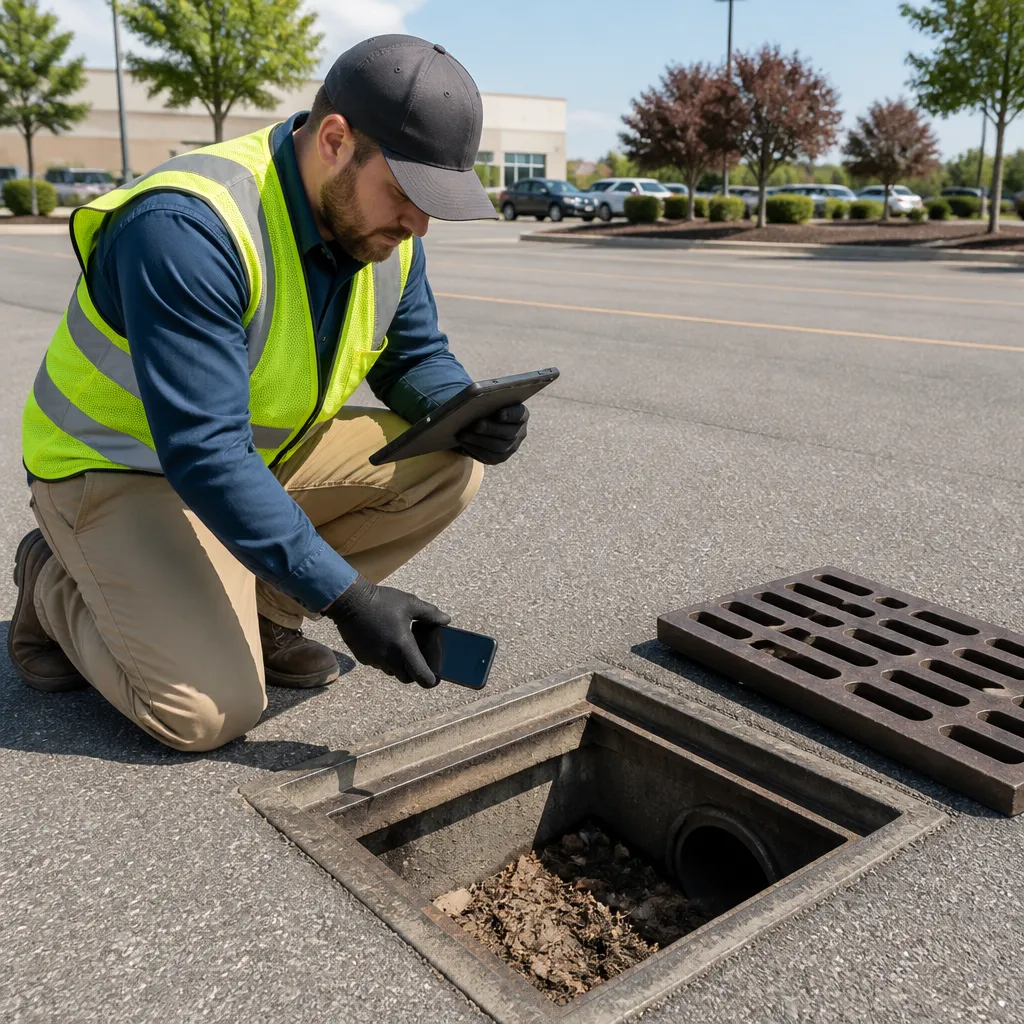
Ask why the deficiency happened, not only how to remove it. A catch basin that fills with leaf litter every autumn points to a sweeping and cleaning schedule problem, not a one-time event. A cracked structure may come from a failed pipe joint that needs CCTV inspection before any repair plan is credible. Regulators respond better to a root cause you have identified than to a fix that ignores the reason the problem returned.
Sequencing Cleaning, Inspection, and Repair
Order matters. Clean first, inspect with CCTV second, and repair third. Repairing a structure before you know what it looks like underground often means redoing the work, and a second repair looks worse than a longer schedule. Put this sequence into the plan with dates, so the reviewer can see the logic rather than a list of tasks.
Writing Milestones a Reviewer Can Check
Each milestone should produce evidence: a completed cleaning ticket, a CCTV file, a repair invoice, or a dated photo. If a milestone will not generate a document, it will not count when someone checks. Tie every line of the plan to something that can be filed and produced on request.
Choosing How to Respond
Owners generally face three paths after a notice: reply narrowly to the cited items, respond with a full documented plan supported by outside help, or delay action while they wait for a call with the agency. The table below compares them based on the files we see most often.
| Approach | How It Works | Where It Fails |
|---|---|---|
| Narrow reply | Answer only the cited item with one photo and a completion date. | Reviewers see unaddressed root causes and request more information, which reopens the file. |
| Full documented plan with compliance assistance | Written response with records, root cause analysis, inspection data, and a dated schedule. | It takes more coordination across vendors, but it tends to close files faster and with fewer follow-ups. |
| Wait and call first | Phone the agency and promise a written follow-up later. | Verbal commitments leave no paper trail, and a missed follow-up often becomes the second notice. |
For any notice that cites recurring or structural problems, we recommend the second approach. The narrow reply works only for isolated, single-event items with no discharge history and clear evidence of a one-time cause. The wait-and-call approach is the one we see fail most often, because owners treat a conversation as a response.
Communicating With the Regulator
Call the inspector to confirm receipt, the deadline, and the name of the reviewer, but send every substantive point in writing. A short call builds rapport, and the letter creates the record that matters.
What a Strong Response Letter Contains
Open with the notice number and the date you received it. Then respond to each cited item in order, stating what you found, what you did, and when. Attach the evidence and list the attachments by name. Close with the remaining schedule and a single point of contact. Avoid long explanations of why the problem occurred unless they support the corrective action.
Pro tip: Number each attachment to match the item it supports, such as “Attachment 3: CCTV report for structure CB-4.” Reviewers move faster when every claim points to a document they can open in one step.
Requesting an Extension Before the Deadline
If a schedule slips, request an extension in writing before the deadline passes. State a specific reason, such as contractor availability, the need for a permit, or CCTV scheduling, and propose interim measures that reduce risk while you wait. A vague request for “more time” is rarely approved. A specific request with interim controls often is.
Pro tip: Keep your tone factual. Dispute findings with evidence, not with arguments about the agency’s authority. A reviewer can work with a documented disagreement, but a combative letter tends to harden the file.
Escalation, Repeat Notices, and Penalties
Notices rarely escalate because of one bad day. They escalate when the response is late, incomplete, or when the same problem appears again. Understanding how an agency counts history and how penalties are built will help you judge how much urgency each notice deserves.
How Repeat Violations Are Counted
Some agencies define a history of non-compliance in their enforcement response plans. One municipal plan, for example, defines it as receiving more than three informal or formal responses to stormwater violations in the past two years. Counting windows and thresholds differ by agency, so read your local rules rather than assuming a clean slate after the last notice closed.
In practice, a second notice on the same structure is much more serious than a first one. Owners who treat each notice as a standalone event often miss that the agency is building a pattern.
Stop Work Orders, Permit Holds, and Penalty Calculations
For construction sites, escalation can mean a stop work order that halts activity until compliance is achieved, or a permit revocation that blocks further work. A state environmental regulator describes its enforcement process as moving from documenting violations to initiating enforcement, with tools such as expedited compliance orders, followed by a penalty calculation step. Severity, compliance history, and the owner’s response all feed into that calculation.
The owners who avoid these steps tend to do the same three things: they respond on time, they fix the cited items fully, and they keep the agency informed when something changes. None of these require unusual resources.
Self-Audits and Disclosure Options
The EPA publishes an audit protocol that encourages businesses and organizations to perform environmental compliance audits and disclose violations they find. Whether disclosure fits your situation is a question for counsel, and eligibility depends on the program. Still, know that the option exists before you are in the middle of an enforcement action, because a self-review done early gives you more room to choose your path.
Preventing the Next Notice
The best response to a violation notice is a maintenance record that makes the next inspection uneventful. That record comes from a schedule built on what the site actually produces, not on a generic calendar copied from another property.
Setting Cleaning and Sweeping Cadences From Data
Set cleaning frequency based on what each structure collects. Sites with heavy sediment loads, construction traffic, or seasonal leaf drop need catch basin cleaning and vacuum sweeping more often than a quiet parking lot. Log sediment depth at every cleaning and adjust the interval when the numbers climb faster than expected. Data from two or three cycles is enough to set a defensible schedule.
Keeping the O&M Plan Current
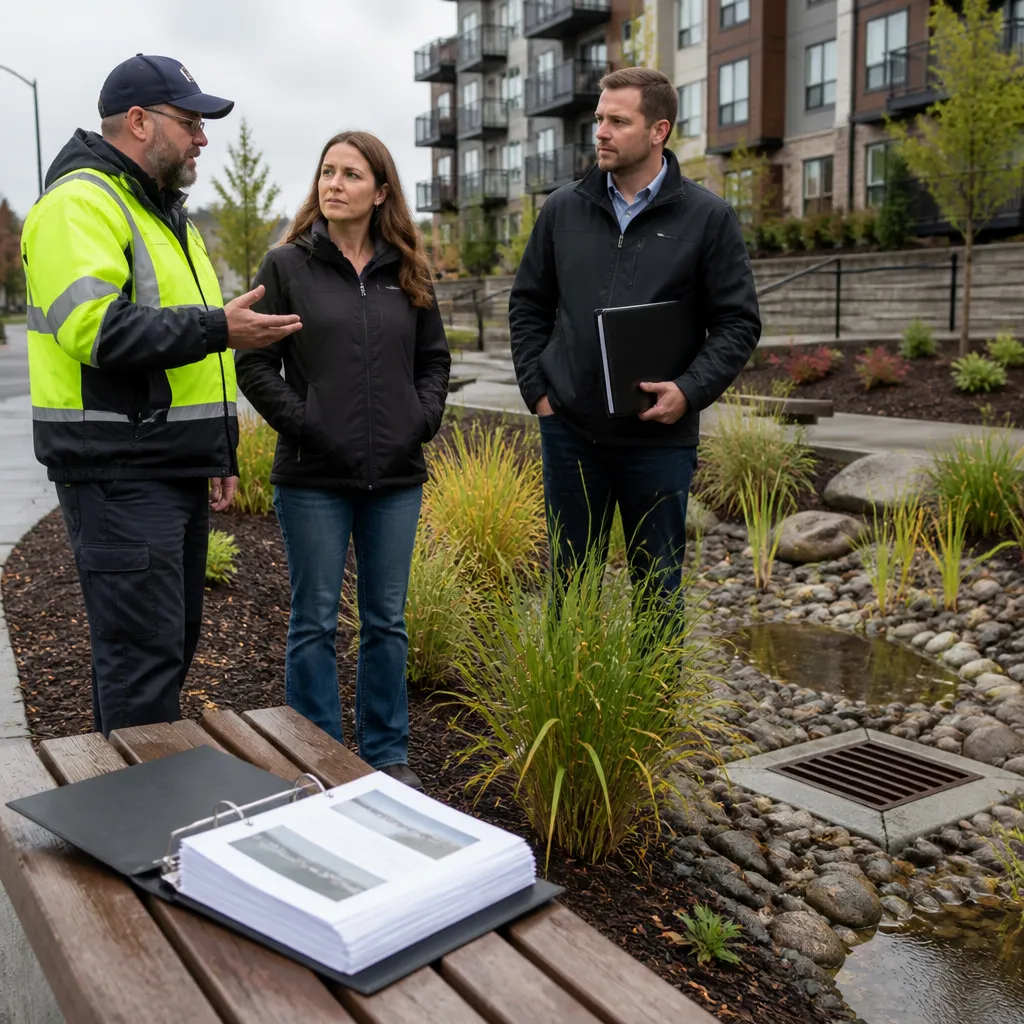
A Stormwater Operation and Maintenance plan should reflect the structures that are actually on site. Update it after repairs, after changes to drainage, after new construction, and after any change in responsible party. Tie the plan to the services that keep the system working, including CCTV pipe inspections, hydrodynamic separator and water quality device cleaning, bioretention and rain garden maintenance, and vegetation management where it affects inlets and outfalls.
A plan that matches the field is one of the few documents that can calm an inspector quickly. A plan that describes a site that no longer exists invites the next notice.
Frequently Asked Questions
How quickly should I respond to a stormwater violation notice?
Calendar the response deadline the day the notice arrives, and start the internal review within 24 hours. Even if the full corrective work will take weeks, a timely written response that lists your actions and schedule keeps the file in good standing.
Do I need a lawyer to respond to a stormwater violation notice?
Not every notice requires legal counsel for the technical response. However, if the notice mentions legal action, large penalties, or a possible permit impact, involve counsel before you make written admissions. Ask counsel to review quickly so the deadline is not missed.
Can I fix the problem and skip the written response?
No. A completed repair does not close the file on its own. The agency needs a written response that connects the cited item to the work you performed, along with the evidence that proves it.
What should I do if I disagree with the violation?
Do not ignore the notice. Respond in writing with dated evidence that addresses the specific finding, and request a meeting if the facts are unclear. Appeal rights and timelines vary by agency, so confirm them in the notice itself.
What does compliance assistance typically include?
Compliance assistance usually covers reviewing the notice, scoping the inspections and cleaning needed, documenting conditions, drafting the corrective action plan, and updating the O&M plan. The goal is a response the agency can verify without a second visit.
How long should I keep records after a notice closes?
Keep the notice, your response, the evidence, and the maintenance records for as long as the agency’s rules require and longer if your counsel advises it. Records that show a clean follow-up history are often the strongest defense if the same location returns to the agency’s list.
What step gave you the most trouble when you responded to a stormwater violation notice, and what would have made that step easier?
References
- Seven recurring stormwater compliance mistakes that lead to enforcement
- Construction stormwater penalties and how runoff control prevents them
- Stages of a state environmental enforcement process, from violation to action
- EPA guidance on conducting environmental compliance audits for stormwater programs
- Example municipal stormwater enforcement response plan with repeat-violation definitions